09-10-2026
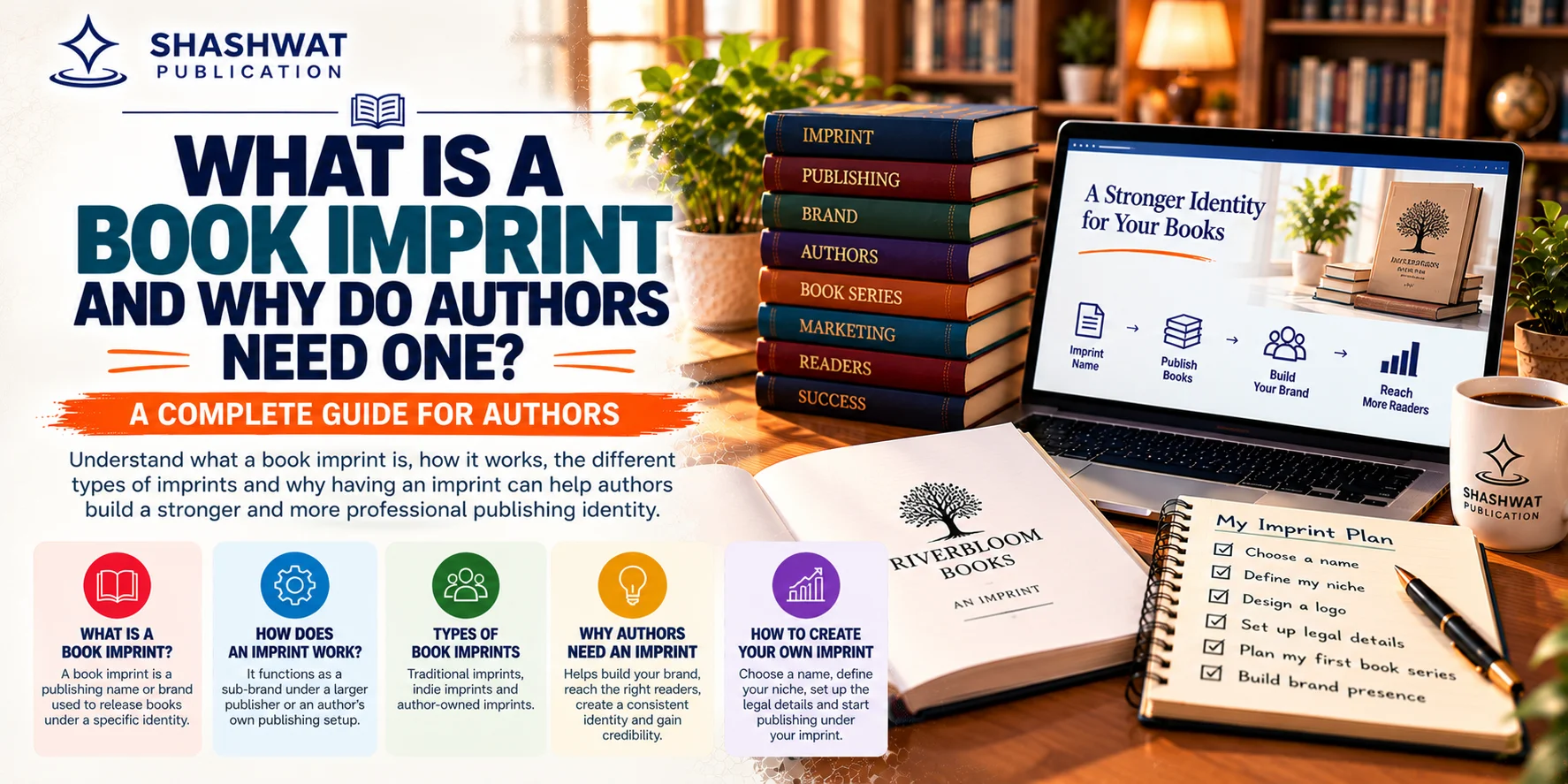
A book imprint is a trade name under which a book is published. It is the name that appears as a publishing identity for a particular book or group of books.
An imprint may represent a specific genre, editorial focus, audience or publishing style. For example, a publishing business might use one imprint for academic publications and another for literary fiction, depending on its business structure and branding strategy.
An imprint is not necessarily a separate legal company. It may operate as a brand or trade name within an existing publishing business.
For independent authors, creating an imprint can be a way to establish a professional publishing identity. Instead of presenting every book solely as an individual project, an author can publish under a consistent name that connects multiple titles.
According to the official Indian ISBN FAQ, an imprint is a publisher's trade name under which a work is published. <Cite refs={["turn327189search24"]}/>
However, using an imprint name does not automatically create a separate legal entity, establish trademark rights or transfer copyright ownership. Those matters depend on the applicable legal arrangements.
A book imprint provides a publishing identity for a title. It may appear on the copyright page, in publisher information, in book catalogues and in other relevant publication records.
The precise arrangement depends on who publishes the book and how the imprint is legally and commercially structured.
Consider an independent author who writes several books in different genres. The author may choose a consistent imprint name for their publications to create a recognisable identity.
Alternatively, a publishing business may operate several imprints, each focused on a particular subject or audience.
A typical imprint workflow involves:
Choosing an appropriate publishing name.
Checking whether the name is available and suitable for use.
Establishing the relevant business or publishing arrangement.
Preparing the book's publication details.
Using the imprint name consistently in appropriate publishing materials.
Maintaining accurate records of ownership, rights and publication information.
An imprint can support branding and organisation, but the book must still be professionally prepared, accurately documented and distributed through suitable channels.
Authors planning to publish independently can explore self-book publishing to understand the broader publishing process.
A publisher is the person or organisation responsible for publishing a book under the relevant arrangement. An imprint is a trade name used to publish a work.
The two terms are related, but they do not mean the same thing.
|
Factor |
Publisher |
Book Imprint |
|
Meaning |
The person or organisation publishing a book |
A trade name under which a book is published |
|
Role |
May manage publishing, production, distribution and other services |
Provides a publishing identity or brand |
|
Legal status |
May be a company, individual or other recognised business arrangement |
Does not automatically constitute a separate legal entity |
|
Branding |
May operate under its main business name |
May have its own name and editorial identity |
|
Number |
A publisher may publish many titles |
A publisher may use one or multiple imprints |
|
Copyright |
Ownership depends on the actual rights arrangement |
The imprint name alone does not establish copyright ownership |
For example, an established publishing business may use different imprints for different types of books while remaining the same underlying organisation.
An independent author may also use an imprint name, but that does not automatically make the author a separate publishing company.
Not every author needs an imprint. However, it can be useful when an author wants to develop a long-term publishing identity or manage several books under a consistent name.
An imprint gives an author a name that can be associated with their published work.
This may be helpful for authors who intend to publish multiple books over time. A consistent imprint name can appear across their publication materials, creating a recognisable identity for readers and professional contacts.
Authors who write several books may prefer to connect their titles under a single publishing identity.
For example, a writer who publishes a series of educational guides may want those books to share a consistent imprint name, visual style and publication information.
This can make the catalogue easier to organise and present.
An imprint can communicate a specific publishing focus.
An author might choose an imprint that reflects literary fiction, poetry, academic writing, children's books or professional reference material.
A clear focus can help readers understand the kind of publications associated with that name.
An imprint can form part of an author's broader brand alongside an author website, biography, book covers and promotional materials.
The name should be memorable, relevant and suitable for the intended readership.
However, branding alone does not guarantee sales or recognition. The quality and relevance of the books remain important.
As an author publishes more titles, an imprint can help organise publication information and maintain consistency across a catalogue.
This may be particularly useful for authors producing books across related subjects or managing a small independent publishing operation.
An imprint can be considered as part of a longer-term publishing strategy rather than a decision made for just one book.
Authors planning a series, multiple genres or regular publication schedules may find it useful to establish a consistent identity early.
However, if an author intends to publish only one book, the additional branding and administration may not provide enough benefit to justify the effort.
Self-published authors do not automatically need an imprint.
An author can publish a book under their own name or through an existing publishing arrangement, subject to the applicable requirements and agreement.
An imprint becomes more useful when the author wants to:
Publish several books under a consistent name.
Establish an independent publishing identity.
Develop a recognisable catalogue.
Organise books around a specific genre or subject.
Build a publishing brand for future titles.
Manage a long-term independent publishing project.
For an author publishing a single personal memoir or poetry collection, using an imprint may be optional.
For an author planning to publish ten books over several years, a consistent imprint may be a more useful investment in branding and organisation.
The decision should depend on the author's goals, budget, intended publishing model and willingness to manage the associated administrative responsibilities.
Choosing an imprint name requires more thought than selecting a name that simply sounds attractive.
The name should suit the intended books, be reasonably easy to remember and be appropriate for long-term use.
Choose a name that readers can recognise, spell and pronounce without unnecessary difficulty.
A short and distinctive name may be easier to use on book covers, websites, catalogues and promotional materials.
Think about the subjects and genres you intend to publish.
An imprint focused on academic and research books may need a different identity from one focused on poetry or children's literature.
However, avoid choosing a name that restricts your future plans too narrowly unless you intend to maintain a specialised catalogue.
Before using an imprint name, check whether another business or publisher is already using the same or a confusingly similar name.
Review relevant business records, domain availability and trademark information where appropriate.
Domain availability does not automatically mean that a name is legally available for use. Consider obtaining professional advice if there is a potential conflict.
An imprint should ideally remain appropriate as your publishing catalogue grows.
A name that works for one book should also make sense if you later publish related titles, a series or books in additional formats.
Do not choose a name that falsely suggests government approval, official academic affiliation, professional accreditation or a business relationship that does not exist.
The imprint should represent your actual publishing identity.
Consider how the name will look on a book cover, copyright page, website and catalogue.
A professional visual identity can help maintain consistency across publications, although a logo or design is not essential to every imprint.
The information required depends on the publishing arrangement. An imprint does not necessarily require every feature of a standalone business.
However, authors should establish the following details before using an imprint consistently.
Choose the exact name that will appear in relevant publishing materials.
Keep spelling, spacing and capitalisation consistent.
Determine who owns or operates the imprint and who is responsible for the publishing activities.
If the imprint operates under a company or another business, ensure the arrangement is documented appropriately.
Maintain accurate records of book titles, authors, editions, publication dates, ISBNs where applicable and relevant publishing agreements.
Clarify who owns the copyright and who has permission to publish each work.
An imprint name alone does not determine ownership of a book's content.
If appropriate, establish a reliable contact method for reader enquiries, rights requests, orders and professional communication.
Use the imprint name consistently across appropriate book covers, websites, catalogues and promotional materials.
The goal is to make the publishing identity clear without introducing incorrect or misleading information.
An imprint and an ISBN serve different purposes.
An imprint is a trade name under which a book is published. An ISBN is a unique identifier used to identify an eligible book publication or edition.
The imprint communicates a publishing identity, while the ISBN helps distinguish the publication for bibliographic and distribution purposes.
For example, a book may identify an imprint on its copyright page and also display an ISBN assigned to the relevant edition.
The two should not be confused with copyright registration. An imprint name does not establish copyright ownership, and an ISBN is not proof that the holder owns the book's copyright.
Authors should confirm the applicable ISBN assignment requirements and ensure that their publication details accurately identify the relevant publisher and edition.
The placement depends on the publishing arrangement, book design and relevant publication requirements.
An imprint name may appear in several places.
The copyright page may identify the imprint as the trade name under which the book is published, along with other relevant publication information.
The exact wording should reflect the actual arrangement.
Some books display the imprint name or logo on the back cover, often near the lower portion of the design.
This is primarily a design and branding choice, subject to the book's production requirements.
The imprint may appear in catalogue or bibliographic information where appropriate.
Accurate metadata helps distinguish the publishing identity from the author's name and the book's title.
An author operating an independent publishing identity may maintain a website or catalogue that presents its books.
A separate website is optional and should be considered according to the author's publishing goals and resources.
There is no single answer that applies to every imprint arrangement.
An imprint may simply be a trade name used by an existing publisher, or it may form part of an independent business structure. The relevant requirements depend on how the imprint is operated and the activities undertaken.
Authors should distinguish between:
Using a name as a publishing identity.
Establishing a legal business entity.
Protecting a name through applicable trademark procedures.
Obtaining an ISBN for a book publication.
Establishing copyright ownership and permissions.
These are separate matters and should not be treated as interchangeable.
If an author plans to operate an imprint as a commercial business, employ people, enter contracts or undertake other regulated activities, the relevant legal, tax and business requirements should be reviewed.
Where name ownership or potential trademark conflicts are involved, consider consulting a qualified professional.
An imprint can support a publishing strategy, but mistakes in its setup may create confusion.
An imprint is a publishing trade name. It does not automatically create a separate legal entity.
Authors should establish the correct business arrangement before making legal or commercial representations.
Using a name that conflicts with an existing business or protected mark can create avoidable problems.
Conduct appropriate checks before investing in branding or publishing materials.
The imprint name does not automatically own the book's copyright.
Ownership and licensing should be established through the actual rights arrangement.
Different spellings or names across the cover, copyright page, ISBN records and website may create confusion.
Maintain accurate and consistent publication records.
An imprint may not be necessary for every author.
Before creating one, consider whether it supports your long-term publishing goals or merely adds another administrative task.
A publishing name does not automatically create demand, establish credibility or guarantee distribution.
Book quality, audience relevance, marketing and availability remain important factors.
Authors deciding whether to publish under an imprint should first understand their publishing goals, rights arrangements and production requirements.
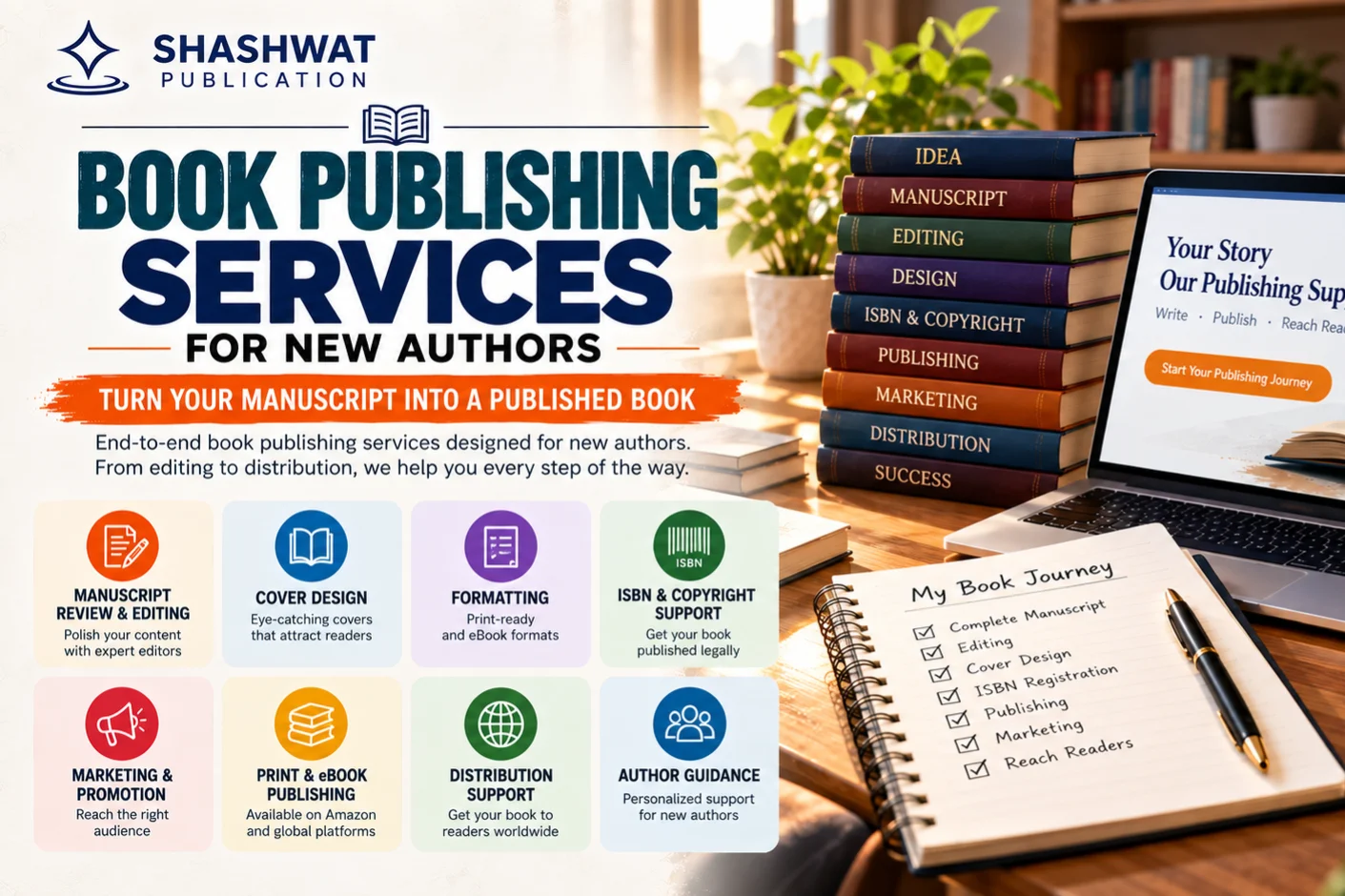
Shashwat Publication provides publishing services for authors preparing different types of books.
Depending on the selected package and agreement, services may include manuscript editing, proofreading, cover design, interior formatting, ISBN-related assistance, printing, distribution and marketing.
Authors should confirm how publisher and imprint information will be represented in their publication records, what details are required, and which responsibilities remain with the author.
You can review the available book publishing packages to understand the publishing services and options offered.
Choosing a publishing service and choosing an imprint name are related decisions, but they are not the same. An author should understand the actual publishing arrangement before deciding how to present the book's imprint information.
A book imprint is a trade name under which a book is published. It can help authors and publishing businesses establish a distinct identity, organise a catalogue and maintain consistent branding across multiple titles.
An imprint may be particularly useful for independent authors planning to publish several books, build a specialised catalogue or develop a long-term publishing identity. However, it is not essential for every author, and creating one does not automatically establish a separate company, transfer copyright or guarantee sales.
Before choosing an imprint, consider the name's availability, intended audience, future publishing plans, ownership arrangements and publication requirements.
By understanding the difference between an imprint, a publisher, an ISBN and copyright ownership, authors can make more informed decisions and prepare their books for publication with greater clarity.
+91 99930 01841 | +91 99936 08164 | ssupport@shashwatpublication.com
2nd Floor, HN 46, Balaji Residency, Seept Road, Bilaspur, C.G 495001

Can’t find what you are looking for? Drop an email to support@shashwatpublication.com
A book imprint is a trade name under which a book is published. It can represent a particular publishing identity, subject focus or group of titles.
No. A publisher is the person or organisation publishing a book, while an imprint is a trade name under which the work is published. A publisher may operate one or several imprints.
No. An imprint is optional for many self-published authors. It may be useful for writers who plan to publish multiple books under a consistent publishing identity.
Yes. An author can explore using a distinct imprint name, subject to applicable legal and business requirements. The author should check name availability and clarify ownership and publishing responsibilities.
Requirements depend on how the imprint is operated. Using a trade name, establishing a legal business, registering a trademark and obtaining an ISBN are separate matters. Authors should review the requirements applicable to their circumstances.
An imprint is a publishing trade name, while an ISBN identifies an eligible book publication or edition. Neither automatically establishes copyright ownership.
An imprint name may appear on the copyright page, back cover, book catalogue or other publication materials, depending on the publishing arrangement and design.
Yes. A publishing business may use multiple imprints to distinguish different genres, audiences or editorial identities. The underlying business may remain the same.
Not automatically. Copyright ownership depends on the relevant legal arrangements. An imprint is a trade name and does not, by itself, establish ownership of the book's content.
Choose a name that is memorable, appropriate for your intended books and suitable for long-term use. Check for existing names and relevant trademark conflicts before investing in branding.
A change may be possible, but the process depends on the publishing arrangement, existing contracts, publication records and distribution requirements. Authors should confirm what changes are needed before updating the imprint information.
Shashwat Publication offers publishing services that may include editing, design, formatting, ISBN-related assistance, printing and distribution, depending on the selected agreement. Authors should confirm whether their intended imprint arrangement can be accommodated before proceeding.


Very Good publications
Publishing Experience with Shashwat Publications My experience with Shashwat Publications has been a fulfilling and memorable journey. From the initial stages of manuscript preparation to the final publication of my book, The Dental Prescriber: Fro... Read More
About Publishing Experience with Us As a first-time author with Shashwat Publications, I look forward to a professional, collaborative, and enriching publishing experience. I appreciate the opportunity to present this work to students and educators... Read More
I am satisfied with the work, it was not too long time taken by the publishers. Also the price is appropriate for publishing the book. I recommend other authors too, must have experience once with this publication. Worthy experiences. Thanks :)
शाश्वत पब्लिकेशन एक मार्गदर्शक है दिशादर्शक है और आपकी मंजिल तक पहुचाने का बहुत शांतीदायी रास... Read More
It was really a very smooth and wonderful interaction with Shashwat Publication while writing my book. They were very much approachable and helpful in each step. All information was given to me with complete clarity. Whatever corrections were requir... Read More

B-75, Krishna Vihar, Koni, Bilaspur, C.G 495001
support@shashwatpublication.com
Timing
Important Pages
All rights are reserved by Aadeera Corporation Private Limited
Terms & Condition Apply