16-10-2026
Publishing a book is an important milestone for an author, but the work does not always end when the book becomes available to readers. Over time, you may discover typographical errors, outdated information, formatting problems or opportunities to improve the manuscript.
Revising a published book can help maintain its quality and relevance. However, making changes without a clear plan can confuse existing readers, create inconsistencies between editions and make it difficult for people to identify the correct version.
For example, correcting a spelling mistake is very different from rewriting several chapters or adding entirely new material. Minor corrections may not require a new edition, while substantial changes can justify publishing a revised edition with updated details.
The key is to understand the scale of the revision, follow the applicable publishing requirements and communicate changes transparently.
In this guide, you will learn how to update or revise a published book without confusing readers, when to create a new edition, how to manage book identifiers and how to communicate revisions professionally.
Before changing your manuscript, identify the reason for the revision. A clear objective will help you determine which sections need attention and whether the changes are minor or substantial.
Common reasons to update a published book include:
Correcting spelling, grammar and punctuation errors.
Fixing formatting problems or incorrect page references.
Updating outdated facts, statistics or examples.
Correcting inaccurate information.
Adding new chapters or supplementary material.
Improving unclear explanations or reorganizing content.
Updating references, citations or appendices.
Responding to recurring feedback from readers.
For example, a self-help author might discover that an exercise needs clearer instructions. An academic author might need to update references or correct a factual error. A novelist might want to fix continuity problems identified after publication.
Write down each proposed change before editing the original manuscript.
This creates a clear revision plan and helps prevent unnecessary rewriting.
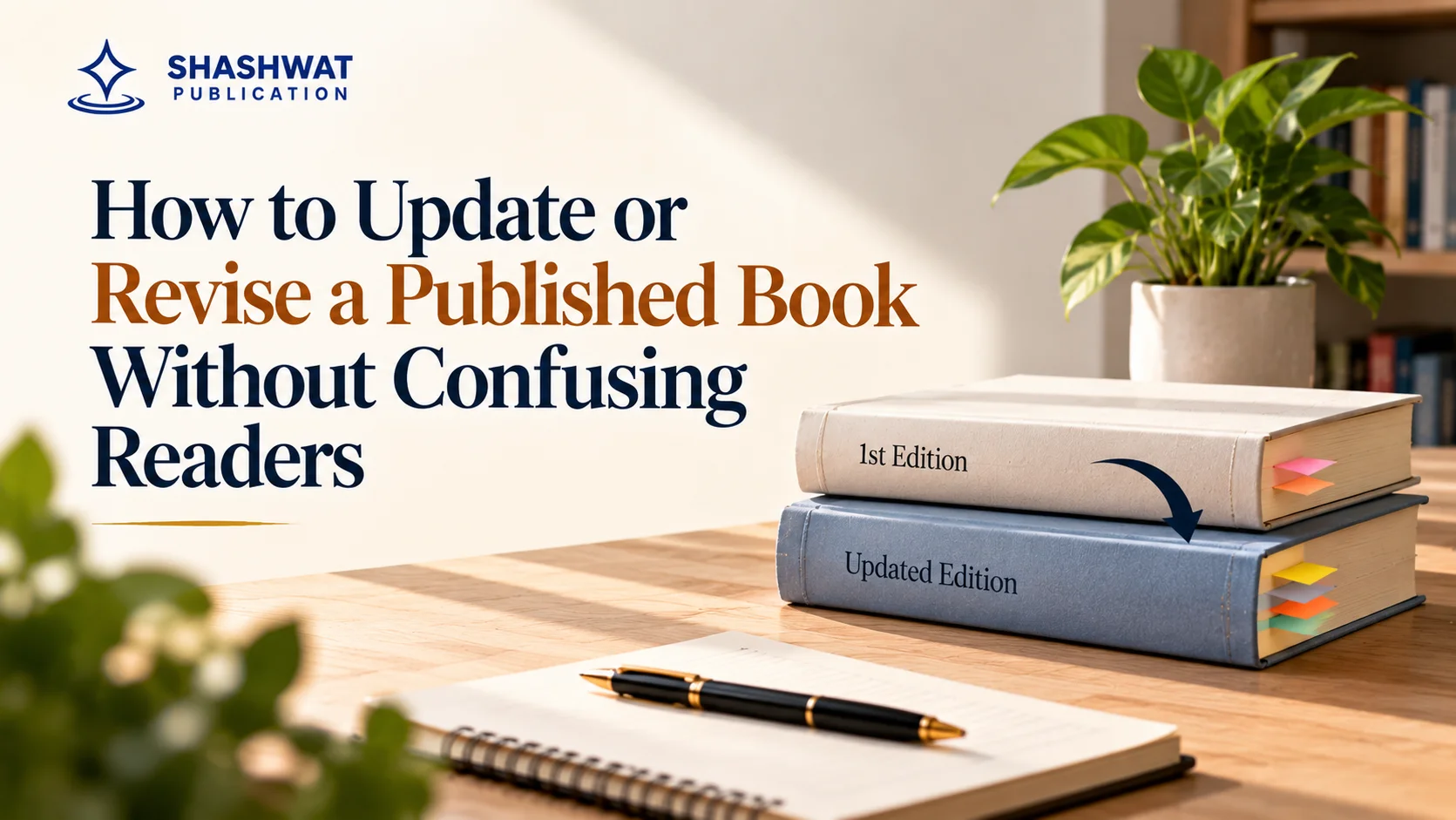
One of the most important decisions is determining whether your changes can be handled as an update to the existing book or whether they justify a new edition.
The distinction matters because publishing services may treat manuscript updates, metadata changes and substantial revisions differently.
Minor updates generally improve the existing book without substantially changing its content or identity.
Examples include:
Correcting typographical errors.
Fixing punctuation and capitalization.
Correcting a small formatting issue.
Repairing an incorrect page reference.
Making limited wording corrections that do not change the meaning.
Depending on the publishing arrangement, these changes may be possible within the existing published title.
Major revisions can change the content, structure or identity of the book significantly.
Examples include:
Adding substantial new chapters.
Rewriting major sections.
Replacing outdated information throughout the manuscript.
Changing the title or primary author information.
Reorganizing the book extensively.
Creating a substantially redesigned or expanded version.
These changes may require a new edition rather than a simple manuscript update.
The International ISBN Agency's guidance distinguishes minor corrections from significant changes to a publication, while publishing platforms may have their own specific rules for determining when a new edition is required. <Cite refs={["turn440497search32","turn440497search12","turn440497search2"]}/>
Important: Do not rely on a universal word-count rule to decide whether a revision is minor or major. Check the requirements of your publishing service and the applicable ISBN agency before making a final decision.
Reader feedback can reveal problems that were not obvious during the original editing process. However, not every suggestion needs to become a manuscript change.
Start by collecting feedback from reviews, reader emails, professional editors and subject experts where relevant.
Look for recurring issues, such as:
Explanations that readers frequently find confusing.
Missing information needed to understand a topic.
Repeated factual corrections.
Inconsistent character details in fiction.
Broken references or links.
Formatting issues affecting readability.
Separate feedback into three categories:
Essential corrections: Errors that affect accuracy, comprehension or the reader's experience.
Useful improvements: Changes that may improve clarity, organization or usability.
Optional preferences: Suggestions based mainly on individual taste.
Prioritize essential corrections and evaluate other suggestions carefully.
For example, if several readers identify the same confusing explanation, revising that section may be worthwhile. If one reader dislikes a character's decision in a novel, changing the story may not be necessary.
The goal is to improve the book while preserving the author's original purpose and voice.
Never begin substantial revisions without preserving the published version.
Save a copy of the original manuscript, cover file and other relevant publication materials. Create a separate working version for the revised book.
Use descriptive file names and dates to distinguish versions. Avoid editing the only copy of the published manuscript.
Readers should be able to recognize your book after a minor update. Avoid changing unrelated details simply because you are already working on the manuscript.
For minor revisions, consider preserving:
The original title and subtitle.
The author's name and established author identity.
The book's central theme.
The original chapter sequence, unless changes are necessary.
The visual identity of the cover.
The overall tone and intended readership.
However, preserving the original identity does not mean avoiding necessary changes. If the book has become outdated or requires substantial restructuring, a more extensive revision may be appropriate.
The important thing is to ensure that the final version accurately represents the book readers are purchasing.
An ISBN is an identifier used to distinguish a particular book publication. Understanding when an ISBN needs to change is important when you revise a published title.
The general ISBN guidance is that a substantially revised edition requires a separate ISBN. A simple reprint with no substantial changes is treated differently. ISBN requirements can also vary according to publication format and the nature of the changes. <Cite refs={["turn440497search32","turn440497search12"]}/>
Before releasing a revised version, verify the requirements applicable to your book.
Consider the following distinctions:
Minor corrections: Small typographical or similar corrections may not require a new edition.
Substantial content revisions: Significant changes may require a new edition and a new ISBN.
Different formats: Print and digital formats may require separate ISBNs where ISBNs are used and applicable.
Changed title or publication details: Significant changes to identifying information may require a new edition or identifier.
Do not assume that the ISBN from the original edition can automatically be reused for every revised version.
If your book was published through a service, contact the provider to confirm how revisions, edition numbers and identifiers should be handled.
A revised book may need changes to its cover or description, but these updates should help readers understand the new version rather than create unnecessary uncertainty.
A minor typo correction inside the book usually does not require a completely new cover design.
However, a new edition with additional content, an updated scope or a different intended readership may benefit from a revised cover.
If you update the cover, make sure the title, author name, edition information and other relevant details match the final manuscript and publication listing.
Review the description if the revision changes the book's contents, audience or purpose.
For example, if you have added several chapters to a practical guide, the description should accurately explain the expanded scope.
Avoid describing a book as a completely new work when it is primarily a corrected version of an existing publication.
Publishing platforms have different rules about which book details can be changed after publication and which changes require a new edition. Check those requirements before submitting updates. <Cite refs={["turn440497search0","turn440497search3"]}/>
Clear communication is one of the most effective ways to prevent confusion.
Readers who already own the original book should understand whether the revised version contains small corrections or substantial new material.
If the changes are significant, provide a short revision note describing the main improvements.
For example:
About This Revised Edition
This edition includes corrected references, updated examples and an expanded discussion in Chapter 5. The book's central argument and overall structure remain unchanged.
Adapt the wording to reflect the actual changes. Do not claim that content has been updated if it has not.
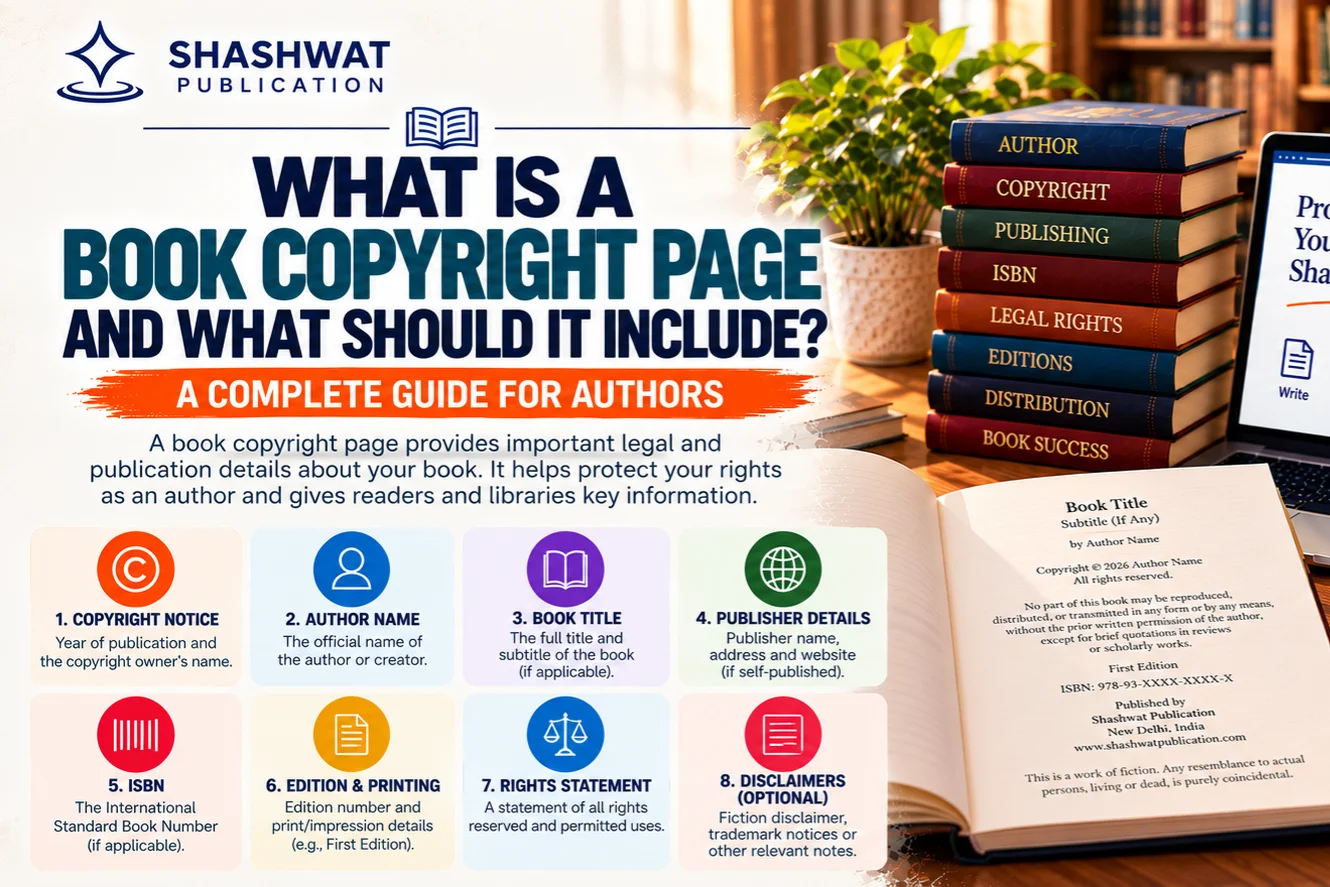
Where appropriate, include an edition statement on the copyright page or in the front matter.
For example:
First edition: 2024
Revised edition: 2026
Use accurate publication information and follow the applicable formatting requirements.
Edition statements are especially helpful when substantial revisions have been made and multiple versions may remain in circulation.
If you maintain an author website, newsletter or social media profile, share a brief announcement when the revised edition becomes available.
Explain:
The reason for the revision.
The main changes.
The release date of the revised edition.
Whether existing readers need to take any action.
Avoid suggesting that every reader must purchase the revised version. Instead, explain what has changed so readers can decide whether the update is relevant to them.
Updating a manuscript does not always mean that every copy available to readers changes immediately.
Previously printed copies may remain in circulation. Retail listings, digital samples and other publication details can also take time to reflect updates.
For example, publishing services may require a revised manuscript to pass another review before the updated version becomes available. The timing and available update options depend on the service and format. <Cite refs={["turn440497search1","turn440497search5"]}/>
To reduce confusion:
Confirm the revision has been approved and published.
Check the live book listing.
Verify that the cover, description and edition information are correct.
Review the digital sample or print preview where available.
Confirm whether older physical copies may still be sold.
Update your author website and promotional materials.
If the original and revised editions are both available, label them clearly so readers can distinguish between them.
Do not assume that correcting the online manuscript changes every previously printed copy.
A revised manuscript should go through quality checks just like the original book.
Making changes to a few pages can affect pagination, references, chapter transitions and the table of contents.
Before submitting the revision, check the following:
Proofreading: Review spelling, grammar, punctuation and consistency.
Fact-checking: Verify updated figures, quotations, references and other factual information.
Formatting: Check headings, paragraph spacing, page breaks and font consistency.
Table of contents: Confirm that chapter titles and page numbers match the revised manuscript.
References: Make sure citations, footnotes, bibliography entries and links are accurate.
Cover and metadata: Verify that the title, author name and edition information are consistent across publication files.
Final preview: Inspect the complete exported file and use a physical proof copy where appropriate.
If you are updating an academic or technical book, consider having a qualified subject expert review changes that affect the accuracy of the material.
A final quality check can prevent the revised edition from introducing new errors while correcting old ones.
Even well-intentioned revisions can create problems if they are not managed carefully.
Editing the only available manuscript makes it difficult to compare editions or recover earlier content.
Better approach: Preserve the published files and create a separate working copy.
A title change can affect how readers identify the book and may require a new edition or updated identifiers.
Better approach: Check the applicable publishing and ISBN requirements before changing identifying details.
Adding or removing sections can shift page numbers and make the contents page inaccurate.
Better approach: Regenerate or update the TOC after the manuscript layout is stable.
A substantial revision may require a separate ISBN.
Better approach: Confirm the identifier requirements for the new edition and format.
An old description may no longer accurately represent the revised book.
Better approach: Review your book listing, author website and promotional materials after publication.
Readers may not know whether they already own the same content.
Better approach: Provide a concise revision note when meaningful changes have been made.
Revising a published book may involve manuscript editing, formatting, cover adjustments, edition planning and publication-file checks.
Authors can explore Shashwat Publication to learn more about its publication services. You can also review the information on book publication services and book publishing packages.
Before proceeding, confirm which services are available for an already published book, whether the work requires a new edition, what the revision process includes and how much it will cost.
Do not assume that every publication package includes revision management, a new ISBN, editing or cover redesign. Confirm the exact deliverables and responsibilities directly.
Updating a published book can improve its accuracy, readability and long-term usefulness. The process becomes much easier when you identify the purpose of the revision, distinguish minor corrections from substantial changes and preserve a clear record of every update.
Before releasing the revised version, verify the applicable edition and ISBN requirements, update the manuscript and publication details, and communicate meaningful changes to readers.
Most importantly, make sure the revised book accurately represents what readers will receive. Clear edition information and transparent communication can help you improve your work without creating unnecessary confusion.
+91 99930 01841 | +91 99936 08164 | ssupport@shashwatpublication.com
2nd Floor, HN 46, Balaji Residency, Seept Road, Bilaspur, C.G 495001

Can’t find what you are looking for? Drop an email to support@shashwatpublication.com
Yes. Depending on your publishing service, you may be able to correct errors, update the manuscript or revise certain book details. Substantial changes may require publishing a new edition.
Minor corrections, such as fixing typographical errors, generally do not require a new edition. However, check the rules of your publishing service before submitting changes.
Consider a revised edition when the book has undergone substantial content changes, significant restructuring or other changes that affect its identity as a publication. Follow the applicable publishing and ISBN requirements.
A substantially revised edition generally requires a new ISBN. Minor corrections may be treated differently. Confirm the applicable rules with the relevant ISBN agency or publishing service.
Not always. Minor corrections may not require a new cover. A substantial revision may justify a cover update if it helps communicate the new edition accurately.
Publish a short revision note, update your author website or relevant book listings, and use your existing communication channels to explain the main changes and release date.
Not necessarily. Availability of updated digital content depends on the publishing service and its policies. Readers who purchased printed copies generally retain their original editions.
Save the original files, maintain a revision log, proofread the updated manuscript, verify references and pagination, and inspect the final publication files before submitting them.
Title changes may be restricted after publication and may require a new edition or new listing. Check the publishing service's rules before making changes.
You can contact Shashwat Publication to ask about the services available for revising an existing book. Confirm the scope, charges, timelines and whether a new edition or ISBN is required.


Dear Team, I would like to express my sincere appreciation for the seamless book publishing experience. As this is my debut publication, I will certainly be recommending Shashwat Publication.
I write this to express my deep sense of appreciation and gratitude to Shashwat Publication for publishing my first book in a time bound and professional manner. The first call from Ms Swati and her subsequent interactions, followed by dealing with ... Read More
Very Good publications
Publishing Experience with Shashwat Publications My experience with Shashwat Publications has been a fulfilling and memorable journey. From the initial stages of manuscript preparation to the final publication of my book, The Dental Prescriber: Fro... Read More
About Publishing Experience with Us As a first-time author with Shashwat Publications, I look forward to a professional, collaborative, and enriching publishing experience. I appreciate the opportunity to present this work to students and educators... Read More
I am satisfied with the work, it was not too long time taken by the publishers. Also the price is appropriate for publishing the book. I recommend other authors too, must have experience once with this publication. Worthy experiences. Thanks :)

B-75, Krishna Vihar, Koni, Bilaspur, C.G 495001
support@shashwatpublication.com
Timing
Important Pages
All rights are reserved by Aadeera Corporation Private Limited
Terms & Condition Apply