15-09-2026
Publishing a story book is a dream for many writers, but only a few understand the complete process behind bringing a story from manuscript to readers. Writing is an important part of the journey, but editing, designing, formatting, publishing, distribution, and marketing are equally important.
If you are searching for how to publish a story book, this guide will walk you through the process in a simple and practical way.
Whether you want to publish a children's story, fiction book, collection of short stories, fantasy book, or another type of creative work, understanding each publishing stage can help you make better decisions.
With professional publishing support from companies such as Shashwat Publication, authors can receive assistance with different stages of preparing and publishing their books.
Publishing a story book means transforming your written manuscript into a professionally edited, designed, formatted, and distributed book that readers can access in print or digital formats.
The publishing process can include:
Writing and refining your story
Professional editing
Book cover design
Interior formatting
ISBN assistance
Printing
Distribution
Marketing and promotion
Modern publishing has made it possible for first-time authors to explore different publishing routes without depending exclusively on traditional publishing houses.
Before starting the publishing process, you should understand the major publishing models available to authors.
In traditional publishing, an author submits a manuscript to a publishing house or literary agent. If the manuscript is selected, the publisher manages various stages of production and distribution according to the publishing agreement.
Submit your manuscript
Publisher reviews the submission
Manuscript is accepted or rejected
Editing and production begin if accepted
Book is published and distributed
Established publisher support
Professional production
Potential access to established distribution networks
Publisher-managed production in many cases
Highly competitive
Selection is not guaranteed
Publishing timelines can be longer
Authors may have less creative control
Self-publishing gives authors greater control over their publishing journey. The author can independently manage or arrange services such as editing, design, formatting, publishing, distribution, and marketing.
Greater creative control
Faster publication potential
Flexible pricing
Greater involvement in publishing decisions
Potentially higher royalty margins depending on the platform or agreement
Professional services may require investment
Marketing responsibility can largely remain with the author
Authors need to carefully evaluate service providers
Many authors choose professional assistance to simplify the process, especially when publishing their first book.
Hybrid publishing combines aspects of traditional and self-publishing.
It may provide:
Professional publishing services
Shared investment
Editorial and production assistance
Faster publication than some traditional routes
Distribution support
Authors should carefully review the services, costs, rights, royalties, and terms before selecting a hybrid publishing provider.
Now let's look at the practical publishing workflow from the initial story idea to the final book.
Every story book starts with an idea.
Before writing the complete manuscript, think about the central concept and the experience you want to create for your readers.
Ask yourself:
What is the central message of the story?
Who is my target audience?
Is it a children's story, fiction, fantasy, moral story, or short story collection?
What makes my story different?
What should readers feel or learn after reading it?
A clear concept gives your story direction and helps you maintain consistency during the writing process.
Creating an outline before writing the complete manuscript can make the process more organized.
A basic story structure can include:
Introduce the characters, setting, situation, and central idea.
Develop the main conflict, journey, challenges, or character relationships.
Present the major turning point of the story.
Resolve the central conflict and provide a satisfying conclusion.
A well-planned structure can prevent unnecessary repetition and confusion during the writing process.
Once your outline is ready, start writing your manuscript.
At this stage, focus on completing the story instead of trying to make every sentence perfect.
Story flow
Character development
Emotional connection
Dialogue
Consistency
Overall readability
Your first draft is naturally going to contain areas that need improvement. That is part of the writing process.
The goal is to complete the manuscript first and refine it later.
Editing is one of the most important stages of publishing a story book.
A strong story can lose its impact if the manuscript contains structural, language, or formatting problems.
Developmental editing focuses on the overall story structure, plot, pacing, character development, and flow.
Copy editing focuses on grammar, sentence construction, punctuation, spelling, consistency, and language quality.
Proofreading is the final review that helps identify remaining typographical and minor formatting errors before publication.
Professional editing can make your manuscript more polished and reader-friendly.
After editing, your manuscript needs to be properly formatted for its intended format.
Formatting may include:
Font selection
Chapter alignment
Page numbering
Paragraph spacing
Margins
Headings
Page layout
Digital formatting
Print books and ebooks may require different formatting specifications.
If you are planning a physical edition, understanding professional book printing services can also help you prepare for the production stage.
Once your manuscript is ready, decide how you want to publish it.
You can consider:
Traditional publishing
Self-publishing
Hybrid publishing
Assisted publishing
Your decision should be based on:
Budget
Publishing timeline
Creative control
Distribution requirements
Marketing goals
Professional support needed
There is no single publishing method that is perfect for every author.
If you are publishing a story book in India, the process can involve several stages from manuscript preparation to distribution.
Complete the manuscript
Edit and proofread the content
Design the book cover
Format the interior
Understand ISBN requirements
Prepare print or digital files
Select distribution channels
Publish the book
Promote and market the book
Authors can also explore fiction books to understand how professionally published fiction titles are presented.
For children's stories, illustrations, age-appropriate formatting, and visual presentation become particularly important. You can explore children's book publishing for more information about this category.
ISBN stands for International Standard Book Number. It is a unique identifier used for books and specific editions.
An ISBN can help with:
Book identification
Cataloguing
Retail distribution
Online marketplace management
Professional book records
Authors should understand the ISBN requirements applicable to their specific book, format, edition, and distribution route.
A publishing service provider may also assist with the relevant ISBN process and documentation.
Your book cover is one of the first things potential readers notice.
This is particularly important for online book sales, where readers may see your cover as a small thumbnail before reading the title or description.
Attractive typography
Clear title visibility
Genre-appropriate design
Suitable imagery
Professional layout
Strong visual appeal
The design should also match the target audience. A children's story, romantic fiction book, thriller, and literary story may require completely different visual approaches.
Once your story book is ready, you need to decide how it will be produced and made available to readers.
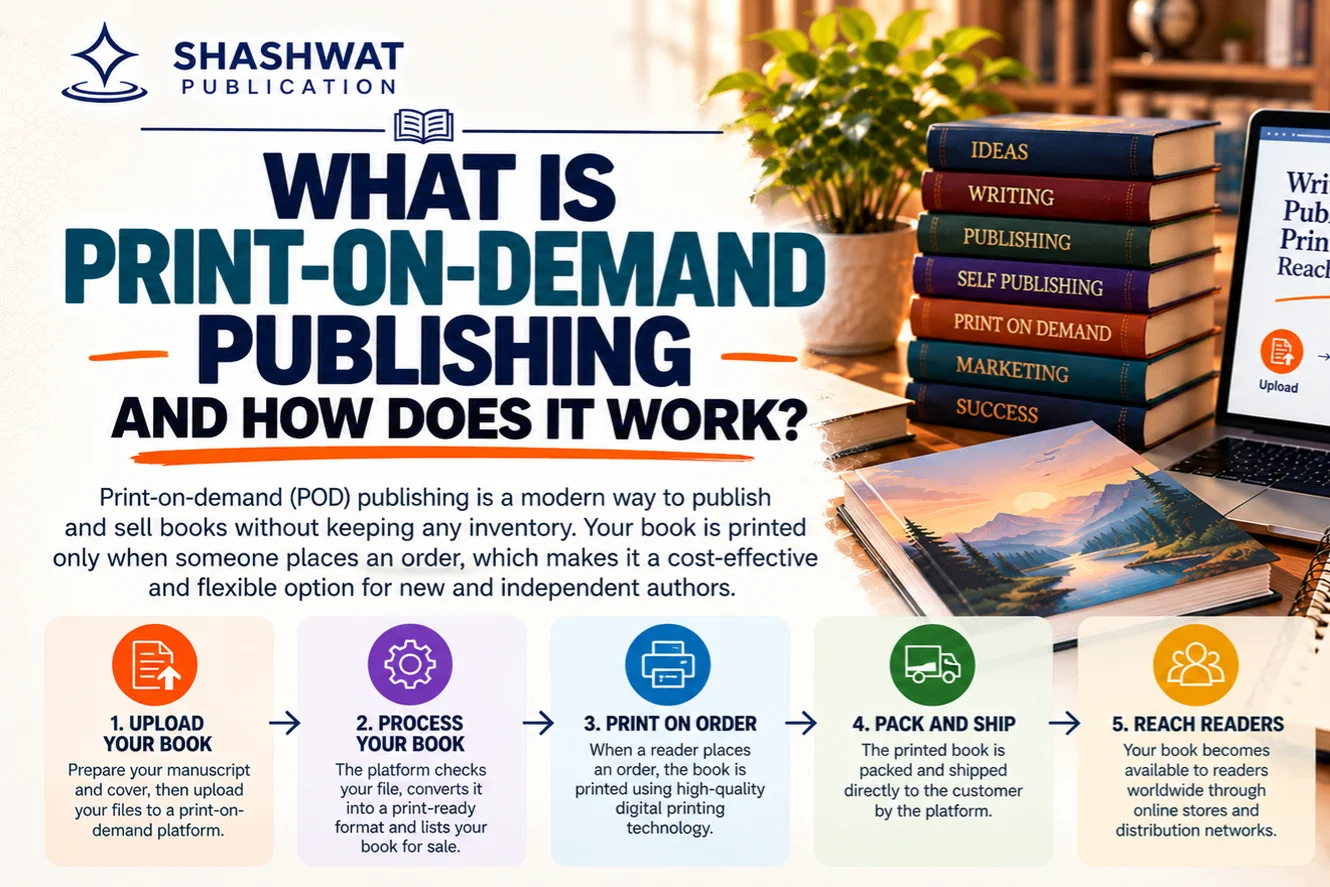
Print-on-demand allows books to be printed according to orders or the selected distribution model.
Lower inventory requirements
Reduced storage concerns
Flexible production
Useful for new authors
Bulk printing involves producing a larger quantity of books at once.
Potentially lower per-unit cost
Suitable for planned events
Useful when demand is predictable
Helpful for larger distribution requirements
The best option depends on your budget, expected demand, storage, and distribution strategy.
Story books can potentially be distributed through:
Online bookstores
Amazon
Ebook platforms
Local bookstores
Libraries
Educational institutions
Author websites
Publisher distribution networks
A strong distribution strategy can help make your book accessible to readers in different locations.
Publishing is not the end of the journey. Marketing plays an important role in helping readers discover your story.
Share:
Story excerpts
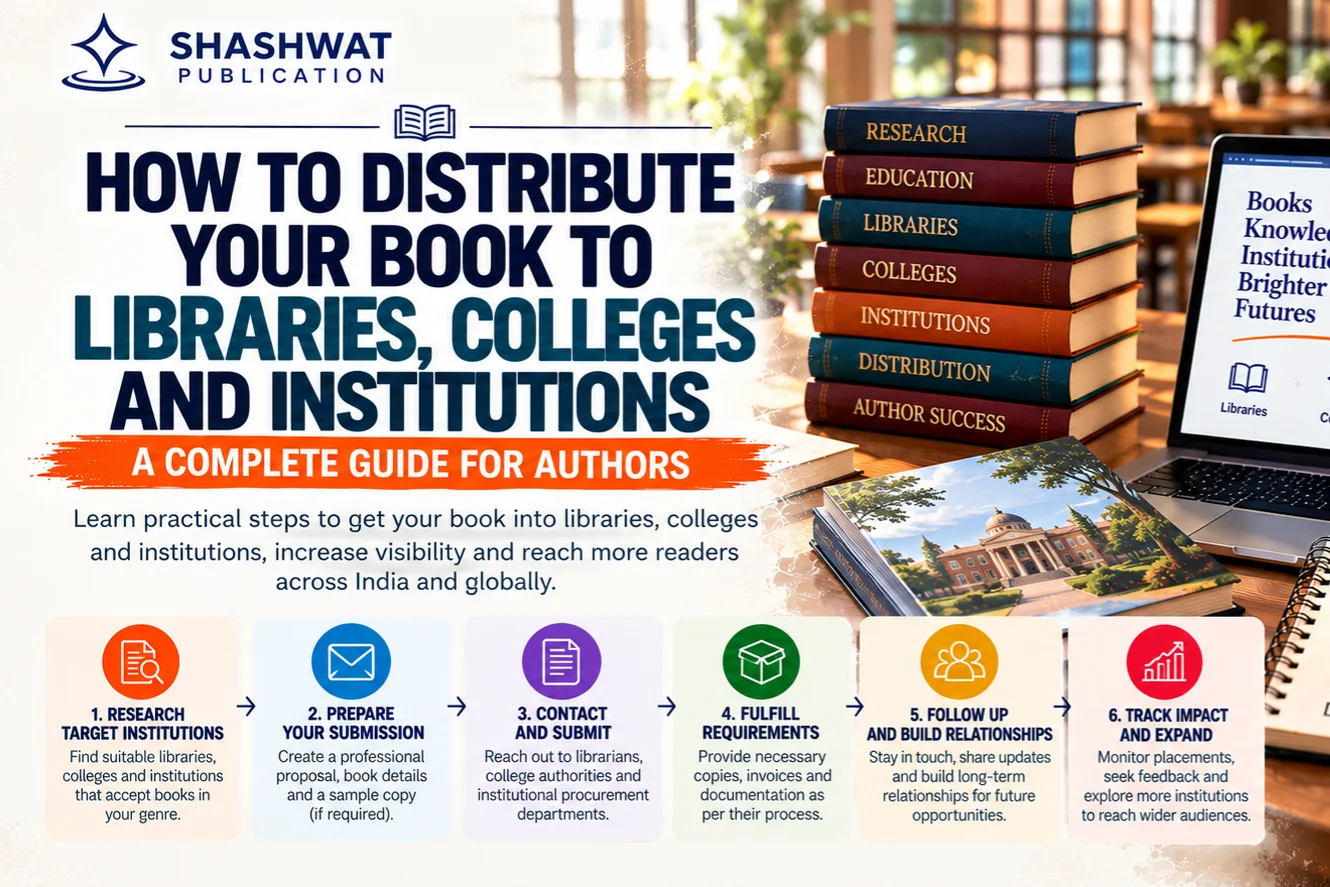
Character introductions
Cover reveals
Author videos
Launch announcements
Reader feedback
An author website can showcase your biography, books, upcoming releases, reviews, and other content.
Genuine reviews can help build credibility and encourage potential readers to explore your book.
Relevant book bloggers, reading communities, reviewers, and content creators can help introduce your story to new audiences.
Email newsletters can help authors maintain a direct relationship with existing readers and announce new books or promotions.
A structured marketing campaign can combine different promotional channels to increase awareness. Authors interested in professional promotion can also explore book marketing services.
For publishing-related content, demonstrating genuine experience, expertise, authority, and trust can make information more useful to readers.
Practical understanding of the publishing workflow can help authors make informed decisions.
Knowledge of editing, formatting, design, ISBN, distribution, and marketing is important when explaining the publishing process.
Publishing professionals and established publishing resources can provide useful industry context.
Transparent information about publishing methods, costs, services, rights, and expectations helps authors make better decisions.
Authors should avoid unrealistic promises and carefully evaluate publishing services before making a commitment.
First-time authors can make several mistakes when they are unfamiliar with the publishing process.
Publishing an unedited manuscript can affect readability and reader satisfaction.
A great concept needs a well-developed structure to keep readers engaged.
Inconsistent fonts, spacing, margins, or chapter layouts can make a book difficult to read.
A story should be positioned according to the readers it is intended for.
Even a good book can struggle to reach readers without consistent promotion.
For a first-time author, managing every stage of publishing independently can be challenging.
Shashwat Publication can provide support across different stages of the publishing journey.
Manuscript editing
Proofreading
Book cover design
Interior formatting
ISBN assistance
Publishing consultation
Printing support
Distribution guidance
Marketing support
Author guidance
Professional assistance can reduce confusion and help authors focus on creating and promoting their books.
The time required to publish a story book can vary significantly depending on the manuscript and publishing method.
A general workflow may look like this:
Writing: Several weeks to several months
Editing: Depends on manuscript length and editing requirements
Design: Depends on cover and interior requirements
Publishing setup: Depends on the selected publishing route
Marketing: Ongoing
Instead of focusing only on a fixed timeline, authors should prioritize manuscript quality and proper preparation at every stage.
Publishing a story book is not just a technical process — it is a creative journey that combines storytelling with professional publishing.
If you have a strong story idea, a properly prepared manuscript, and a clear publishing strategy, you can take your work from an initial concept to a finished book.
The key stages include developing your story, creating an outline, completing the manuscript, editing, designing the cover, formatting the book, understanding ISBN requirements, selecting a publishing method, arranging distribution, and marketing your work.
Modern publishing has created opportunities for first-time writers to reach readers through both physical and digital formats.
With the right preparation and professional support, your story can move beyond your manuscript and become a book that readers can discover and enjoy.
+91 99930 01841 | +91 99936 08164 | ssupport@shashwatpublication.com
2nd Floor, HN 46, Balaji Residency, Seept Road, Bilaspur, C.G 495001

Can’t find what you are looking for? Drop an email to support@shashwatpublication.com
Start by completing your manuscript, editing and proofreading it, preparing professional cover and interior design, understanding ISBN requirements, choosing a publishing method, and setting up distribution and marketing.
The cost depends on factors such as editing, proofreading, cover design, formatting, printing, distribution, and marketing. Self-publishing and professional publishing services can have different costs depending on the services selected.
Yes. Self-publishing allows authors to publish independently or work with professional service providers for editing, design, publishing, distribution, and marketing assistance.
The timeline varies depending on the manuscript, editing requirements, design, formatting, publishing method, and distribution. A book can take several weeks to several months to prepare and publish.
An ISBN is an important identifier for books and specific editions. Whether and how it is required depends on your publication format and distribution route, so authors should check the applicable requirements.
Self-publishing means the author takes greater control of the publishing process instead of relying entirely on a traditional publisher. The author can independently manage or arrange services such as editing, design, publishing, distribution, and marketing.
Yes. Marketing helps readers discover your book. Social media, author websites, reviews, email marketing, collaborations, and online promotions can all contribute to book visibility.
Yes. Children's books can be self-published. However, authors should pay particular attention to age-appropriate storytelling, illustrations, typography, formatting, and overall visual presentation.
Shashwat Publication provides publishing-related support that can include editing, proofreading, book design, formatting, ISBN assistance, publishing, distribution, and marketing guidance, depending on the selected services.
Both options have advantages. Traditional publishing can provide established publisher support, while self-publishing generally offers greater control and flexibility. Your choice should depend on your goals, budget, timeline, and desired level of involvement.


Dear Team, I would like to express my sincere appreciation for the seamless book publishing experience. As this is my debut publication, I will certainly be recommending Shashwat Publication.
I write this to express my deep sense of appreciation and gratitude to Shashwat Publication for publishing my first book in a time bound and professional manner. The first call from Ms Swati and her subsequent interactions, followed by dealing with ... Read More
Very Good publications
Publishing Experience with Shashwat Publications My experience with Shashwat Publications has been a fulfilling and memorable journey. From the initial stages of manuscript preparation to the final publication of my book, The Dental Prescriber: Fro... Read More
About Publishing Experience with Us As a first-time author with Shashwat Publications, I look forward to a professional, collaborative, and enriching publishing experience. I appreciate the opportunity to present this work to students and educators... Read More
I am satisfied with the work, it was not too long time taken by the publishers. Also the price is appropriate for publishing the book. I recommend other authors too, must have experience once with this publication. Worthy experiences. Thanks :)

B-75, Krishna Vihar, Koni, Bilaspur, C.G 495001
support@shashwatpublication.com
Timing
Important Pages
All rights are reserved by Aadeera Corporation Private Limited
Terms & Condition Apply