12-09-2026
Becoming an author in India is a dream shared by thousands of passionate writers, storytellers, poets, educators, and professionals. Whether you want to publish fiction, non-fiction, academic books, poetry, or self-help guides, the Indian publishing industry offers more opportunities today than ever before.
With the rise of self-publishing, digital publishing platforms, and traditional publishing houses, aspiring authors can now transform their ideas into published books with the right strategy, dedication, and publishing support.
If you are wondering how to become an author in India, this detailed guide will help you understand every stage—from developing your writing skills and creating a manuscript to publishing, building your author brand, and marketing your book successfully.
For many first-time writers, trusted publishing support from experienced companies like Shashwat Publication can make the journey smoother and more professional.
India has a large and diverse reading audience, with growing interest in books across English, Hindi, and regional languages. The rise of online book sales, self-publishing, digital reading, and educational content has also created new opportunities for aspiring authors.
Creative freedom
Personal branding and authority building
Income opportunities through book sales
Speaking, coaching, and consulting opportunities
Long-term professional recognition
Opportunity to inspire and educate readers
Whether you write in English, Hindi, or a regional language, identifying the right audience and publishing strategy can help you build your career as an author.
Before starting your journey, it is important to identify what type of author you want to become.
Fiction authors include:
Novelists
Short story writers
Romance writers
Thriller writers
Fantasy writers
Non-fiction authors may include:
Self-help writers
Business authors
Academic writers
Motivational authors
Memoir writers
Educational authors can create:
Textbooks
Exam preparation books
Skill development books
Educational guides
Digital authors may focus on:
eBooks
Kindle publishing
Digital guides
Online educational content
Your chosen niche can influence your writing style, publishing route, target audience, and marketing strategy.
The foundation of becoming an author starts with developing strong writing skills. While natural creativity is valuable, consistent practice and learning are equally important.
Reading books across different genres can improve:
Vocabulary
Storytelling
Structure
Writing style
Understanding of readers and markets
Read books similar to the type of content you want to create. Study how successful authors structure chapters, develop ideas, and maintain reader engagement.
Consistency builds writing discipline. You can practice by writing:
Blogs
Journals
Short stories
Articles
Social media captions
Poetry
Even writing a small amount every day can help you develop a consistent writing habit.
Participate in:
Writing workshops
Author groups
Literary forums
Online writing platforms
Writing communities
These communities can provide feedback, motivation, and opportunities to connect with other writers.
Self-editing is an important skill for every author. Before sending a manuscript to a publisher or professional editor, review your writing for grammar, structure, repetition, clarity, and consistency.
Your book topic should ideally align with your expertise, interests, audience demand, and market opportunities.
Consider:
Audience demand
Your expertise
Market trends
Personal passion
Competition
Long-term relevance
Some popular categories include:
Self-help
Spirituality
Competitive exams
Business
Personal finance
Fiction
Children's books
Poetry
Academic books
Motivational books
Research books available on Amazon, Flipkart, Google, and other online platforms to understand what readers are searching for and purchasing.
However, market demand should not be your only consideration. Choose a topic that you can write about with genuine knowledge, interest, and originality.
Professional authors often use structured systems instead of relying entirely on inspiration.
A clear writing plan can help you complete your manuscript faster and maintain consistency.
Your outline can include:
Chapter names
Main concepts
Story arcs
Research sections
Key arguments
Supporting examples
For example:
1,000 words per day
Weekly chapter goals
Monthly manuscript targets
Editing deadlines
Choose a schedule that is realistic for your lifestyle and commitments.
Depending on your book, you may need:
Statistics
References
Examples
Interviews
Research papers
Case studies
A disciplined writing and research plan can make manuscript completion more manageable.
This is where your idea begins to become a complete book.
The first draft does not need to be perfect. Your initial objective should be to complete the manuscript and then improve it through revision and editing.
Avoid excessive editing while writing your first draft. Constantly rewriting earlier chapters can slow down your progress.
Complete the manuscript first and then begin a structured revision process.
Depending on your genre, use:
Clear language
Emotional connection
Practical examples
Strong storytelling
Relevant information
Engaging chapter openings
Your writing should be appropriate for the people you want to reach.
Many aspiring authors never finish their books because they constantly try to make every sentence perfect.
Remember that a first draft is a starting point. Editing and rewriting come later.
Even experienced authors can benefit from professional editing.
Editing helps improve the quality, structure, clarity, and readability of your manuscript.
Developmental editing focuses on:
Structure
Flow
Chapter organization
Argument clarity
Story development
Copy editing focuses on:
Grammar
Sentence structure
Punctuation
Tone consistency
Language accuracy
Proofreading is the final correction stage and focuses on:
Typographical errors
Formatting issues
Spelling mistakes
Minor inconsistencies
Professional publishing companies such as Shashwat Publication can provide editing and publishing-related support to authors preparing their manuscripts.
Choosing the right publishing model is one of the biggest decisions for a new author.
Traditional publishing involves submitting your manuscript to an established publishing house for consideration.
Professional credibility
Distribution support
Professional editorial teams
Established market reach
Publisher-led production
Highly competitive
Longer timelines
Less author control
Manuscript rejection is possible
Royalty structures may vary
Traditional publishing can be suitable for authors who are comfortable with a competitive submission and selection process.
Self-publishing gives authors greater control over the publishing process.
Greater creative control
Flexible publishing timeline
Greater control over pricing
Direct involvement in marketing
Faster market entry
Marketing responsibility
Initial investment may be required
Author involvement is higher
Professional services may need to be arranged
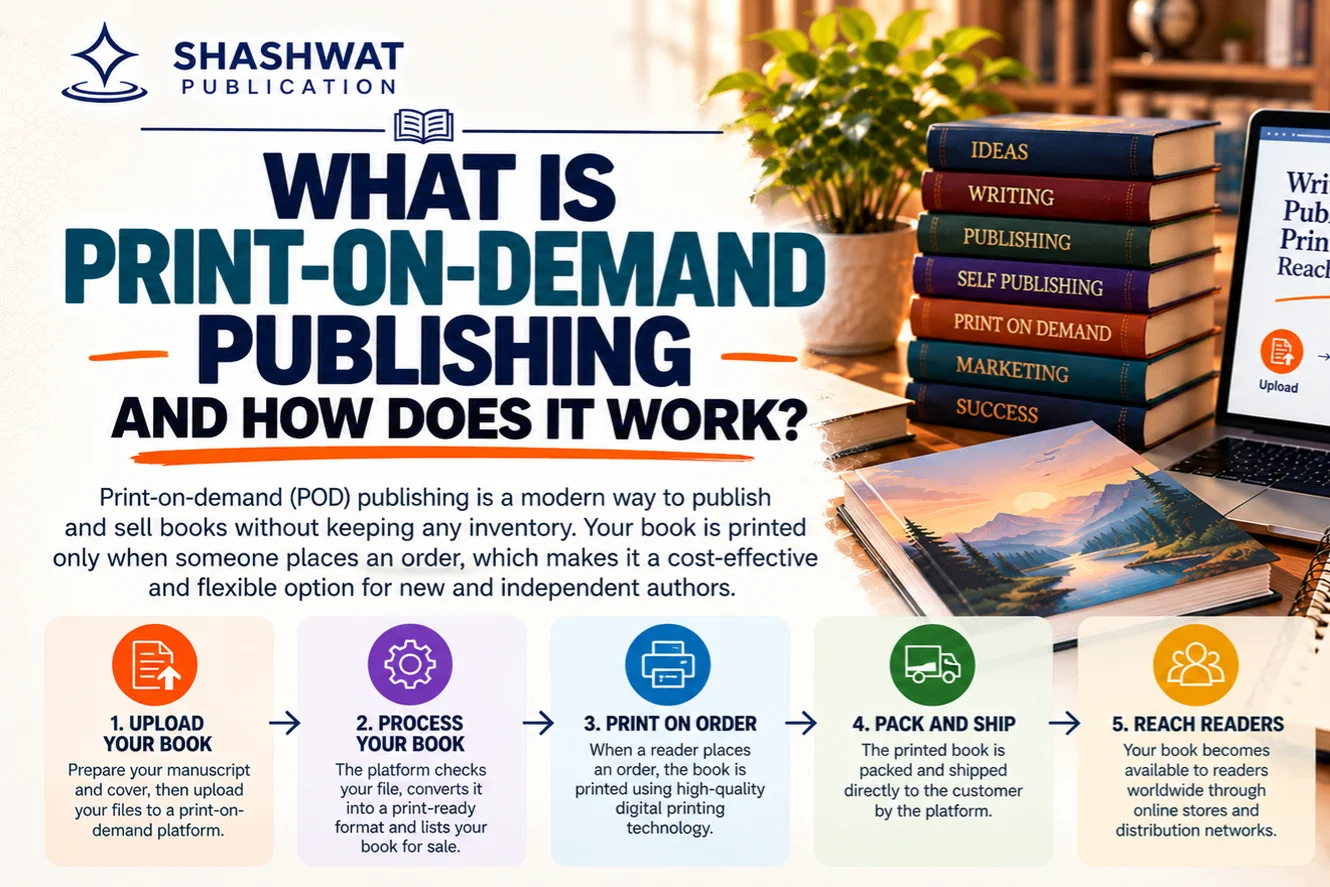
Many new authors choose self-publishing with professional support to simplify editing, design, ISBN, printing, distribution, and other publishing requirements.
You can explore self-publishing services in India to understand how professional publishing support can work.
Your cover is an important part of your book's presentation, especially when selling through online platforms.
Match the book's genre
Have readable typography
Use professional graphics
Look attractive on mobile screens
Clearly communicate the book's theme
Maintain a professional appearance
Readers often see the cover before they read the description, so professional cover design can influence their first impression.
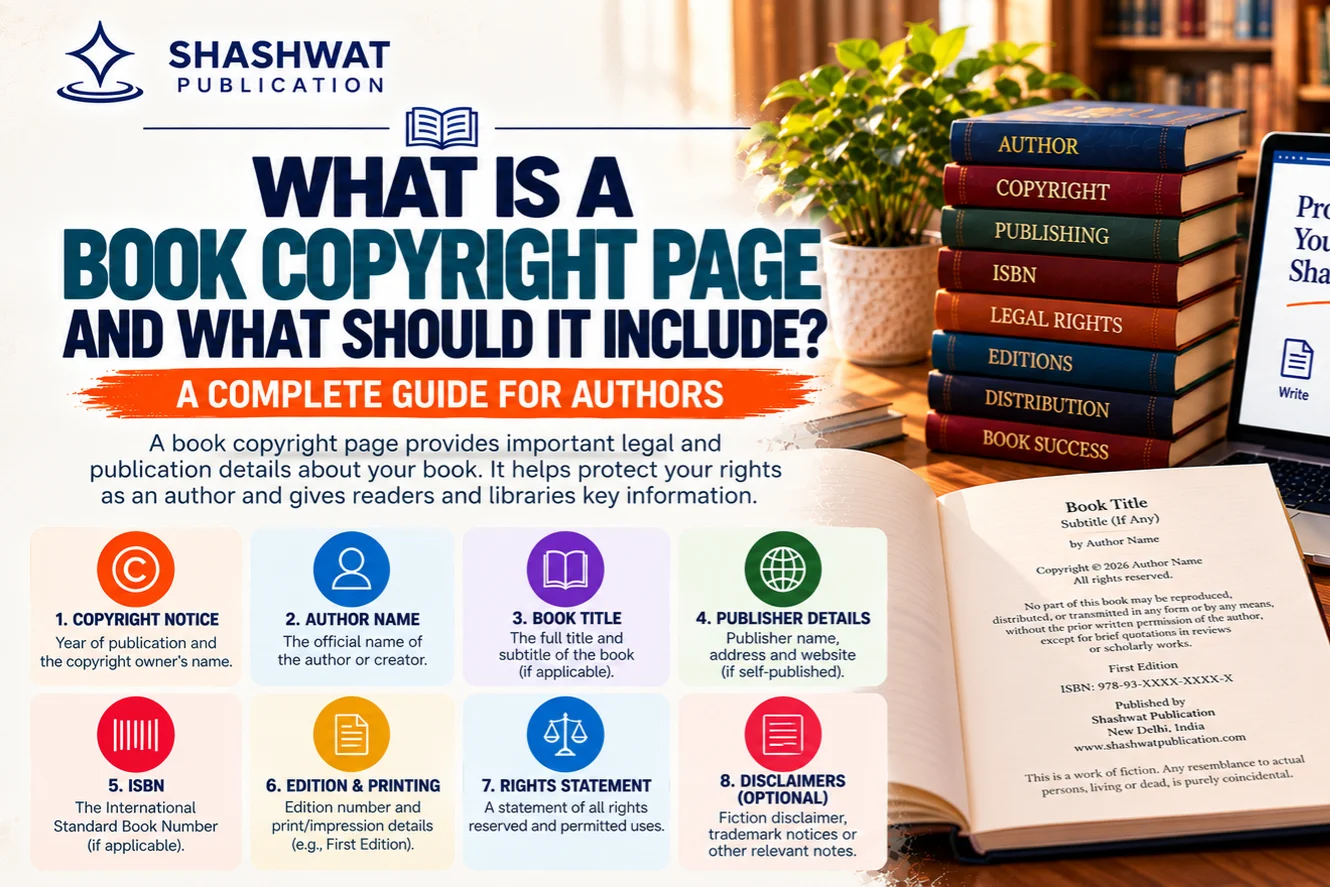
ISBN stands for International Standard Book Number and helps identify a specific book publication.
An ISBN can support:
Sales channels
Library cataloging
Online listings
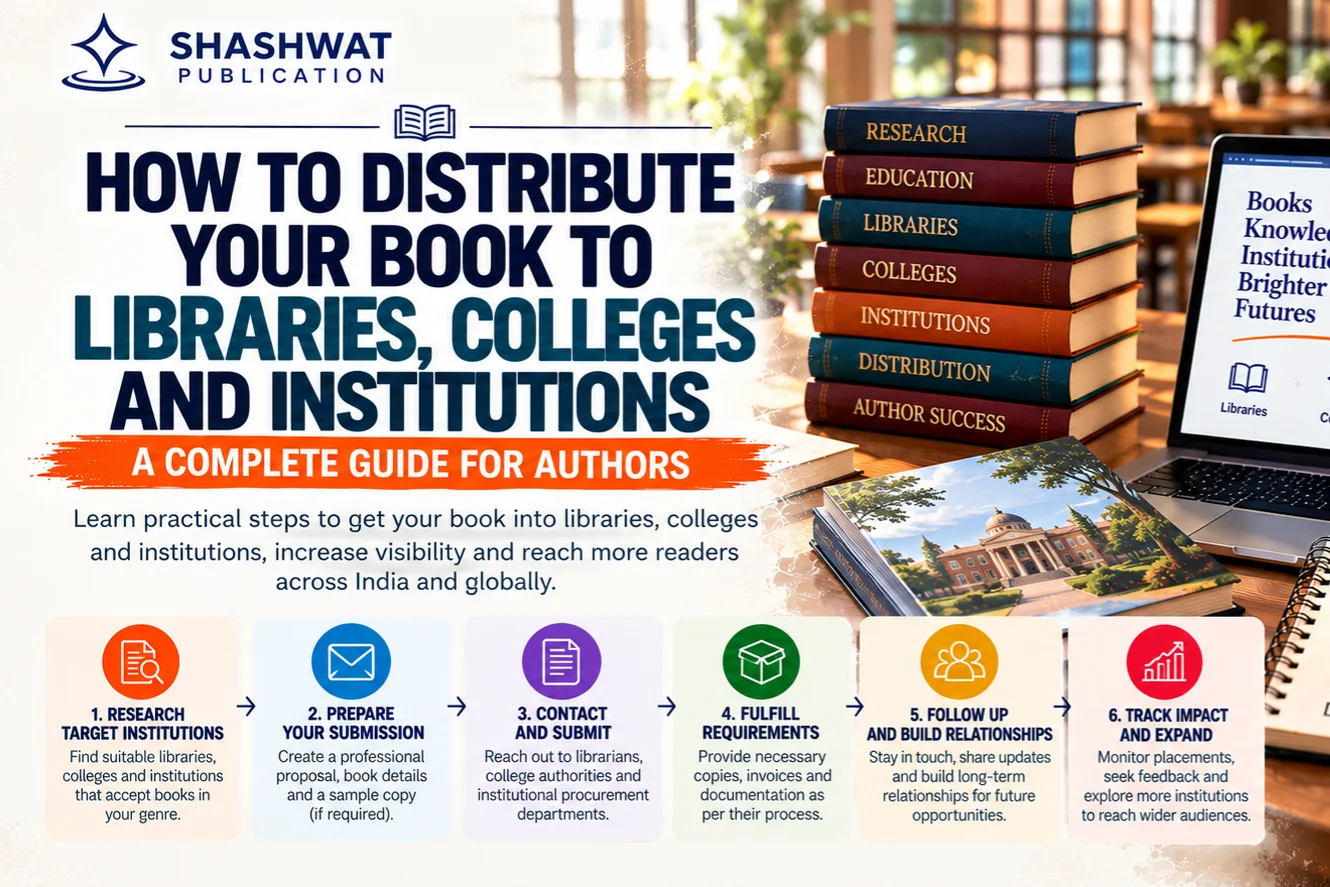
Distribution
Book identification
Copyright relates to the protection of your original creative work.
Before publishing, authors should understand:
Copyright ownership
Publishing rights
Distribution rights
Licensing terms
Royalty arrangements
The exact requirements can depend on your publishing model and agreement.
Once your manuscript, editing, cover, formatting, and publishing formalities are complete, you can move to publication.
Authors may consider:
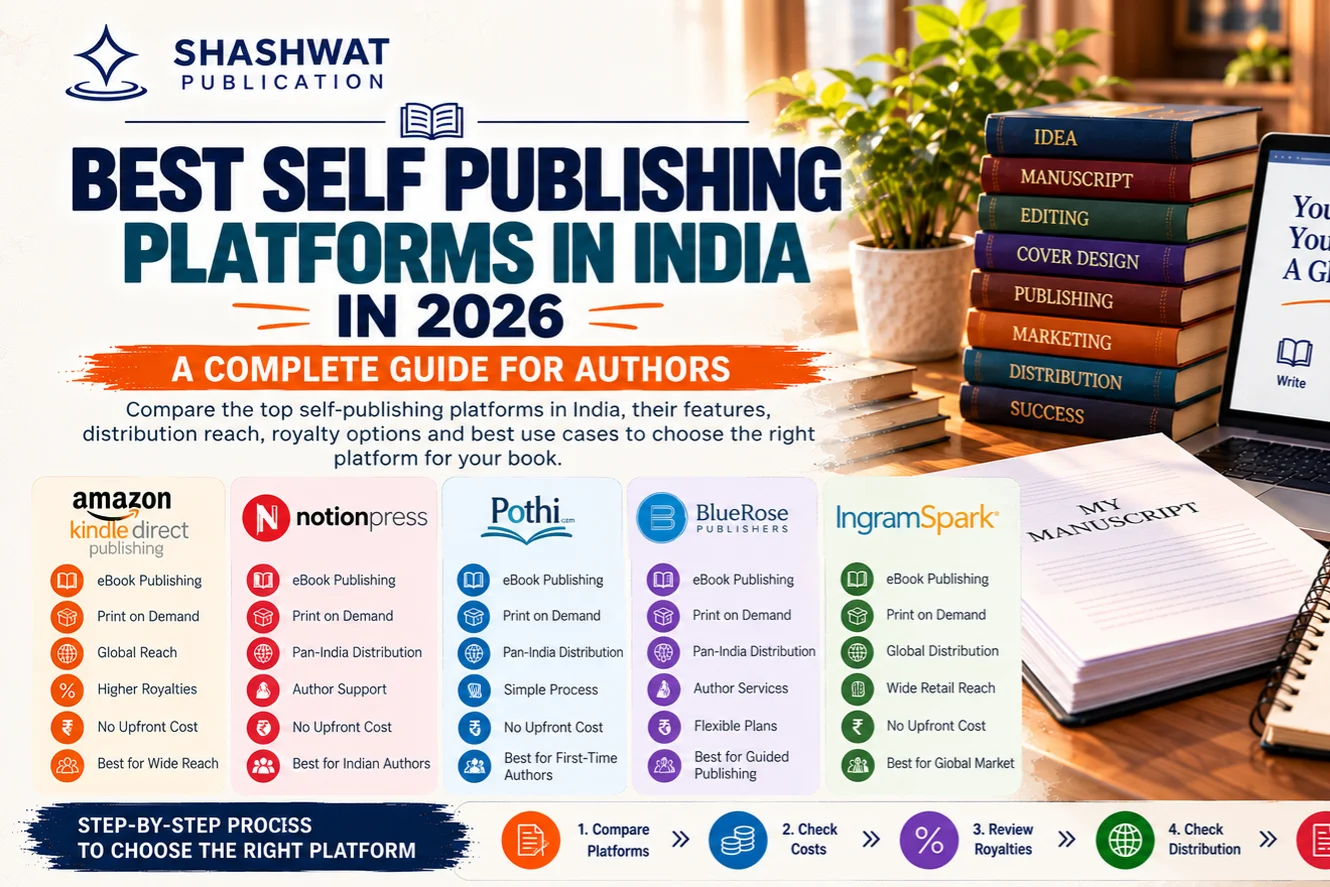
Amazon Kindle Direct Publishing
Google Books
Online publishing platforms
Traditional publishers
Self-publishing companies
Hybrid or supported publishing services
When choosing a publishing route, consider:
Budget
Publishing goals
Distribution needs
Author control
Marketing support
Expected audience
Professional publishing companies can help authors manage multiple stages of the process.
Writing a book is only half the journey. Building an author identity can help readers recognize and connect with your work.
Your website can include:
Author bio
Book details
Blog
Contact page
Published works
Media or interview information
An author website also gives you a platform that you control rather than depending entirely on third-party platforms.
Depending on your target audience, you can use:
YouTube
Share content related to your books, writing journey, expertise, and interests.
Content marketing can include:
Guest blogs
Podcasts
Reels
Interviews
Articles
Author insights
Consistent content can help build authority and introduce your work to potential readers.
Publishing your book does not automatically guarantee sales. Marketing is essential for generating awareness and attracting the right audience.
Before your book is published, you can use:
Cover reveals
Email lists
Advance reviews
Social media announcements
Author introductions
During the launch, consider:
Introductory discounts
Influencer outreach
PR campaigns
Social media promotions
Online launch events
Continue promoting the book after launch through:
SEO blogs
Workshops
Public speaking
Interviews
Paid advertising
Social media content
Reader communities
Professional publishing companies may also provide marketing and promotional support depending on the publishing arrangement.
First-time authors often encounter several challenges during the writing and publishing process.
Writer's block can make it difficult to maintain consistency. Creating a writing schedule and breaking the project into smaller tasks can help.
Many new authors understand writing but are unfamiliar with editing, formatting, ISBN, printing, distribution, and publishing agreements.
Publishing without proper editing can negatively affect the quality and credibility of a book.
Even a good book needs visibility. Without a marketing strategy, it can be difficult to reach potential readers.
Authors should establish a realistic budget and understand exactly which services they are paying for.
Traditional publishing can be competitive. Rejection does not necessarily mean that your writing has no value. Authors can continue improving their manuscript or explore other publishing routes.
For first-time writers seeking professional publishing support, Shashwat Publication provides publishing-related assistance across different stages of the author journey.
Services can include:
Manuscript evaluation
Editing services
Book design
ISBN support
Publishing consultation
Printing
Distribution
Marketing support
Authors can explore the book publishing services available to understand how professional support can simplify the publishing process.
For writers who are specifically interested in self-publishing, self-publishing services can also be explored.
Becoming an author in India is no longer limited to established literary circles. Today, aspiring writers with dedication, knowledge, creativity, and the right publishing strategy can turn their ideas into published books.
The key is to:
If you are serious about transforming your manuscript into a professionally published book, working with an experienced publishing partner can make the process easier and more structured.
+91 99930 01841 | +91 99936 08164 | ssupport@shashwatpublication.com
2nd Floor, HN 46, Balaji Residency, Seept Road, Bilaspur, C.G 495001

Can’t find what you are looking for? Drop an email to support@shashwatpublication.com
To become an author in India, develop your writing skills, choose a suitable book idea, complete your manuscript, edit and proofread it, select a publishing route, and promote your published work. You can choose traditional publishing, self-publishing, or professional publishing support depending on your goals.
No, a formal degree is not mandatory to become an author. Strong writing skills, creativity, subject knowledge, consistency, and the ability to connect with readers are important factors. The requirements can vary depending on the type of book you want to write.
There is no single publishing method that is best for every author. Traditional publishing can provide publisher-led support and established distribution, while self-publishing provides greater control and flexibility. Your choice should depend on your goals, budget, timeline, and desired level of involvement.
Self-publishing costs vary depending on services such as manuscript editing, proofreading, cover design, formatting, printing, ISBN support, distribution, and marketing. Authors should compare publishing packages carefully and understand what services are included before making a decision.
Some self-publishing platforms allow authors to publish without paying an upfront publishing fee, although other costs may still apply depending on the format and services required. Professional editing, design, printing, marketing, and other services can involve additional costs.
The timeline depends on your writing speed, manuscript length, editing requirements, publishing route, design, printing, and distribution. For some authors, the process may take several months, while others may take a year or longer to complete their manuscript and publish.
Self-publishing can be a good option for many first-time authors because it generally offers greater accessibility and control. However, authors should be prepared to participate in decisions related to editing, design, pricing, marketing, and promotion.
Authors can potentially earn through book royalties and direct book sales. Depending on their expertise and audience, authors may also generate income through speaking engagements, workshops, consulting, courses, and other related activities.
Common mistakes include publishing without professional editing, choosing a weak cover, ignoring formatting, failing to understand publishing agreements, not identifying a target audience, and publishing without a marketing strategy.
Yes. Shashwat Publication provides publishing-related support for aspiring authors, including manuscript evaluation, editing, book design, ISBN support, publishing consultation, and marketing-related assistance. Authors can explore its book publishing services for more information.


Dear Team, I would like to express my sincere appreciation for the seamless book publishing experience. As this is my debut publication, I will certainly be recommending Shashwat Publication.
I write this to express my deep sense of appreciation and gratitude to Shashwat Publication for publishing my first book in a time bound and professional manner. The first call from Ms Swati and her subsequent interactions, followed by dealing with ... Read More
Very Good publications
Publishing Experience with Shashwat Publications My experience with Shashwat Publications has been a fulfilling and memorable journey. From the initial stages of manuscript preparation to the final publication of my book, The Dental Prescriber: Fro... Read More
About Publishing Experience with Us As a first-time author with Shashwat Publications, I look forward to a professional, collaborative, and enriching publishing experience. I appreciate the opportunity to present this work to students and educators... Read More
I am satisfied with the work, it was not too long time taken by the publishers. Also the price is appropriate for publishing the book. I recommend other authors too, must have experience once with this publication. Worthy experiences. Thanks :)

B-75, Krishna Vihar, Koni, Bilaspur, C.G 495001
support@shashwatpublication.com
Timing
Important Pages
All rights are reserved by Aadeera Corporation Private Limited
Terms & Condition Apply