ISBN : 978-93-7462-378-7
Category : Academic
Catalogue : Medical And Nursing
ID : SB22362
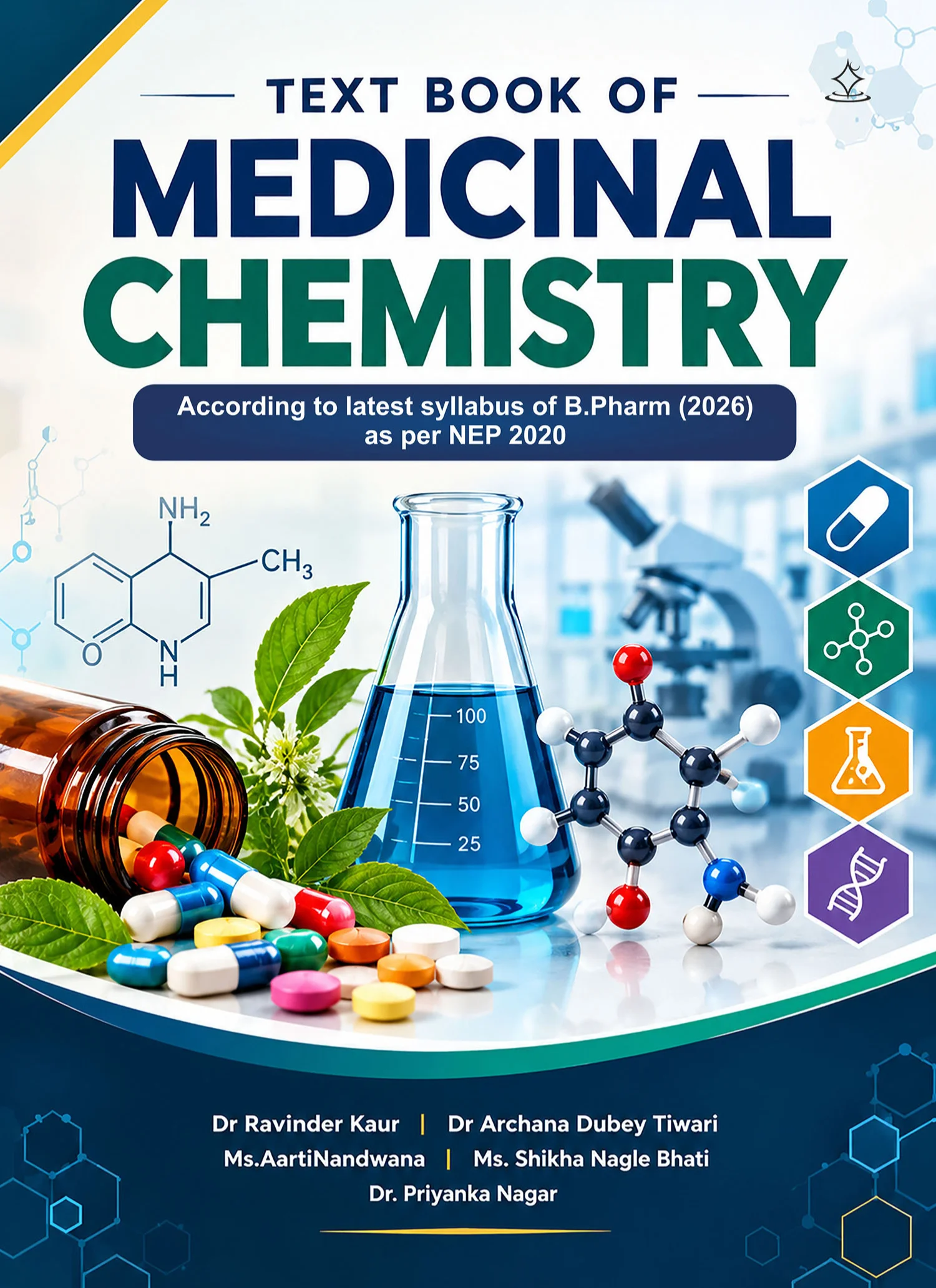
TEXT BOOK OF MEDICINAL CHEMISTRY
According to latest syllabus of B. Pharm- NEP-2020 of Pharmacy Council of India
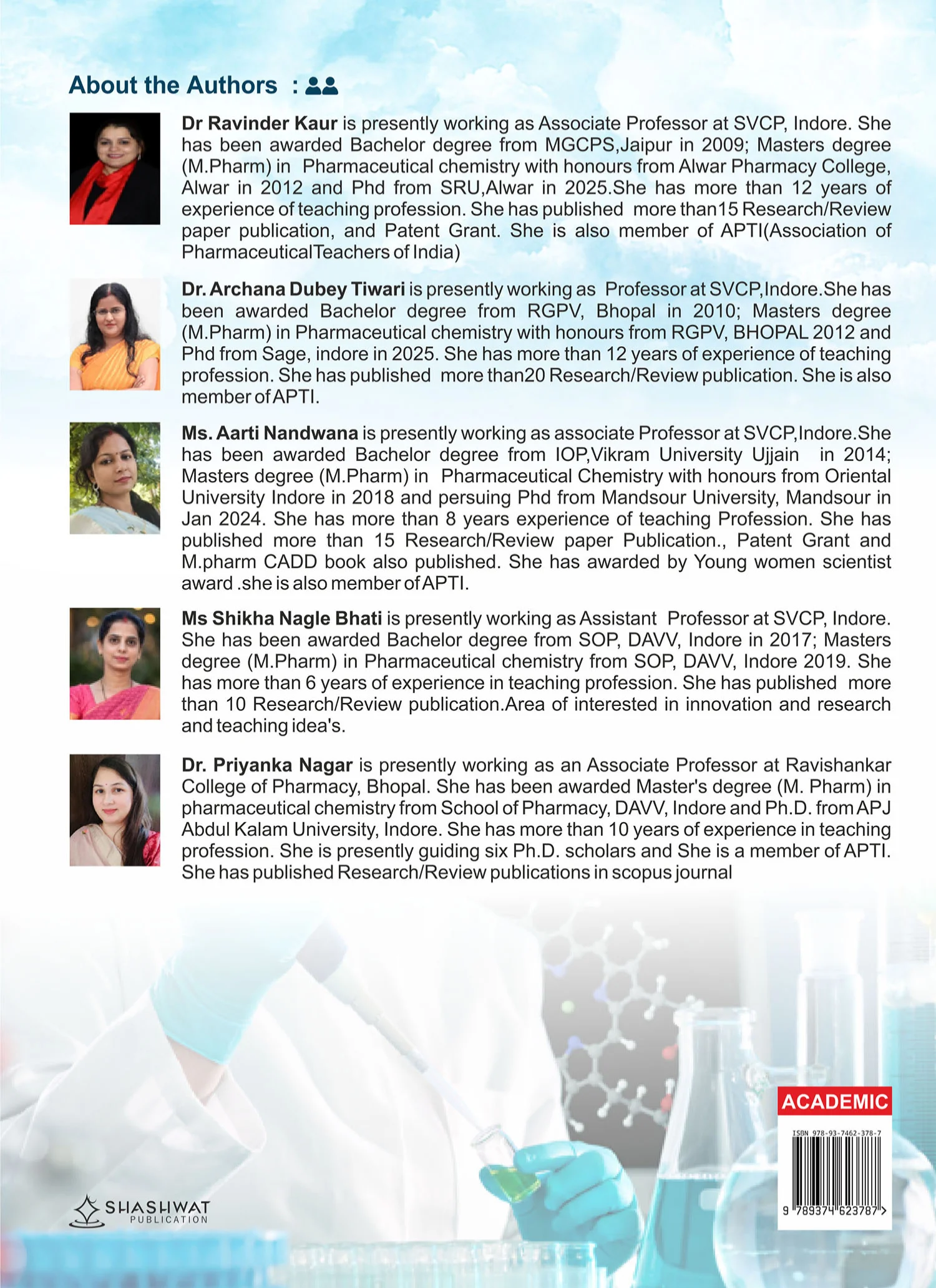
Dr Ravinder Kaur, Dr Archana Dubey Tiwari, Ms.Aarti Nandwana , Ms. Shikha Nagle Bhati, Dr. Priyanka Nagar
Paperback
919.00
e Book
699.00
Pages : 255
Language : English
About Book
The Text Book of Medicinal Chemistry is designed to provide students with a comprehensive understanding of the chemical principles involved in drug action, development, and therapeutic application. The book begins with the history, development, and scope of medicinal chemistry and introduces the fundamental physicochemical properties that influence biological activity. Important concepts such as ionization, solubility, partition coefficient, hydrogen bonding, chelation, boosterism, and protein binding are explained in a clear and systematic manner. The principles of drug metabolism are presented through Phase I and Phase II biotransformation reactions. Emphasis is also placed on the application of physicochemical and metabolic concepts in understanding drug action and rational drug design. A major section of the book is devoted to drugs acting on the autonomic nervous system, including adrenergic, antiadrenergic, cholinergic, and anticholinergic agents. The chemical classification, structures, therapeutic uses, structure–activity relationships, and synthesis of important drugs are discussed in detail. Special attention is given to the SAR of β-adrenergic blockers and cholinergic blocking agents. Local anaesthetics such as benzocaine, procaine, tetracaine, lignocaine, and related compounds are covered along with their medicinal chemistry and SAR. The cardiovascular section includes antianginal, antihypertensive, antiarrhythmic, and drugs used in congestive heart failure. Important agents such as calcium-channel blockers, ACE inhibitors, cardiac glycosides, and antiarrhythmic drugs are presented with their chemical and therapeutic significance. The book further discusses drugs acting on blood and the renal system, including antihyperlipidemic agents, anticoagulants, antiplatelet drugs, and different classes of diuretics. Representative drugs such as fenofibrate, warfarin, clopidogrel, acetazolamide, hydrochlorothiazide, furosemide, spironolactone, and mannitol are included for better understanding. The structure–activity relationship of thiazide diuretics is also explained to strengthen the concept of chemical modification and pharmacological activity. A separate section is devoted to autacoids and related therapeutic agents. Antihistamines acting on H₁ and H₂ receptors are discussed along with clinically important proton-pump inhibitors. The medicinal chemistry of non-steroidal anti-inflammatory drugs and antipyretics is presented through important classes such as salicylates, fenamates, arylacetic acid derivatives, propionic acid derivatives, oxicams, and selective COX-2 inhibitors. Representative drugs including aspirin, diclofenac, ibuprofen, naproxen, piroxicam, celecoxib, etoricoxib, and paracetamol are described with relevant chemical features. Structure–activity relationships of major NSAID classes are incorporated to help students understand how structural modifications influence pharmacological activity. The book gives special importance to the synthesis of selected medicinal compounds with their chemical structures and reaction pathways. Compounds such as phenylephrine, salbutamol, tolazoline, propranolol, carbachol, ipratropium, dicyclomine, procaine, and dibucaine are included for synthetic study. It also covers the synthesis of isosorbide dinitrate, methyldopate, disopyramide, fenofibrate, acetazolamide, and furosemide. The synthetic chemistry of diphenhydramine, promethazine, cimetidine, mefenamic acid, and ibuprofen is also presented to develop practical understanding of medicinal compound preparation. Chemical structures, classifications, SAR concepts, therapeutic uses, and synthetic pathways are integrated throughout the book to provide a balanced approach to medicinal chemistry. The content has been organized in a logical and student-friendly sequence to support both conceptual learning and examination preparation.
Customer Reviews