support@shashwatpublication.com +91 7000072109 B-75, Krishna Vihar, Koni, Bilaspur, C.G 495001
Mon - Sat 10:00 AM to 5:00 PM
Book Image
Book Image
Book Image

ISBN : 978-93-7462-427-2

Category : Academic

Catalogue : Medical And Nursing

ID : SB22392

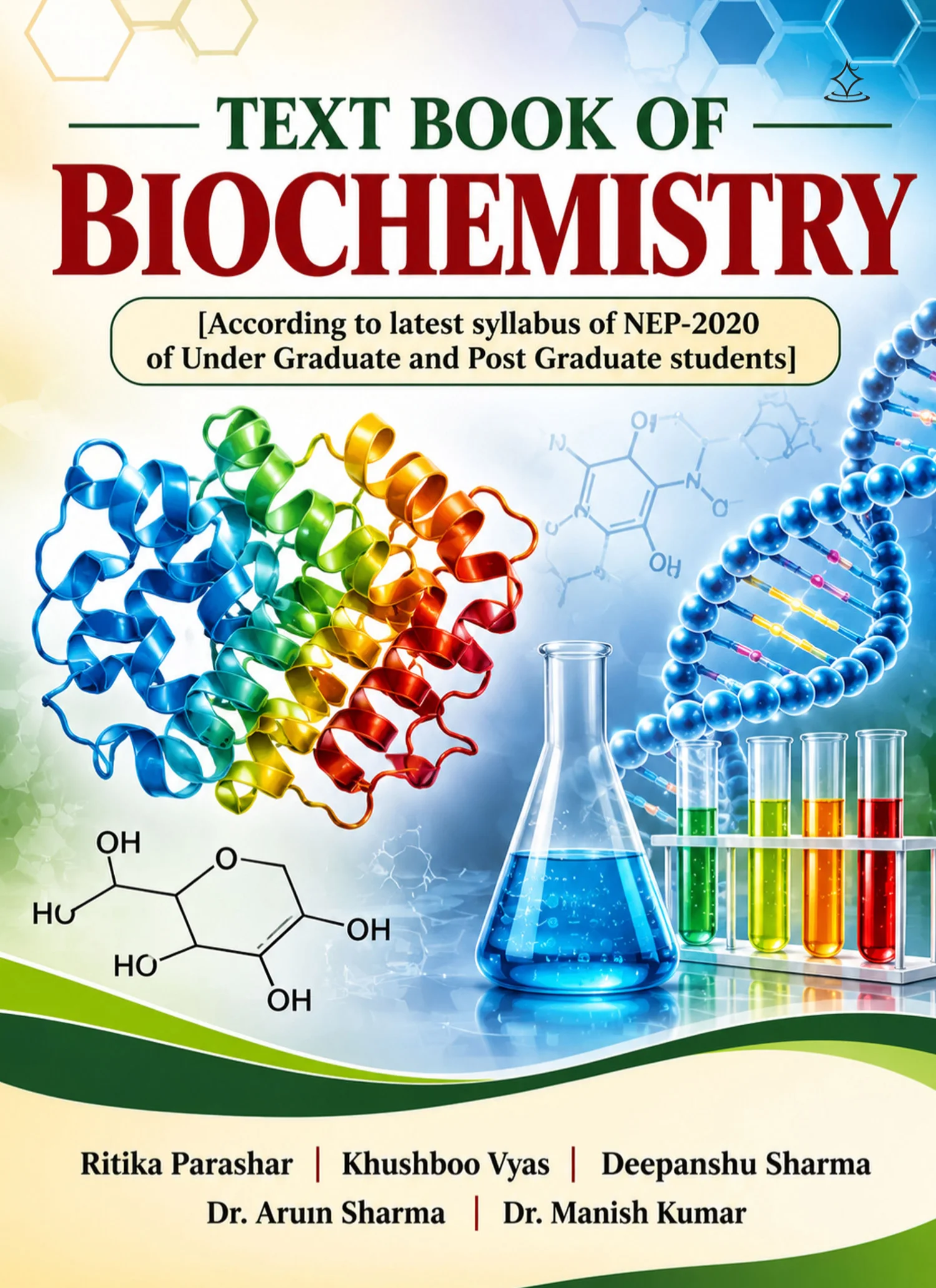
TEXT BOOK OF BIOCHEMISTRY

According to latest syllabus of NEP-2020 of Under Graduate and Post Graduate students

Ritika Parashar, Khushboo Vyas, Deepanshu Sharma, Dr. Arun Sharma, Dr. Manish Kumar

Paperback

999.00

e Book

699.00

Pages : 278

Language : English

PAPERBACK Price : 999.00

About Book

The Text Book of Biochemistry is a comprehensive and systematically organized academic resource designed to provide students with a fundamental understanding of biochemical principles and their applications in pharmaceutical and medical sciences. The book presents essential concepts of biochemistry in a simple, clear, and scientifically accurate manner, making it suitable for undergraduate students of pharmacy, medical, and allied health sciences. It provides a balanced integration of theoretical knowledge, biochemical mechanisms, metabolic pathways, and clinical applications. The book begins with an introduction to enzymology, covering the properties, classification, nomenclature, and biological significance of enzymes and coenzymes. It explains enzyme kinetics, Michaelis–Menten and Lineweaver–Burk plots, enzyme inhibition, and regulatory mechanisms. Special emphasis is placed on the therapeutic and diagnostic applications of enzymes and isoenzymes. The clinical chemistry section introduces important laboratory investigations, including liver function tests, renal function tests, and enzyme-linked immunosorbent assay (ELISA). It also describes the digestion and absorption of nutrients, the biochemical roles of vitamins and minerals, and disorders associated with nutritional deficiencies. The subsequent sections provide a detailed understanding of biomolecules, bioenergetics, carbohydrate metabolism, and biological oxidation. Important metabolic pathways, including glycolysis, the citric acid cycle, gluconeogenesis, the hexose monophosphate shunt, and glycogen metabolism, are explained with their physiological significance. The book also highlights the regulation of blood glucose, metabolic changes during fasting and starvation, and biochemical abnormalities associated with diabetes mellitus. The electron transport chain, oxidative phosphorylation, ATP synthesis, and mitochondrial dysfunction are discussed to establish a clear understanding of cellular energy production. The section on lipid metabolism explains the classification, biological functions, digestion, and metabolic significance of lipids and lipoproteins. It covers fatty acid oxidation, fatty acid synthesis, ketone body metabolism, cholesterol metabolism, and the clinical importance of lipid-profile parameters. Common metabolic disorders, including hyperlipidaemia, hypercholesterolaemia, atherosclerosis, fatty liver disease, and obesity, are discussed to connect biochemical processes with human health and disease. The book further explores amino acid and protein metabolism, including transamination, deamination, decarboxylation, and the urea cycle. It explains the metabolic fate of amino acids and important inherited metabolic disorders such as phenylketonuria, alkaptonuria, albinism, and tyrosinaemia. The biochemical significance of neurotransmitters and hormones derived from amino acids is also presented. Additionally, heme metabolism and the biochemical basis of jaundice are explained to strengthen the understanding of clinically relevant metabolic processes. The final section focuses on nucleic acid metabolism, molecular biology, and genetic information transfer. It describes purine and pyrimidine nucleotide biosynthesis, nucleotide degradation, hyperuricaemia, and gout. Fundamental concepts of genome organization, DNA replication, transcription, translation, and the genetic code are presented systematically. The book also introduces the regulation of protein synthesis, inhibitors of transcription and translation, DNA-repair mechanisms, and associated genetic disorders


About Author

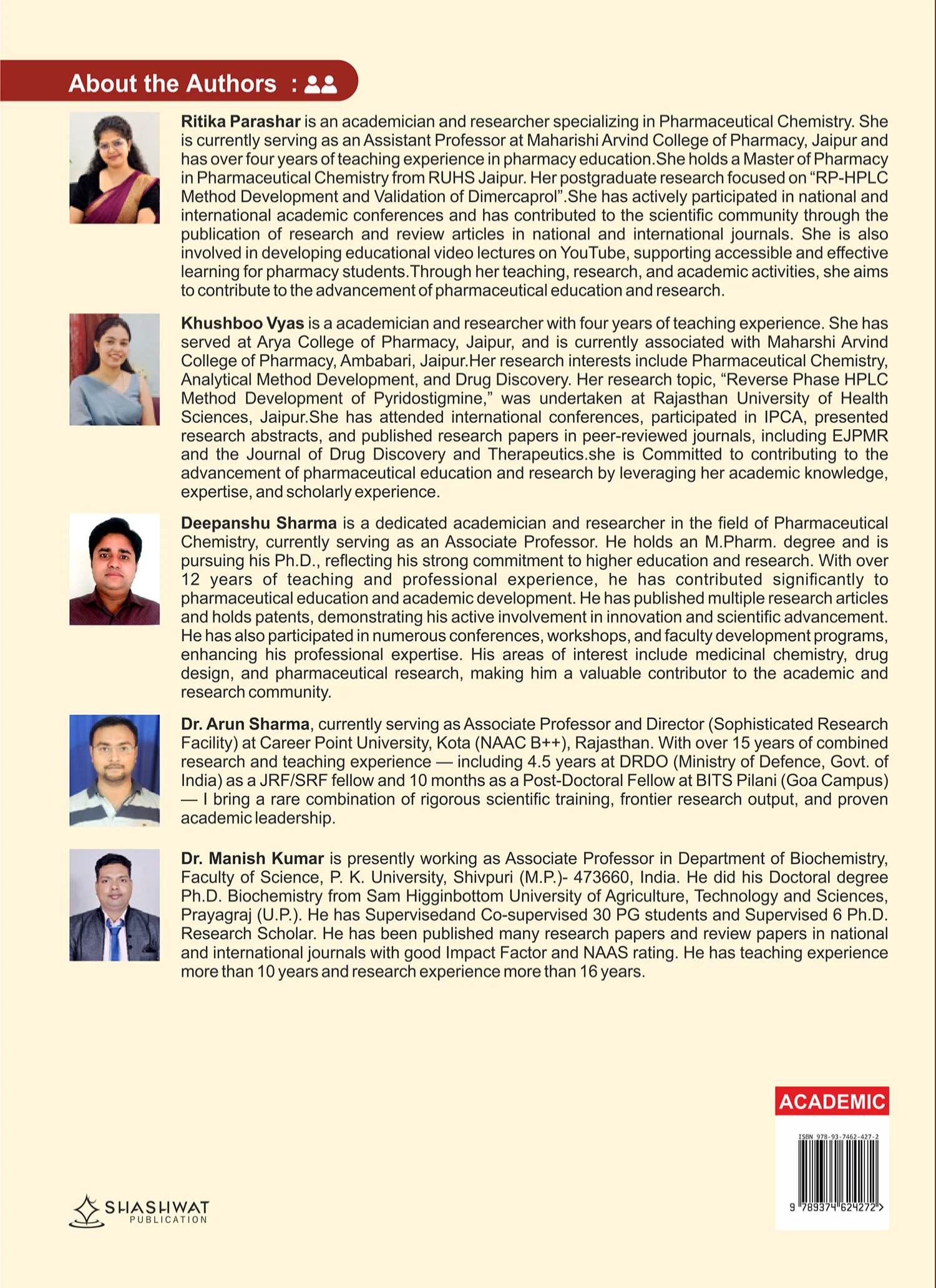
Ritika Parashar is an academician and researcher specializing in Pharmaceutical Chemistry. She is currently serving as an Assistant Professor at Maharishi Arvind College of Pharmacy, Jaipur and has over four years of teaching experience in pharmacy education. She holds a Master of Pharmacy in Pharmaceutical Chemistry from RUHS Jaipur. Her postgraduate research focused on “RP-HPLC Method Development and Validation of Dimercaprol”. She has actively participated in national and international academic conferences and has contributed to the scientific community through the publication of research and review articles in national and international journals. She is also involved in developing educational video lectures on YouTube, supporting accessible and effective learning for pharmacy students. Through her teaching, research, and academic activities, she aims to contribute to the advancement of pharmaceutical education and research. Khushboo Vyas is a academician and researcher with four years of teaching experience. She has served at Arya College of Pharmacy, Jaipur, and is currently associated with Maharshi Arvind College of Pharmacy, Ambabari, Jaipur. Her research interests include Pharmaceutical Chemistry, Analytical Method Development, and Drug Discovery. Her research topic, “Reverse Phase HPLC Method Development of Pyridostigmine,” was undertaken at Rajasthan University of Health Sciences, Jaipur. She has attended international conferences, participated in IPCA, presented research abstracts, and published research papers in peer-reviewed journals, including EJPMR and the Journal of Drug Discovery and Therapeutics. she is Committed to contributing to the advancement of pharmaceutical education and research by leveraging her academic knowledge, expertise, and scholarly experience. Deepanshu Sharma is a dedicated academician and researcher in the field of Pharmaceutical Chemistry, currently serving as an Associate Professor. He holds an M.Pharm. degree and is pursuing his Ph.D., reflecting his strong commitment to higher education and research. With over 12 years of teaching and professional experience, he has contributed significantly to pharmaceutical education and academic development. He has published multiple research articles and holds patents, demonstrating his active involvement in innovation and scientific advancement. He has also participated in numerous conferences, workshops, and faculty development programs, enhancing his professional expertise. His areas of interest include medicinal chemistry, drug design, and pharmaceutical research, making him a valuable contributor to the academic and research community. Dr. Arun Sharma, currently serving as Associate Professor and Director (Sophisticated Research Facility) at Career Point University, Kota (NAAC B++), Rajasthan. With over 15 years of combined research and teaching experience — including 4.5 years at DRDO (Ministry of Defence, Govt. of India) as a JRF/SRF fellow and 10 months as a Post-Doctoral Fellow at BITS Pilani (Goa Campus) — I bring a rare combination of rigorous scientific training, frontier research output, and proven academic leadership. Dr. Manish Kumar is presently working as Associate Professor in Department of Biochemistry, Faculty of Science, P. K. University, Shivpuri (M.P.)- 473660, India. He did his Doctoral degree Ph.D. Biochemistry from Sam Higginbottom University of Agriculture, Technology and Sciences, Prayagraj (U.P.). He has Supervised and Co-supervised 30 PG students and Supervised 6 Ph.D. Research Scholar. He has been published many research papers and review papers in national and international journals with good Impact Factor and NAAS rating. He has teaching experience more than 10 years and research experience more than 16 years.

Customer Reviews


Book from same catalogue

Books From Same Author