ISBN : 978-93-7462-441-8
Category : Academic
Catalogue : Medical And Nursing
ID : SB22405
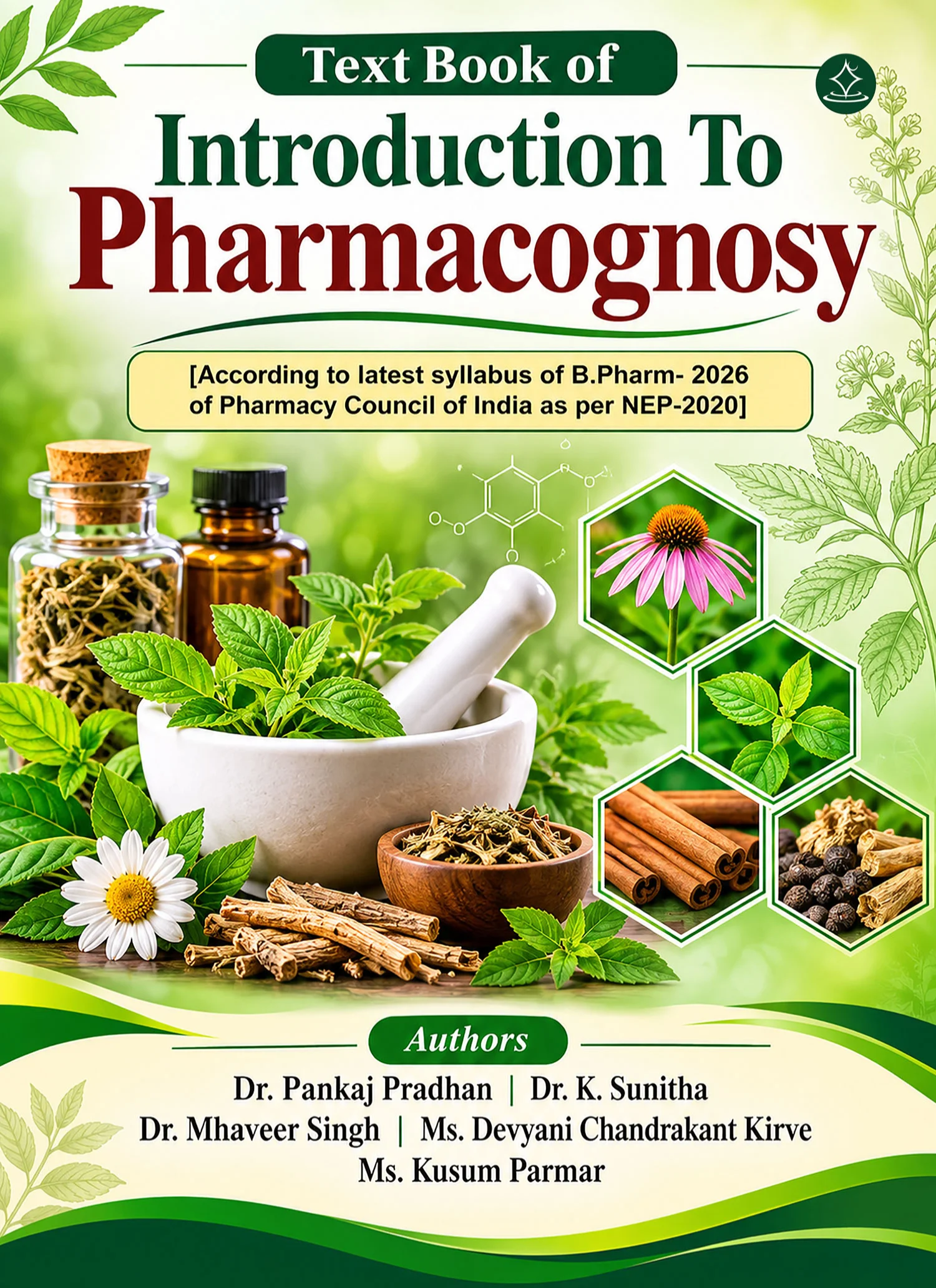
TEXT BOOK OF INTRODUCTION TO PHARMACOGNOSY
According to latest syllabus of B. Pharm- 2026 of Pharmacy Council of India as per NEP-2020
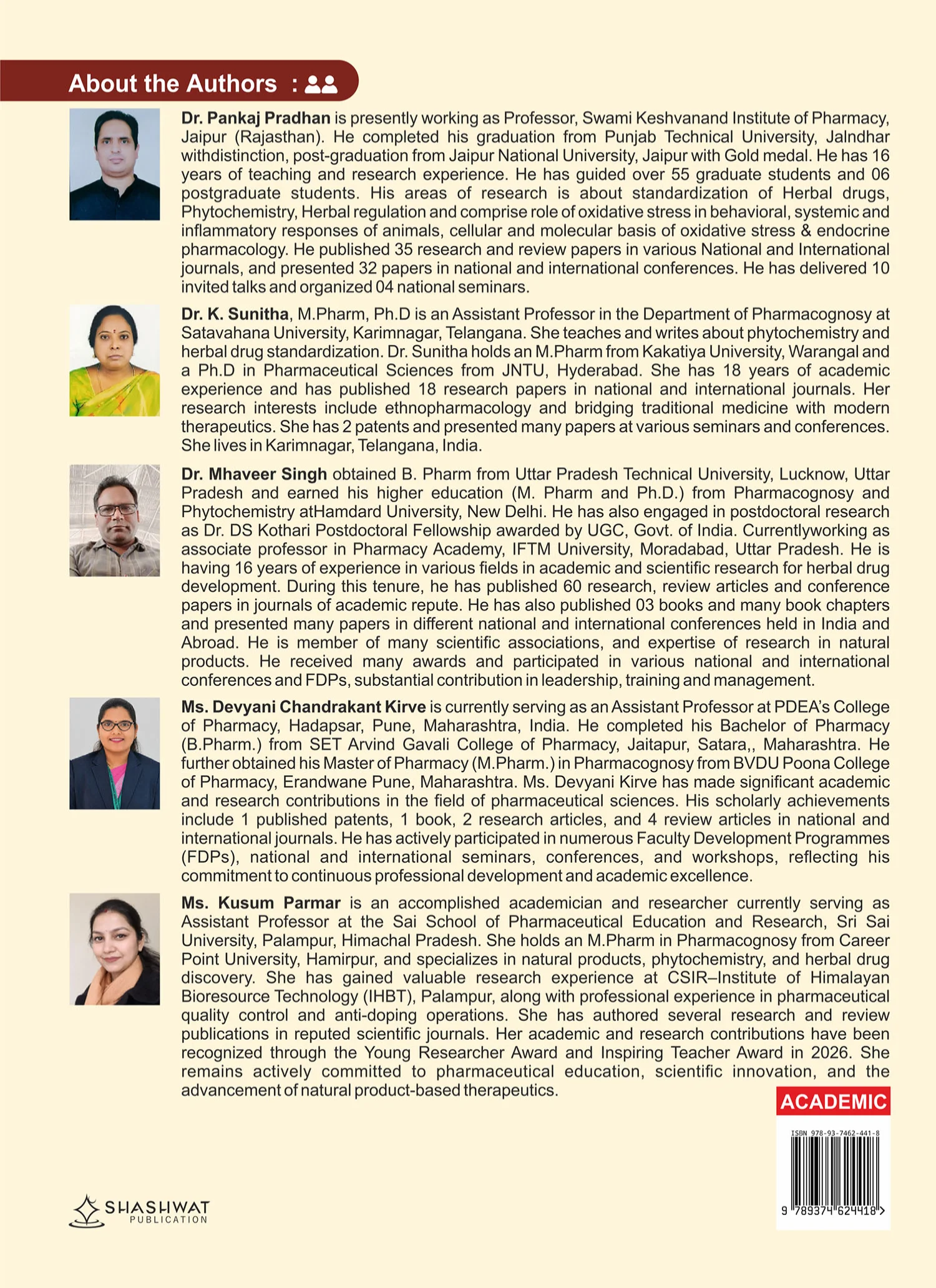
Dr. Pankaj Pradhan, Dr. K. Sunitha, Dr. Mhaveer Singh, Ms. Devyani Chandrakant Kirve, Ms. Kusum Parmar
Paperback
919.00
e Book
699.00
Pages : 299
Language : English
About Book
The Text Book of Introduction to Pharmacognosy is a comprehensive and systematically organized academic resource designed to provide fundamental and advanced knowledge of drugs obtained from natural sources. The book introduces the definition, historical development, present status, scope, and significance of pharmacognosy in modern pharmaceutical sciences. It provides a detailed understanding of natural drug sources, including plants, animals, microorganisms, marine organisms, and minerals, while highlighting the role of plant tissue culture in the production of medicinal compounds. Significant historical milestones in drug discovery, including morphine, quinine, aspirin, penicillin, taxol, and artemisinin, are discussed to demonstrate the contribution of natural products to modern medicine. The book explains the importance of national and international herbal pharmacopoeias in maintaining pharmaceutical quality standards and presents various systems of crude drug classification along with their merits, limitations, and practical applications. Special emphasis is placed on medicinal plant cultivation, Good Agricultural and Collection Practices (GACP), and environmental factors influencing the growth, productivity, and medicinal value of plants. Essential aspects of collection, drying, processing, preservation, and storage of crude drugs are systematically described. Advanced cultivation techniques, including the application of plant hormones, polyploidy, mutation, and hybridization, are explored with particular reference to their role in enhancing secondary metabolite production. The book also addresses medicinal plant conservation through in-situ and ex-situ approaches, introduces the principles of eco-pharmacognosy, and emphasizes the conservation of threatened medicinal plants such as Kutki and Chirata. Quality control and standardization of herbal drugs are discussed with reference to World Health Organization guidelines, while the causes, types, consequences, and detection methods of crude drug adulteration are comprehensively explained. Detailed coverage is provided on organoleptic, microscopic, physical, chemical, and biological evaluation methods, along with important physicochemical parameters used to establish the identity, purity, quality, and stability of natural drugs. Modern analytical approaches, including DNA barcoding and advanced instrumental techniques, are introduced for the authentication and standardization of herbal medicines. The book further explains the classification, properties, and pharmaceutical significance of primary and secondary plant metabolites, including carbohydrates, proteins, lipids, alkaloids, glycosides, flavonoids, tannins, terpenoids, volatile oils, and resins. Traditional healthcare systems, including Ayurveda, Unani, Siddha, Homoeopathy, and Traditional Chinese Medicine, are introduced to emphasize the scientific and therapeutic relevance of medicinal plants in traditional and contemporary healthcare practices. A dedicated section provides comprehensive information on important phytotherapeutic agents, their biological sources, chemical constituents, and medicinal applications, covering plants possessing adaptogenic, immunomodulatory, hepatoprotective, cardiovascular, antidiabetic, anti-inflammatory, analgesic, antimicrobial, antiviral, gastrointestinal, dermatological, and respiratory therapeutic properties. Written in a clear, systematic, and student-friendly manner, this textbook serves as a valuable educational and reference resource for undergraduate pharmacy students, academicians, researchers, and pharmaceutical professionals, offering a strong foundation in pharmacognosy, herbal medicine, natural product chemistry, quality control, and modern pharmaceutical drug discovery.
Customer Reviews