ISBN : 978-93-7462-452-4
Category : Academic
Catalogue : Medical And Nursing
ID : SB22415
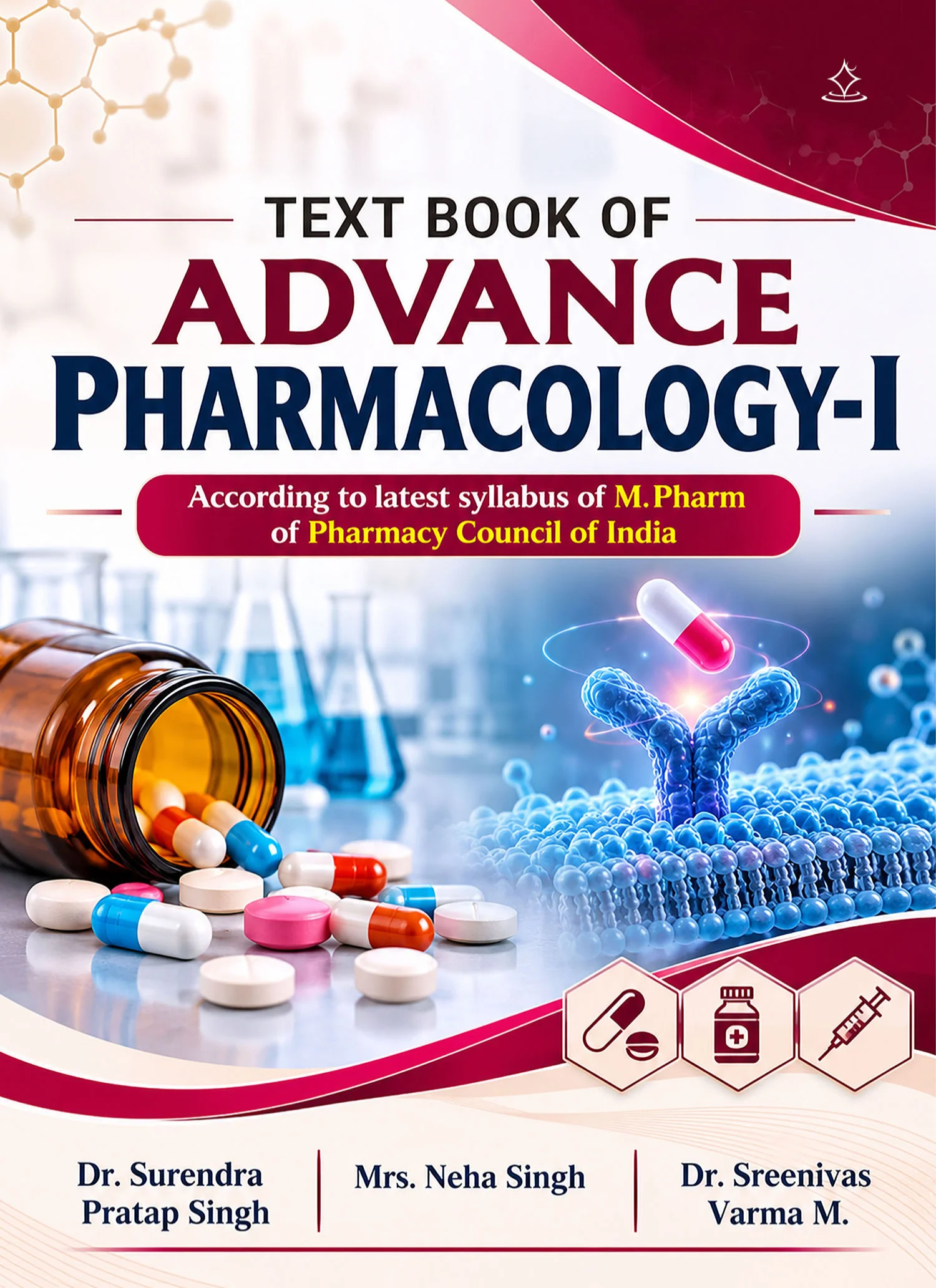
TEXT BOOK OF ADVANCE PHARMACOLOGY-I
According to latest syllabus of M.Pharm of Pharmacy Council of India
Dr. Surendra Pratap Singh, Mrs. Neha Singh, Dr. Sreenivas Varma M.
Paperback
919.00
e Book
699.00
Pages : 226
Language : English
About Book
Text Book of Advance Pharmacology-I is a comprehensive academic resource designed to provide advanced knowledge of pharmacological principles, drug mechanisms, and their therapeutic applications. The book has been systematically organized to meet the academic and research requirements of postgraduate pharmacy students, research scholars, academicians, and pharmaceutical professionals. It begins with a detailed explanation of pharmacokinetics, including drug absorption, distribution, metabolism, and elimination. Special emphasis is given to linear and non-linear compartment models and the significance of plasma protein binding in drug disposition. The fundamental principles of pharmacodynamics are discussed with particular reference to drug–receptor interactions and concentration–response relationships. The book explains the structural and functional classification of receptors and the quantitative evaluation of drug–receptor interactions. A comprehensive discussion of neurotransmission highlights the mechanisms involved in neuronal communication and synaptic transmission. The roles of important neurotransmitters, including adrenaline, acetylcholine, histamine, serotonin, dopamine, GABA, glutamate, and glycine, are systematically described. Non-adrenergic non-cholinergic transmission and co-transmission are also discussed to provide a deeper understanding of neuropharmacological mechanisms. The section on systemic pharmacology provides detailed information on the pathophysiology, classification, mechanisms of action, therapeutic uses, and toxicological aspects of drugs affecting the autonomic nervous system. It covers parasympathomimetic, parasympatholytic, sympathomimetic, and sympatholytic agents, along with drugs acting at the neuromuscular junction. Central nervous system pharmacology is extensively discussed, including general and local anaesthetics, sedatives, hypnotics, anxiolytics, antidepressants, antipsychotics, and antiepileptic drugs. Special attention is given to the pharmacological management of mania, neurodegenerative disorders, and pain using narcotic and non-narcotic analgesics. The cardiovascular pharmacology section explains the therapeutic importance of diuretics, antihypertensive drugs, anti-ischaemic agents, antiarrhythmics, and drugs used in heart failure. It also provides comprehensive information on lipid-lowering drugs and their role in the management of hyperlipidaemia. The pharmacological applications of haematinics, coagulants, anticoagulants, fibrinolytics, and antiplatelet drugs are presented in a systematic manner. The book further explores autacoid pharmacology, highlighting the physiological and pathological roles of histamine, serotonin, kinins, prostaglandins, and endogenous opioid peptides. The mechanisms and therapeutic applications of serotonin receptor antagonists and other autacoid-related drugs are also explained. Throughout the book, emphasis is placed on understanding the relationship between disease mechanisms, drug actions, therapeutic benefits, and adverse effects. Important concepts are presented in clear and accessible language to support effective learning and conceptual understanding. The content integrates fundamental pharmacological principles with advanced therapeutic concepts and contemporary developments in drug research. It aims to strengthen analytical thinking, scientific understanding, and the application of pharmacological knowledge in clinical and experimental settings. The book also serves as a useful reference for competitive examinations, postgraduate studies, academic teaching, and pharmaceutical research. By covering major areas of advanced pharmacology in a structured format, it provides a strong foundation for understanding drug action and rational therapeutics. Text Book of Advance Pharmacology-I is intended to be a valuable academic companion for students, educators, and researchers seeking to enhance their knowledge and professional competence in modern pharmacological sciences.
Customer Reviews