ISBN : 978-93-7462-162-2
Category : Academic
Catalogue : Mathematics and Science
ID : SB22231
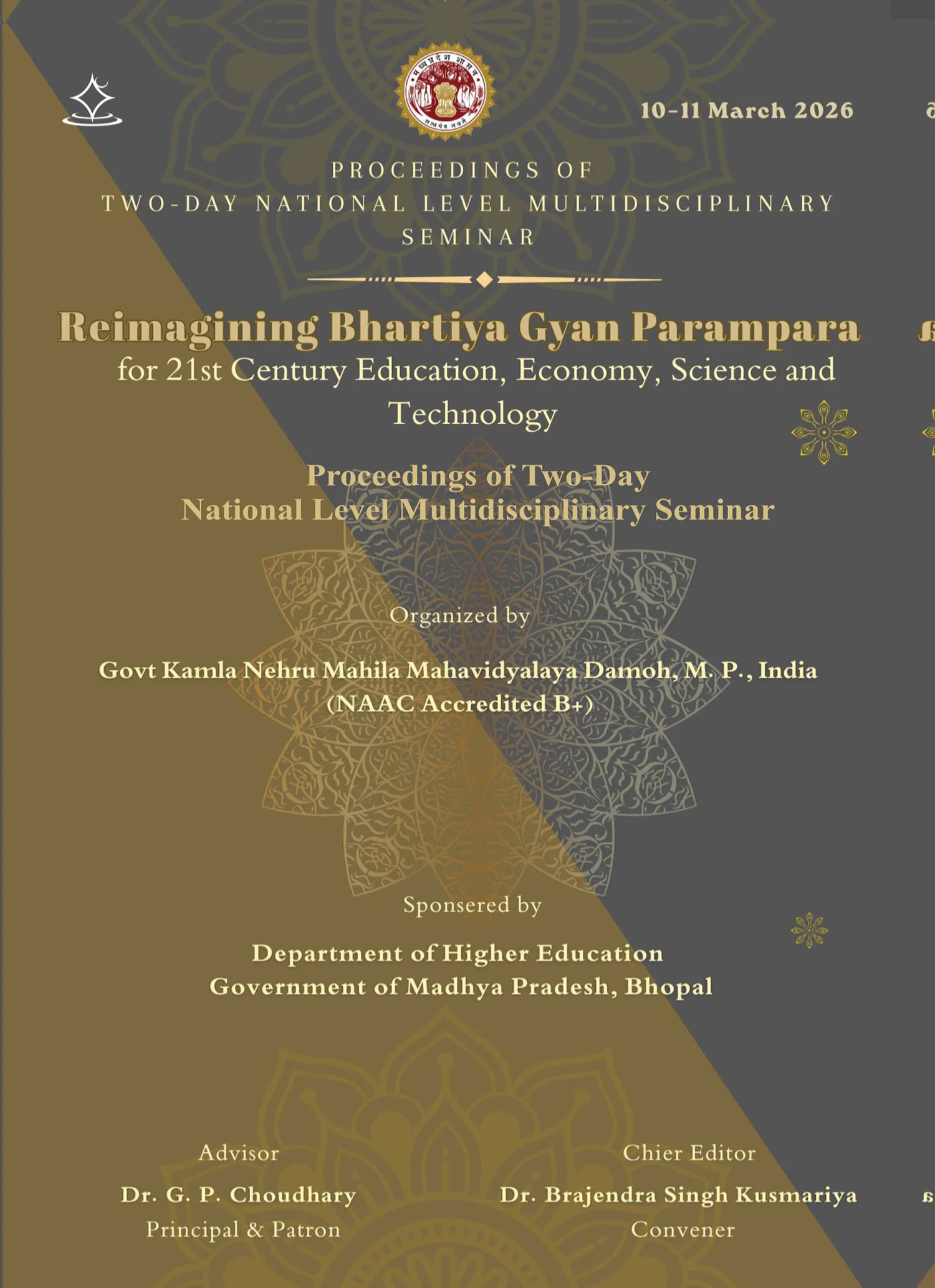
Reimagining Bhartiya Gyan Parampara for 21st Century Education, Economy, Science and Technology
Proceedings of Two-Day National Level Multidisciplinary Seminar
Dr. Brajendra Singh Kusmariya
Paperback
619.00
e Book
299.00
Pages : 272
Language : English
About Book
The present proceedings volume brings together selected research papers presented at the Two-Day National Level Multidisciplinary Seminar on “Reimagining Bhartiya Gyan Parampara for 21st Century Education, Economy, Science and Technology”, organized by Govt Kamla Nehru Mahila Mahavidyalaya, Damoh (Madhya Pradesh), on 10–11 March 2026. The seminar was organized with the objective of creating an academic platform for meaningful discussion on the relevance of Indian knowledge traditions in contemporary education, science, economy, technology, and society. Bhartiya Gyan Parampara represents a vast and diverse intellectual heritage developed through centuries of observation, experience, philosophical reflection, and practical application. These traditions continue to provide valuable insights for present-day academic inquiry and sustainable development. The seminar received encouraging participation from academicians, researchers, scholars, and students belonging to different disciplines and institutions. The technical sessions included discussions on Indian educational traditions, scientific thought, environmental practices, health and wellness systems, indigenous economic ideas, literature, culture, and multidisciplinary perspectives related to Indian Knowledge Systems. The papers included in this proceedings volume reflect diverse academic viewpoints and interdisciplinary approaches. Each contribution attempts to connect traditional knowledge with present-day challenges and contemporary research perspectives. The editors believe that such academic efforts are important for developing a balanced understanding of India’s intellectual heritage in the context of modern global discourse. All papers included in this volume were reviewed and edited carefully before publication. The editors sincerely appreciate the efforts of the authors, reviewers, members of the advisory committee, organizing committee, and all faculty members and student volunteers who contributed to the successful organization of the seminar and preparation of this publication. It is hoped that this proceedings volume will serve as a useful academic resource for researchers, teachers, and students, and will encourage further research and dialogue in the field of Indian Knowledge Systems and multidisciplinary studies.
Customer Reviews