ISBN : 978-93-7462-355-8
Category : Academic
Catalogue : Medical And Nursing
ID : SB22357
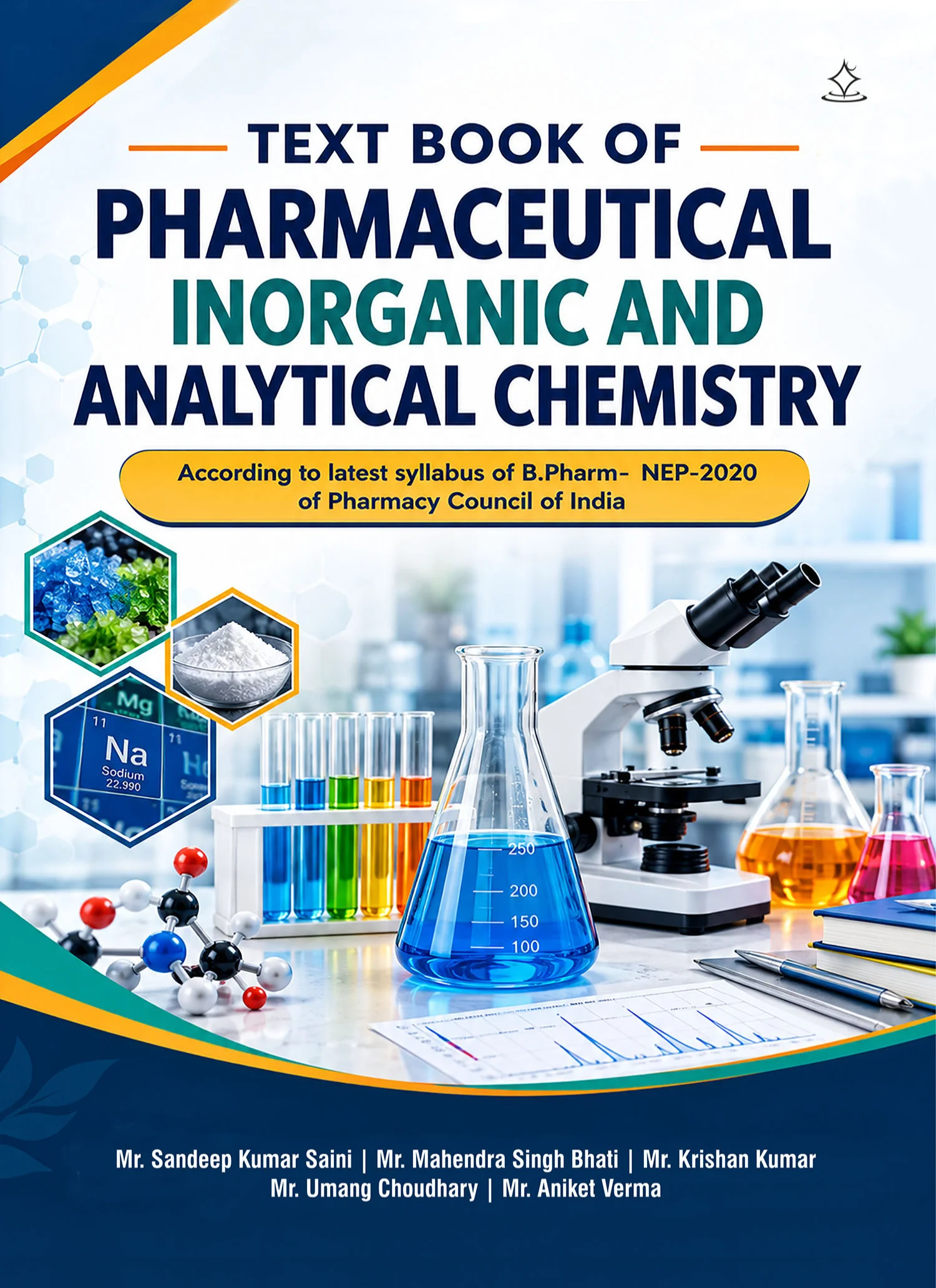
TEXT BOOK OF PHARMACEUTICAL INORGANIC AND ANALYTICAL CHEMISTRY
According to latest syllabus of B.Pharm- NEP-2020 of Pharmacy Council of India
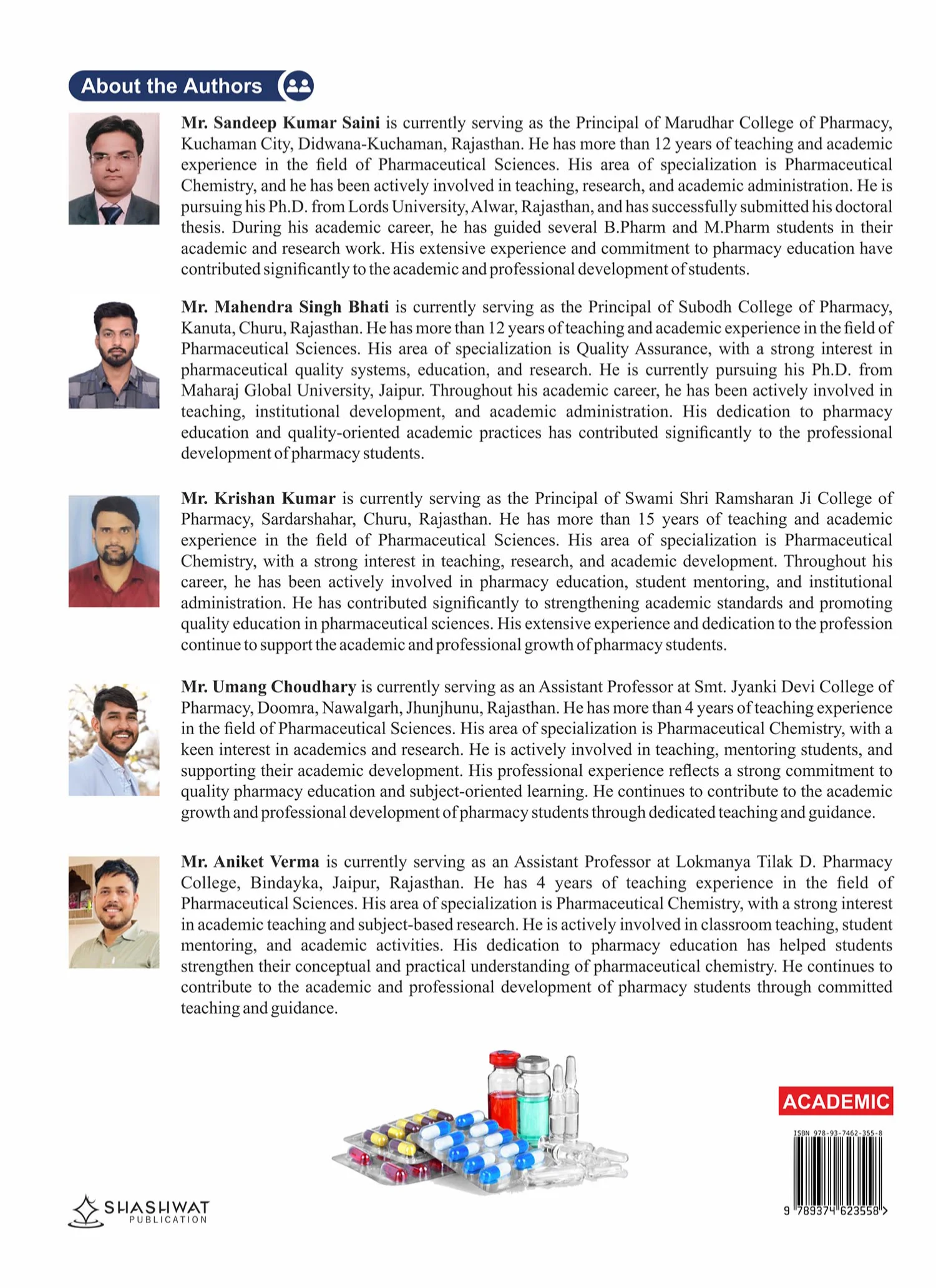
Mr. Sandeep Kumar Saini, Mr. Mahendra Singh Bhati, Mr. Krishan Kumar, Mr. Umang Choudhary, Mr. Aniket Verma
Paperback
1119.00
e Book
699.00
Pages : 316
Language : English
About Book
The Text Book of Pharmaceutical Inorganic and Analytical Chemistry has been designed to provide students with a strong foundation in the fundamental principles and pharmaceutical applications of inorganic and analytical chemistry. The book begins with an introduction to pharmaceutical analysis and explains different analytical techniques used for the identification and estimation of pharmaceutical substances. Various methods of expressing the strength of solutions are discussed along with the concepts of primary and secondary standards. The important topic of analytical errors is presented with emphasis on their sources, classification, minimization, accuracy, precision, and significant figures. Pharmaceutical impurities are discussed with reference to their sources, types, regulatory importance, and impact on product quality. Limit tests for chloride, sulphate, iron, arsenic, lead, and heavy metals are described systematically. Modified limit tests for chloride and sulphate are also included to provide a better understanding of impurity control. The book explains acid-base chemistry, buffers, pH, and their importance in pharmaceutical formulations. Buffer equations and calculations of pH for buffer solutions are presented in an understandable manner. Isotonicity and its applications in intravenous fluids and ophthalmic preparations are discussed with pharmaceutical relevance. Major extracellular and intracellular electrolytes are covered along with their physiological functions. Important replacement electrolytes such as sodium chloride, potassium chloride, calcium chloride, and oral rehydration salts are also described. Physiological acid-base balance is included to relate chemical concepts with human health. The section on volumetric analysis provides detailed coverage of acid-base titrations, indicators, titrant preparation, standardization, and neutralization curves. Non-aqueous titrations are explained with special emphasis on solvents, acidic and basic titrants, and estimation of weakly acidic and basic substances. Precipitation titrations such as Mohr’s, Volhard’s, modified Volhard’s, and Fajans methods are presented along with gravimetric analysis. Complexometric titrations are discussed with reference to metal ion indicators, masking and demasking agents, EDTA standardization, and pharmaceutical estimations. Redox titrations including permanganometry, cerimetry, iodimetry, iodometry, and potassium iodate titrations are explained systematically. The book also presents important gastrointestinal agents with their chemical properties, preparation, storage, applications, and marketed preparations. Acidifiers, antacids, agents promoting bowel movements, and antimicrobial compounds are discussed in a pharmaceutical context. A dedicated section on radiopharmaceuticals introduces the basics of radioactivity and the pharmaceutical uses of important radioisotopes. Safe handling, storage, disposal, and regulatory requirements related to radiopharmaceuticals are also highlighted. The miscellaneous inorganic compounds section covers expectorants, emetics, haematinics, poisons, antidotes, and astringents. Important compounds are described with respect to their molecular characteristics, preparation, physical and chemical properties, pharmaceutical applications, and storage conditions. The inclusion of marketed preparations helps students connect theoretical concepts with practical pharmacy applications. Overall, the book integrates core analytical principles, inorganic pharmaceutical compounds, quality control concepts, and therapeutic applications in a clear and systematic manner, making it a valuable resource for pharmacy students, teachers, researchers, and pharmaceutical professionals.
Customer Reviews