ISBN : 978-93-7462-108-0
Category : Academic
Catalogue : Medical And Nursing
ID : SB22218
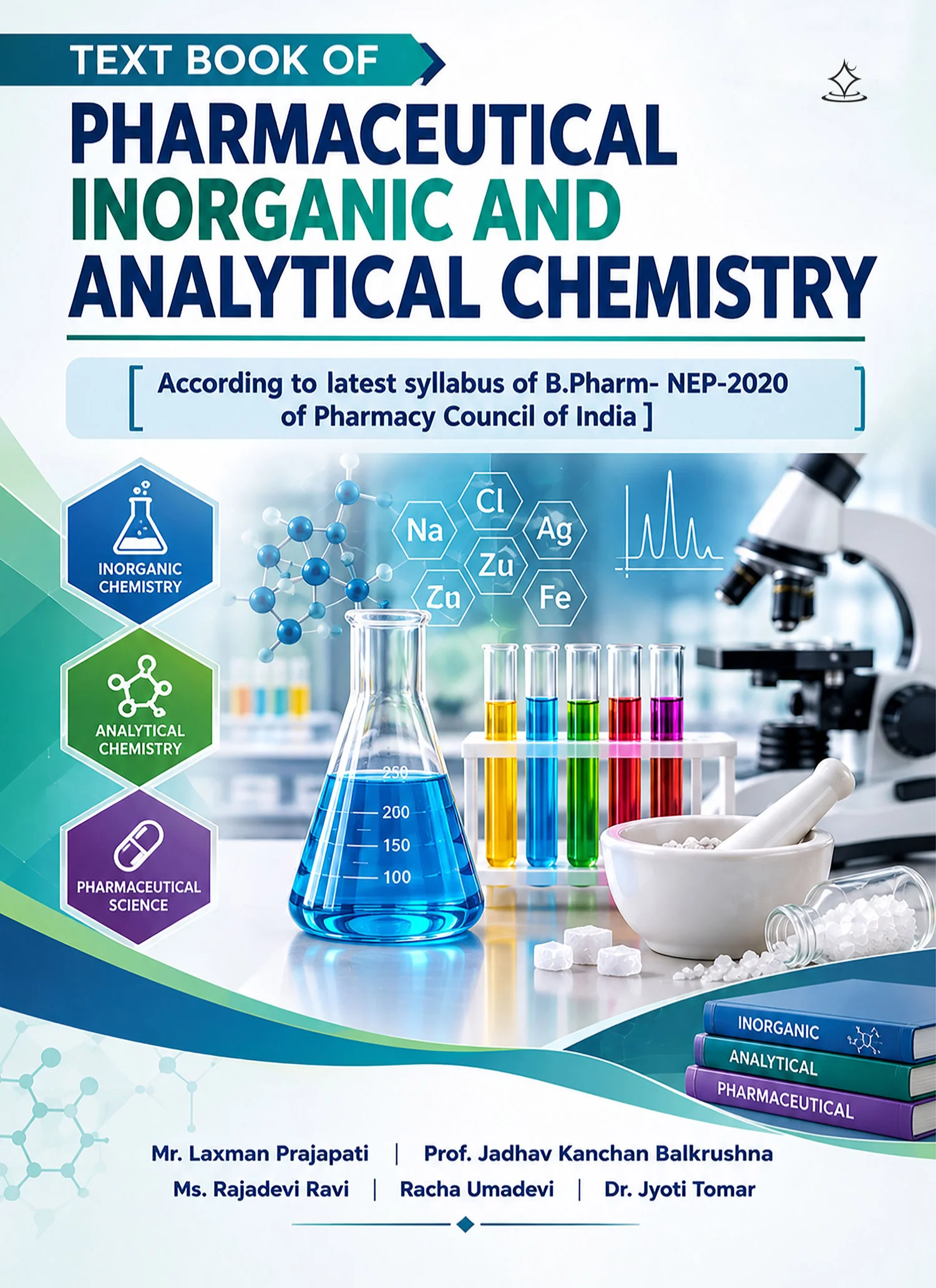
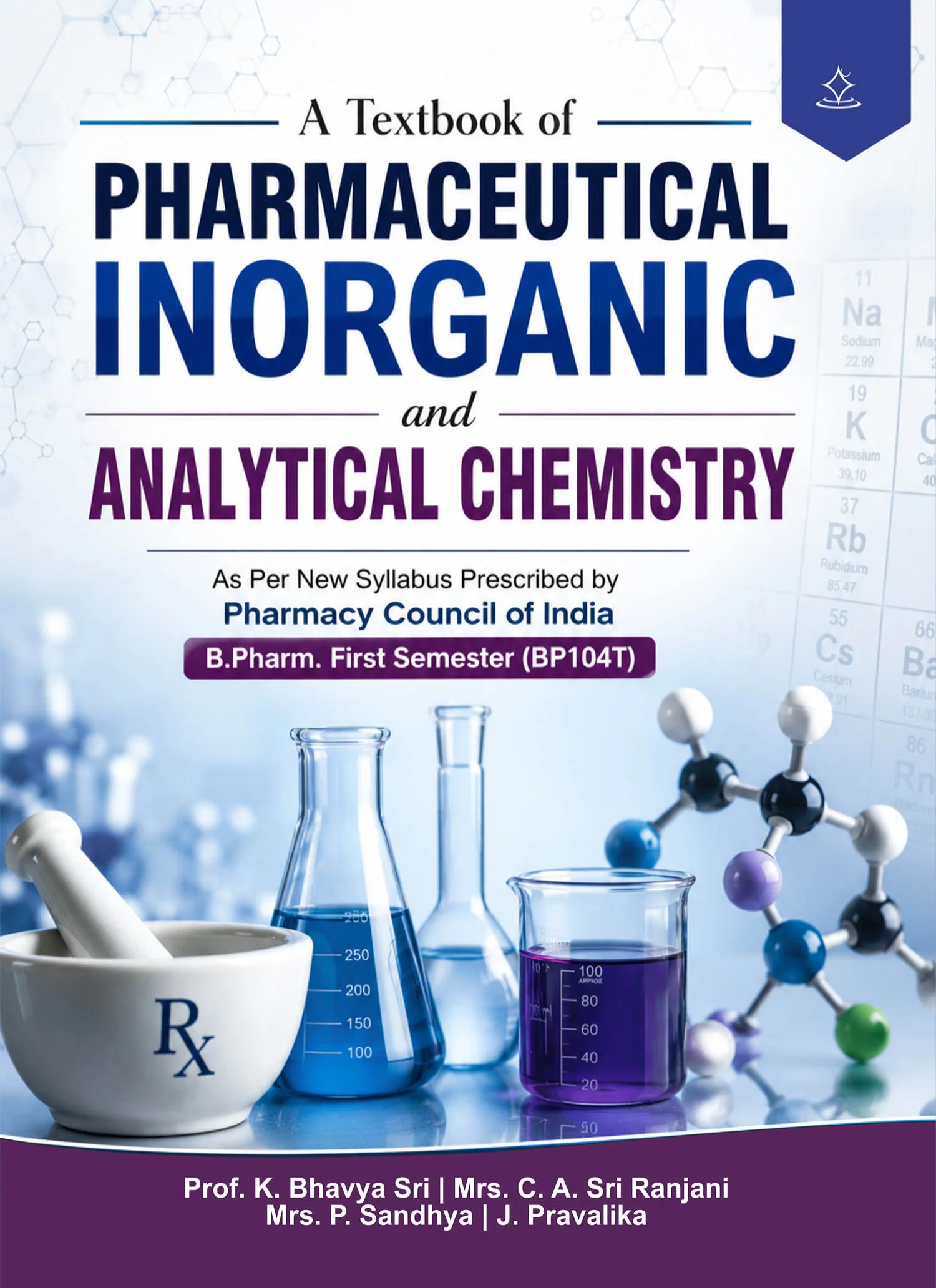
A Textbook of Pharmaceutical Inorganic and Analytical Chemistry
As Per New Syllabus Prescribed by Pharmacy Council of India B.Pharm. First Semester (BP104T)
Prof. K. Bhavya Sri, Mrs. C. A. Sri Ranjani, Mrs. P. Sandhya, J. Pravalika
Paperback
1219.00
e Book
699.00
Pages : 364
Language : English
About Book
Pharmaceutical Inorganic and Analytical Chemistry is a comprehensive textbook developed in alignment with the objectives of the New Education Policy (NEP) 2020, which advocates outcome-based education, interdisciplinary learning, critical thinking, and the development of practical skills. The book is specifically designed to provide pharmacy students with a strong conceptual understanding of inorganic pharmaceuticals and analytical chemistry while emphasizing their significance in modern pharmaceutical sciences and healthcare practice. The text systematically introduces the fundamental principles of pharmaceutical analysis, highlighting the importance of quality control, purity assessment, and regulatory compliance in the pharmaceutical industry. It begins with the study of analytical chemistry, sources of impurities in pharmaceutical substances, and the methods employed to ensure the quality, safety, and efficacy of medicinal products. Students are exposed to the scientific basis of pharmaceutical standards and the role of pharmacopoeias in maintaining drug quality. The book further explores essential concepts of acid-base chemistry, buffer systems, electrolyte balance, and their physiological and therapeutic relevance. These topics provide a foundation for understanding various pharmaceutical formulations and their interactions within biological systems. Detailed coverage of analytical methodologies, including titrimetric and gravimetric techniques, enables learners to acquire practical knowledge of quantitative analysis. Various titration methods such as acid-base, oxidation-reduction, precipitation, complexometric, and non-aqueous titrations are discussed with their principles, procedures, calculations, and pharmaceutical applications. A significant portion of the book is devoted to the study of medicinal inorganic compounds and their therapeutic uses. Comprehensive discussions on gastrointestinal agents, antimicrobial agents, radiopharmaceuticals, and other important inorganic pharmaceuticals—including expectorants, emetics, haematinics, antidotes, astringents, and electrolyte replenishing agents—provide students with a clear understanding of their chemical properties, mechanisms of action, and clinical importance. To foster multidisciplinary learning, the book integrates concepts from chemistry, pharmacology, toxicology, medicine, and regulatory sciences, enabling students to appreciate the broader role of inorganic compounds in disease prevention, diagnosis, and treatment. Numerous illustrative examples, problem-solving exercises, review questions, and application-based case studies have been incorporated throughout the text to strengthen analytical skills and encourage independent learning. With its balanced blend of theoretical concepts and practical applications, this book serves as an essential resource for pharmacy students, educators, and professionals seeking a thorough understanding of pharmaceutical inorganic and analytical chemistry. It not only supports academic excellence but also prepares learners to meet the evolving demands of pharmaceutical practice, research, quality assurance, and regulatory affairs in accordance with the transformative vision of NEP 2020.
Customer Reviews