ISBN : 978-93-7462-637-5
Category : Academic
Catalogue : Medical And Nursing
ID : SB21895
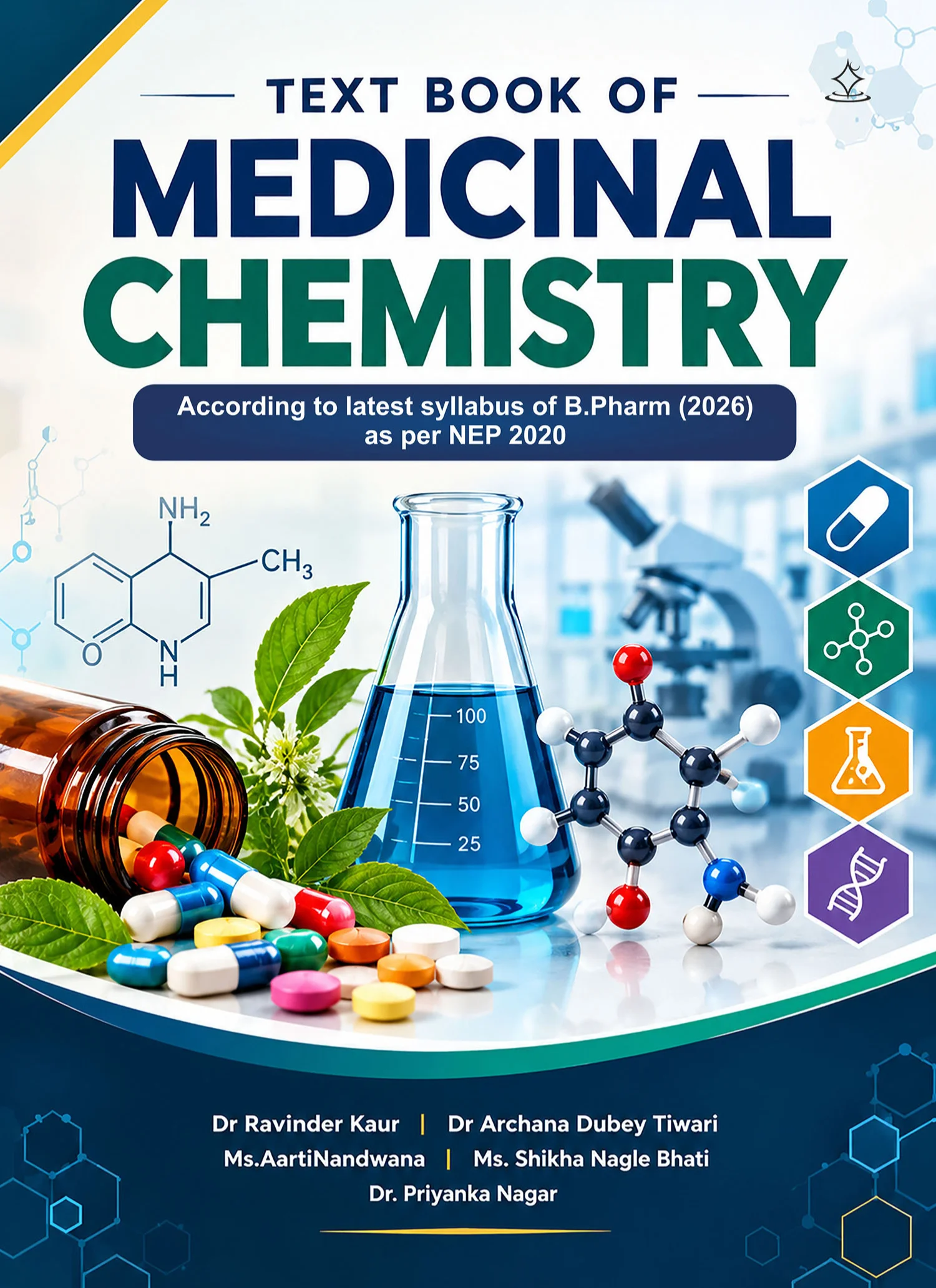
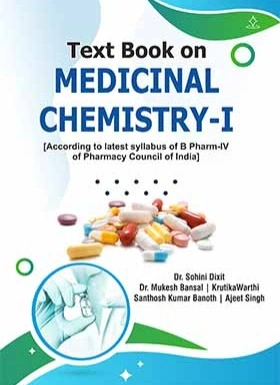
TEXT BOOK OF MEDICINAL CHEMISTRY-I
According to latest syllabus of B Pharm-IV of Pharmacy Council of India
Dr. Sohini Dixit, Dr. Mukesh Bansal, Krutika Warthi, Santhosh Kumar Banoth, Ajeet Singh
Paperback
999.00
e Book
699.00
Pages : 324
Language : English
About Book
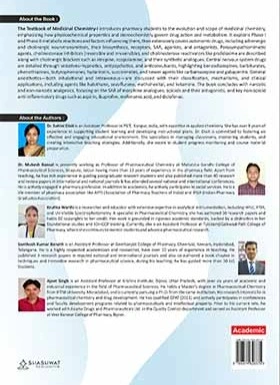
The Textbook of Medicinal Chemistry-I is a comprehensive guide designed for pharmacy and medicinal chemistry students. It introduces learners to the evolution of medicinal chemistry, highlighting the history, growth, and significance of the discipline in modern drug discovery. The book begins with a thorough explanation of physicochemical properties like ionization, solubility, partition coefficient, hydrogen bonding, protein binding, chelation, bioisosterism, and stereochemistry, all of which dictate the biological action of drugs. It then progresses to drug metabolism, covering the principles of Phase I and Phase II reactions, as well as the factors—including stereochemical aspects—that influence metabolic pathways. A major portion of the text is dedicated to drugs acting on the autonomic nervous system. Students are introduced to adrenergic neurotransmitters, with detailed discussions on the biosynthesis and catabolism of catecholamines, alongside receptor classification and distribution. Sympathomimetic agents are presented systematically, including their classification, mechanisms of action, uses, and structure–activity relationships (SAR). Both direct- and indirect-acting sympathomimetic agents are highlighted, along with those having mixed mechanisms. Adrenergic antagonists are given equal emphasis, covering both alpha and beta blockers with their SAR and clinical significance. The cholinergic system is another core area, with explanations of acetylcholine biosynthesis, catabolism, and receptor subtypes. Parasympathomimetic agents are classified and elaborated upon, including direct-acting agents such as carbachol and pilocarpine, and indirect-acting cholinesterase inhibitors, both reversible and irreversible. The text also details cholinesterase reactivators like pralidoxime. Cholinergic blocking agents are discussed in depth, ranging from natural solanaceous alkaloids such as atropine and scopolamine to synthetic derivatives like dicyclomine and ipratropium, with their SAR, mechanisms, and therapeutic uses clearly explained. Moving into central nervous system drugs, the book explores sedatives and hypnotics, particularly benzodiazepines and barbiturates. Their SAR, mechanisms, and clinical applications are thoroughly described, along with miscellaneous sedative agents such as meprobamate and paraldehyde. Antipsychotics are then presented, classified into phenothiazines, ring analogues, butyrophenones, and other groups, with special focus on their SAR and therapeutic uses. Anticonvulsants receive dedicated coverage as well, including barbiturates, hydantoins, succinimides, benzodiazepines, and newer agents like carbamazepine, valproic acid, and gabapentin, alongside their mechanisms of action. The section on general anesthetics explains classification, mechanisms, and clinical applications, discussing inhalation anesthetics such as halothane and sevoflurane, ultra-short-acting barbiturates like methohexital, and dissociative agents like ketamine. Narcotic and non-narcotic analgesics form another crucial segment, where the SAR of morphine analogues is highlighted. Students gain insights into opioids, opioid antagonists, and non-opioid analgesics, including anti-inflammatory agents like aspirin, ibuprofen, mefenamic acid, and diclofenac.
Customer Reviews