ISBN : 978-93-7462-241-4
Category : Academic
Catalogue : Medical And Nursing
ID : SB22292
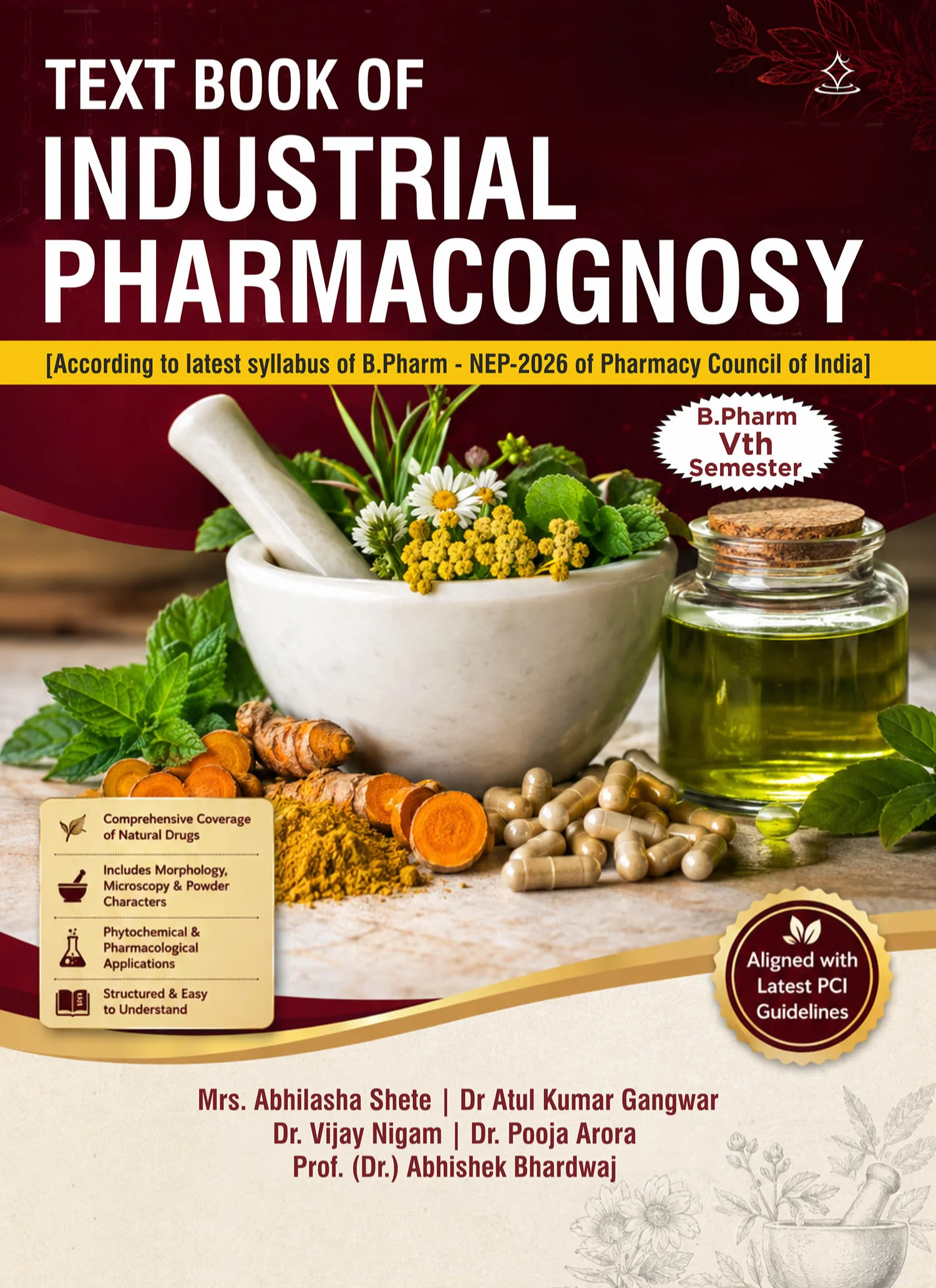
TEXT BOOK OF INDUSTRIAL PHARMACOGNOSY
According to latest syllabus of B. Pharm -NEP-2026 of Pharmacy Council of India
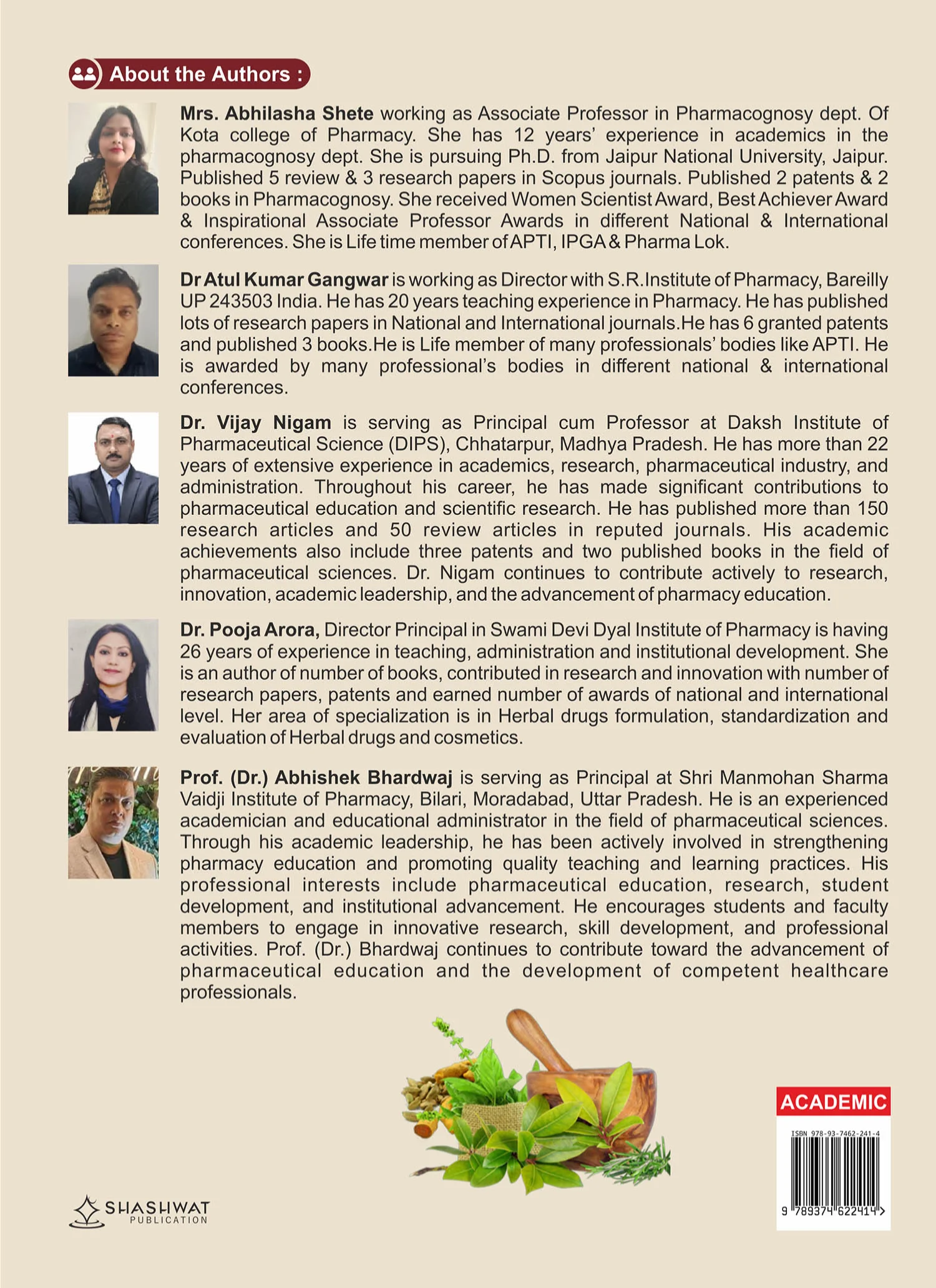
Mrs. Abhilasha Shete, Dr Atul Kumar Gangwar, Dr. Vijay Nigam, Dr. Pooja Arora, Prof. (Dr.) Abhishek Bhardwaj
Paperback
919.00
e Book
599.00
Pages : 281
Language : English
About Book
The Text Book of Industrial Pharmacognosy is designed to provide comprehensive knowledge of the industrial, commercial, analytical, and regulatory aspects of medicinal plants and herbal products. It introduces readers to the development and importance of herbal industries in national and international markets. The book explains the role of medicinal and aromatic plants in strengthening the bioeconomy and contributing to sustainable industrial growth. Special emphasis is placed on commercially important medicinal plants such as Ashwagandha, Turmeric, Ginseng, Amla, and various essential oils. It also describes biodiversity hotspots and the important institutions involved in medicinal and aromatic plant research in India. Emerging therapeutic categories of herbal medicinal products are discussed with their composition and scientific rationale. These include aphrodisiac, antistress, antidiabetic, antihyperlipidemic, immunomodulatory, hepatoprotective, and kidney-protective herbal formulations. The growing field of herbal cosmeceuticals is also presented in detail. Important applications such as anti-aging, depigmenting, anti-acne, sunscreen, detoxifying, anti-irritant, and nutricosmetic products are covered. The book highlights commercial production and standardization practices required for manufacturing quality herbal medicines. It explains the significance of AYUSH, WHO-GMP, GLP, and USFDA-compliant manufacturing facilities. Standardized herbal extracts of Coleus, Amla, Turmeric, Ashwagandha, and Senna are discussed with their clinical and commercial relevance. The production and quality assessment of volatile oils such as Eucalyptus, Lavender, Peppermint, and Rosemary oils are also included. Traditional AYUSH formulations including Aristas, Asavas, Gutika, Habb, Churna, Shafoof, Arq, Sharbat, tinctures, and Bhasma are described systematically. Modern analytical methods used for the evaluation of botanicals form an important part of the book. Spectroscopic techniques such as UV-Visible, IR, NMR, mass spectroscopy, and atomic absorption spectroscopy are presented with their basic principles and applications. Chromatographic techniques including HPTLC, HPLC, UPLC, and gas chromatography are also discussed for identification and quantitative analysis. The book further explains the isolation, characterization, commercial production, and analysis of important bioactive phytoconstituents. Compounds such as artemisinin, sennosides, withanolides, boswellic acid, atropine, and lycopene are discussed in detail. International regulatory perspectives related to herbal medicines and dietary supplements are also incorporated. Regulatory frameworks of WHO, USFDA, EMA, TGA, and Natural Health Products Canada are introduced for better global understanding. The challenges involved in harmonization and mutual recognition of traditional medicines across different countries are highlighted. Importance is given to the safety, efficacy, quality, and pharmacovigilance requirements of herbal medicinal products. Herbal drug monographs from the Indian Pharmacopoeia, United States Pharmacopoeia, Ayurvedic Pharmacopoeia of India, and Unani Pharmacopoeia of India are also discussed. The book integrates traditional knowledge with modern scientific, industrial, and regulatory approaches to herbal drug development. Overall, it serves as a valuable academic and professional resource for pharmacy students, teachers, researchers, manufacturers, and professionals working in the herbal and phytopharmaceutical industries.
Customer Reviews