ISBN : 978-93-7462-254-4
Category : Academic
Catalogue : Pharmacy and Medical Sciences
ID : SB22297
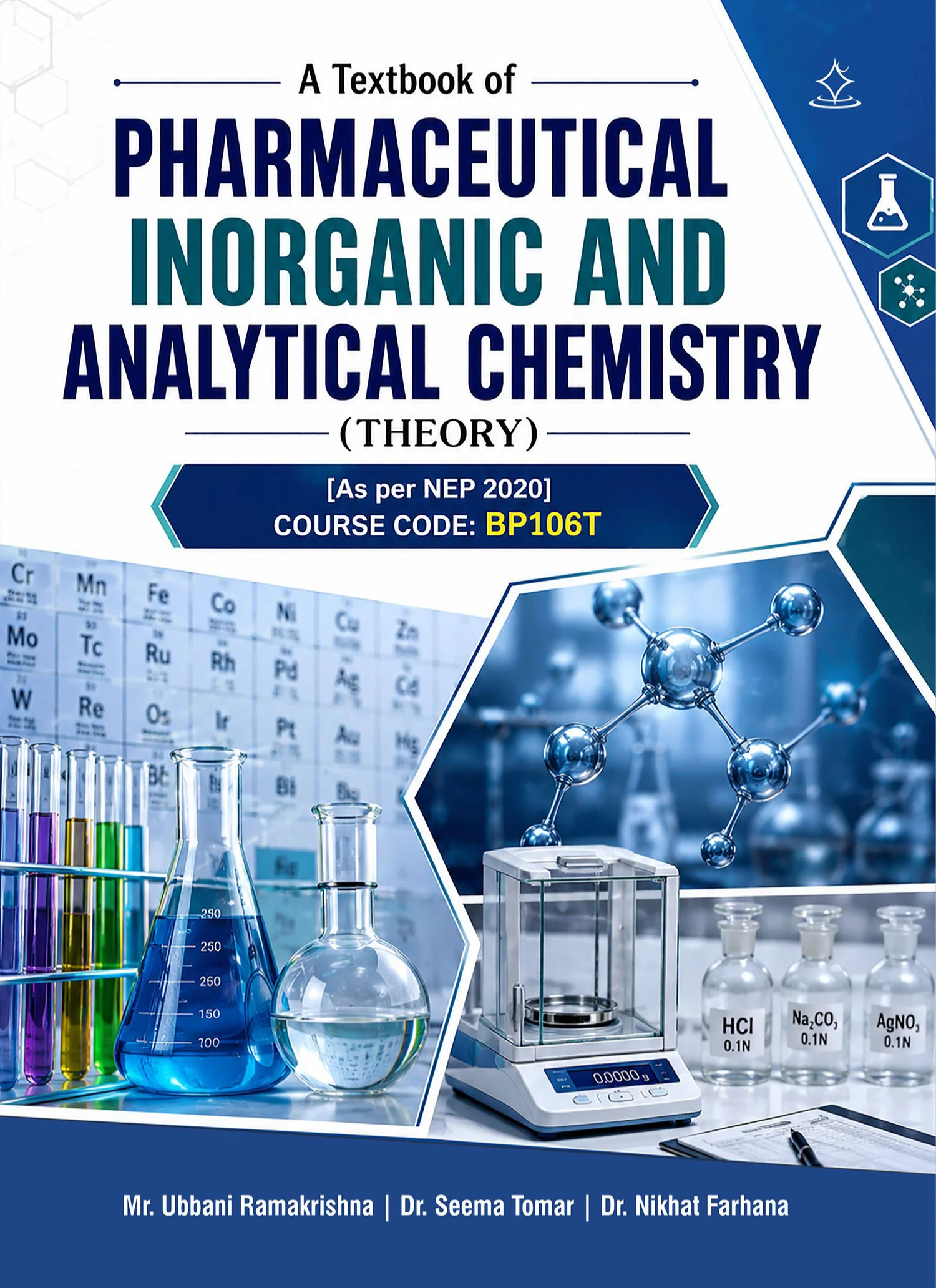
A Textbook of PHARMACEUTICAL INORGANIC AND ANALYTICAL CHEMISTRY (THEORY)
[As per NEP 2020] COURSE CODE: BP106T
Mr. Ubbani Ramakrishna, Dr. Seema Tomar, Dr. Nikhat Farhana
Paperback
819.00
e Book
499.00
Pages : 376
Language : English
About Book
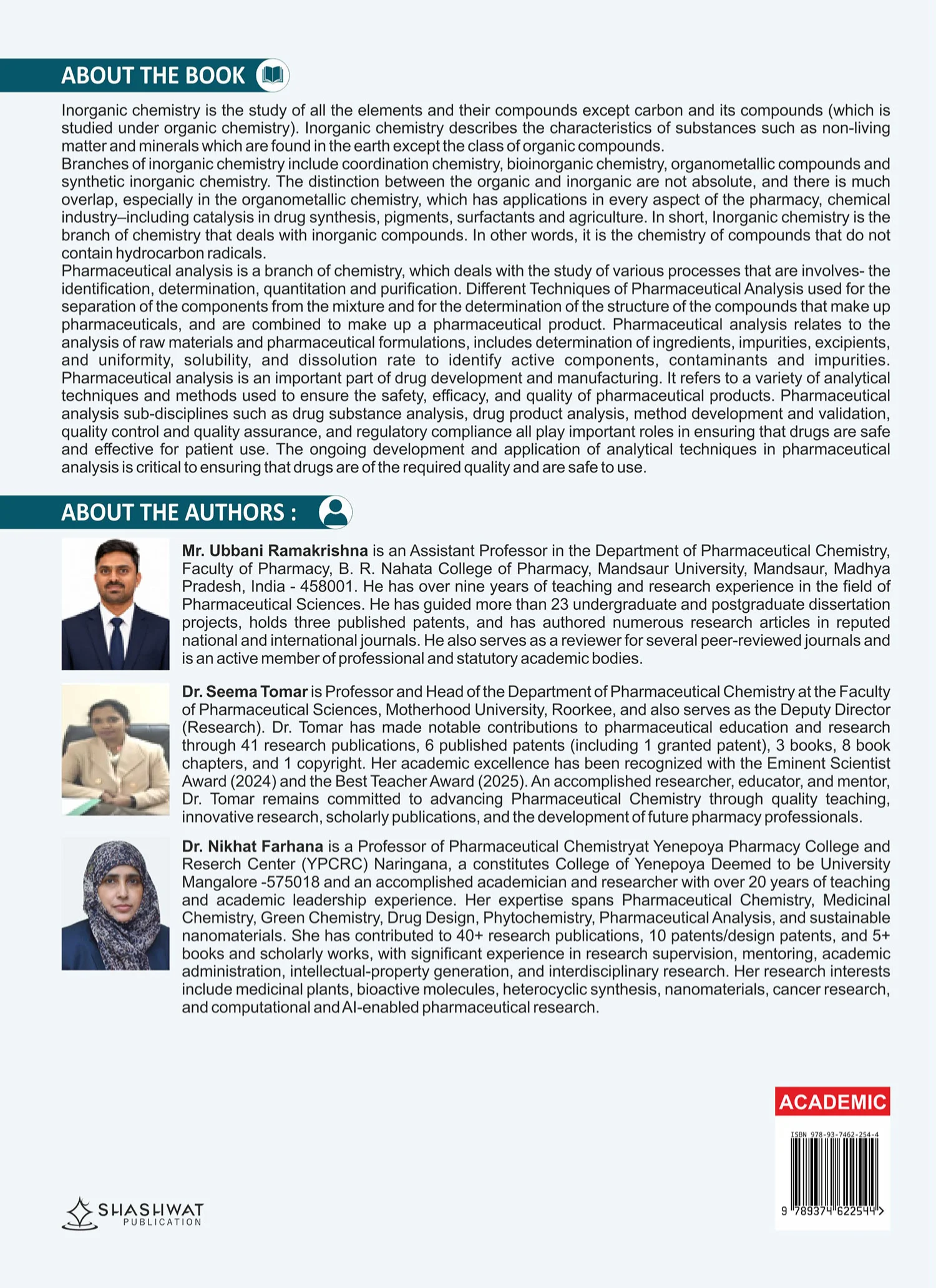
Inorganic chemistry is the study of all the elements and their compounds except carbon and its compounds (which is studied under organic chemistry). Inorganic chemistry describes the characteristics of substances such as non-living matter and minerals which are found in the earth except the class of organic compounds. Branches of inorganic chemistry include coordination chemistry, bioinorganic chemistry, organometallic compounds and synthetic inorganic chemistry. The distinction between the organic and inorganic are not absolute, and there is much overlap, especially in the organometallic chemistry, which has applications in every aspect of the pharmacy, chemical industry–including catalysis in drug synthesis, pigments, surfactants and agriculture. In short, Inorganic chemistry is the branch of chemistry that deals with inorganic compounds. In other words, it is the chemistry of compounds that do not contain hydrocarbon radicals. Pharmaceutical analysis is a branch of chemistry, which deals with the study of various processes that are involves- the identification, determination, quantitation and purification. Different Techniques of Pharmaceutical Analysis used for the separation of the components from the mixture and for the determination of the structure of the compounds that make up pharmaceuticals, and are combined to make up a pharmaceutical product. Pharmaceutical analysis relates to the analysis of raw materials and pharmaceutical formulations, includes determination of ingredients, impurities, excipients, and uniformity, solubility, and dissolution rate to identify active components, contaminants and impurities. Pharmaceutical analysis is an important part of drug development and manufacturing. It refers to a variety of analytical techniques and methods used to ensure the safety, efficacy, and quality of pharmaceutical products. Pharmaceutical analysis sub-disciplines such as drug substance analysis, drug product analysis, method development and validation, quality control and quality assurance, and regulatory compliance all play important roles in ensuring that drugs are safe and effective for patient use. The ongoing development and application of analytical techniques in pharmaceutical analysis is critical to ensuring that drugs are of the required quality and are safe to use.
Customer Reviews