ISBN : 978-93-7462-438-8
Category : Academic
Catalogue : Pharmacy and Medical Sciences
ID : SB22403
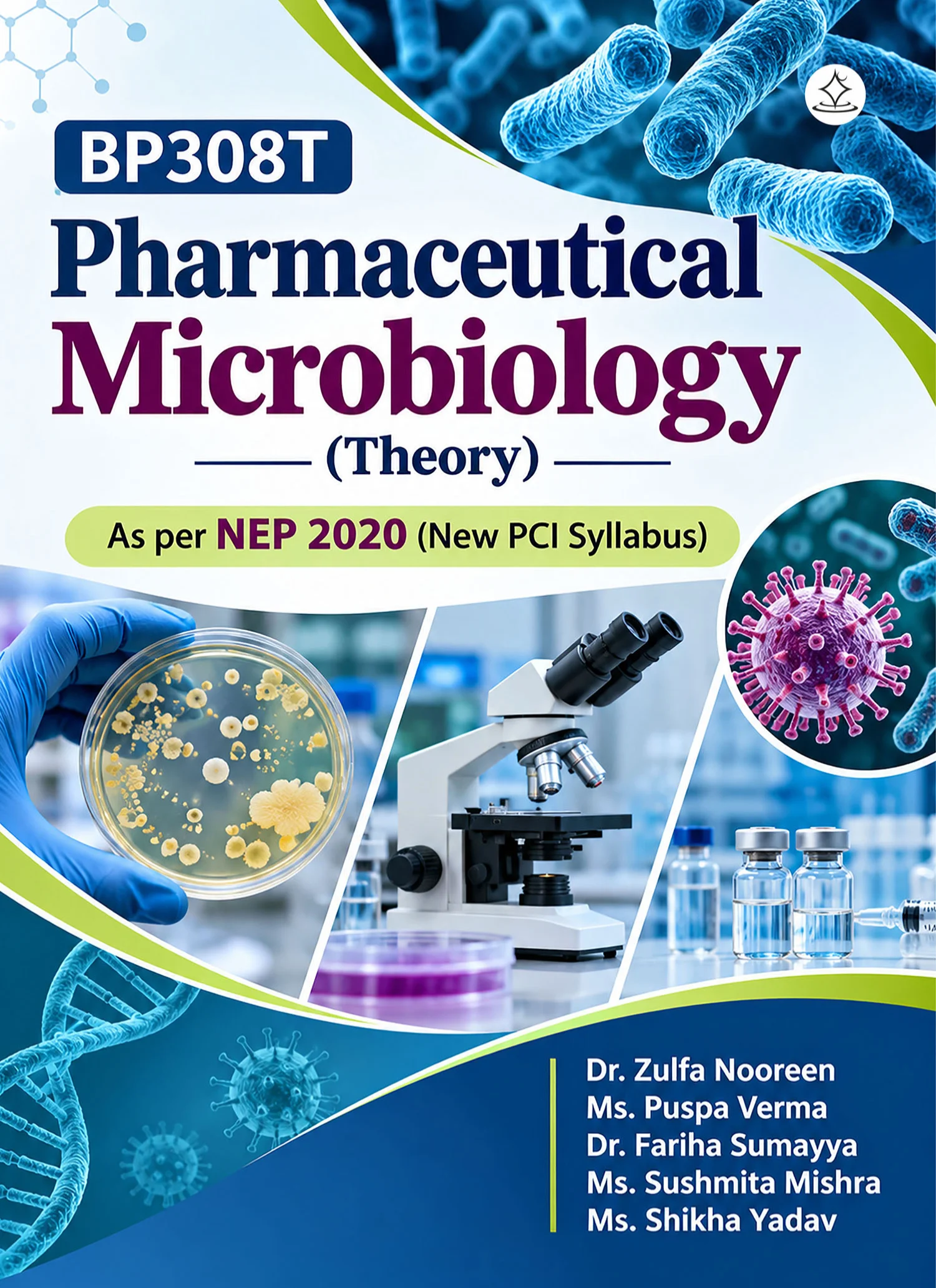
BP308T Pharmaceutical Microbiology (Theory)
As per NEP 2020 (New PCI Syllabus)
Dr. Zulfa Nooreen, Ms. Puspa Verma, Dr. Fariha Sumayya, Ms. Sushmita Mishra, Ms Shikha Yadav
Paperback
719.00
e Book
399.00
Pages : 237
Language : English
About Book
Pharmaceutical microbiology is an essential branch of pharmaceutical sciences that deals with the study of microorganisms in relation to medicines, drug manufacturing, and healthcare products. It is one of the most important subjects in the B. Pharm curriculum because it explains both the beneficial and harmful roles of microorganisms in the pharmaceutical industry. Microorganisms are microscopic living organisms such as bacteria, fungi, viruses, algae, and protozoa. Though invisible to the naked eye, they play a major role in pharmaceutical production, quality control, sterility assurance, and biomedical research. Their importance in pharmacy lies in the fact that they are used to produce many valuable therapeutic agents, while at the same time they can contaminate and spoil pharmaceutical products if not properly controlled. Microorganisms are highly useful in the pharmaceutical industry because they help in the production of antibiotics, vaccines, enzymes, vitamins, amino acids, and recombinant proteins. Many important medicines are produced through microbial processes like, streptomycin is produced by Streptomyces griseus and cephalosporins are obtained from fungal sources. Microorganisms are also used in the production of insulin and vaccines through biotechnology. pharmaceutical microbiology helps students understand both the beneficial and harmful roles of microorganisms. The subject includes the fundamentals of microbiology such as classification, structure, growth, and cultivation of microorganisms. Bacteria, fungi, and viruses are studied in detail because of their pharmaceutical importance. Microbial growth depends on factors such as temperature, pH, oxygen, moisture, and nutrients. In pharmaceutical industries, these factors are controlled either to support useful microbial growth, as in fermentation, or to prevent contamination. Techniques such as microbial cultivation, isolation, and enumeration are important for studying and identifying microorganisms. Nutrient media are used for cultivation, while methods like streak plate and spread plate help in isolation. Microscopy and staining are essential for microbial identification. Staining techniques such as simple staining, Gram staining, and acid-fast staining help identify bacteria. Biochemical tests such as IMViC are also used for bacterial identification. Pharmaceutical microbiology also focuses on microbial contamination, spoilage, and control. Microbial contamination may arise from air, water, raw materials, equipment, or personnel and can affect product quality and safety. Sterilization is a major part of pharmaceutical microbiology and ensures the complete destruction of microorganisms. In conclusion, pharmaceutical microbiology provides B. Pharm students with essential knowledge about microorganisms and their role in pharmacy. It helps students understand how microorganisms contribute to drug production, how contamination can be controlled, and how pharmaceutical products are tested for microbiological quality. This subject forms the foundation for careers in pharmaceutical manufacturing, quality control, research, and biotechnology
Customer Reviews