ISBN : 978-93-7462-661-0
Category : Academic
Catalogue : Medical And Nursing
ID : SB22128
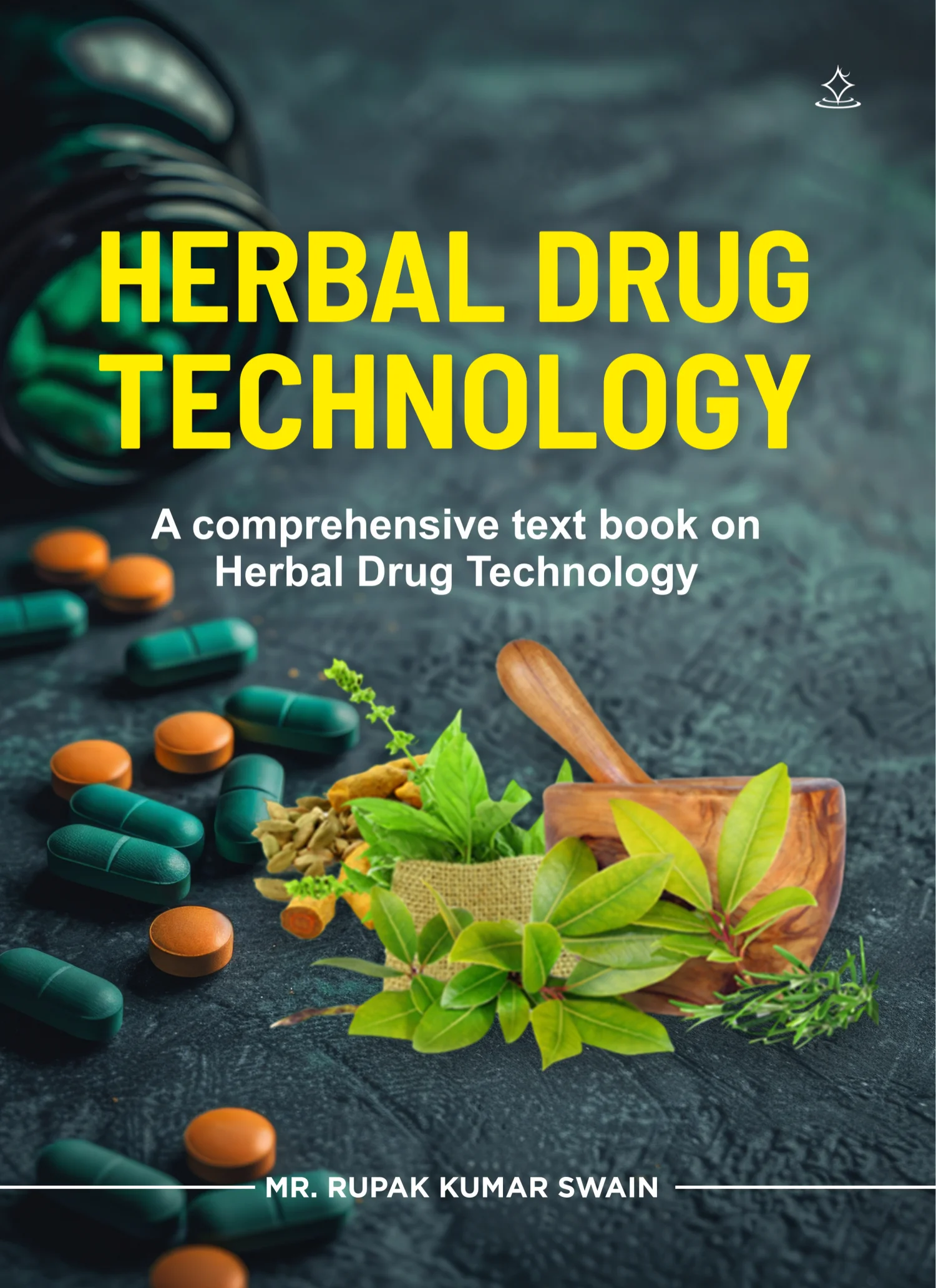
HERBAL DRUG TECHNOLOGY
A comprehensive text book on Herbal Drug Technology
Rupak Kumar Swain
Paperback
330.00
e Book
200.00
Pages : 134
Language : English
About Book
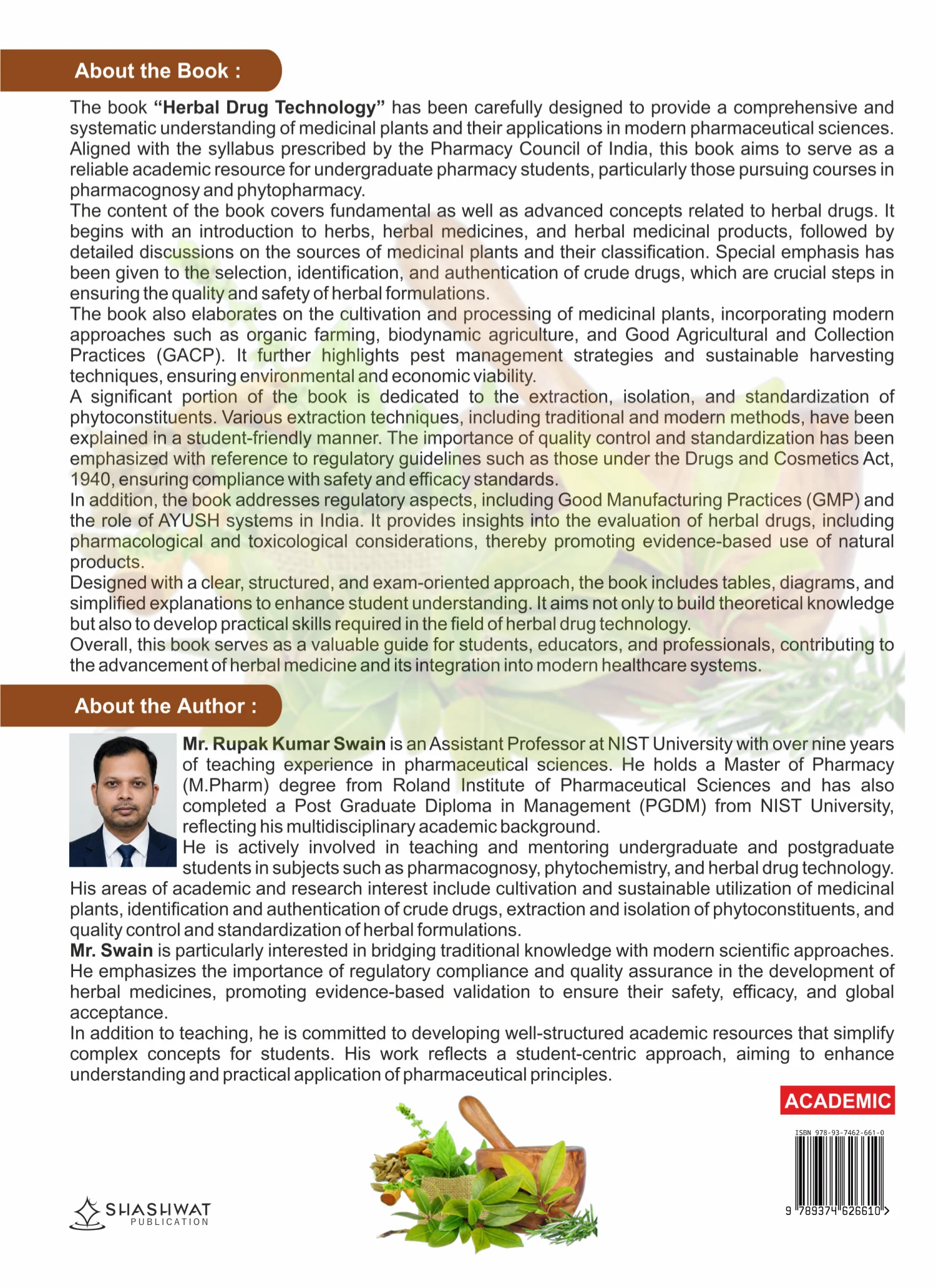
The book “Herbal Drug Technology” has been carefully designed to provide a comprehensive and systematic understanding of medicinal plants and their applications in modern pharmaceutical sciences. Aligned with the syllabus prescribed by the Pharmacy Council of India, this book aims to serve as a reliable academic resource for undergraduate pharmacy students, particularly those pursuing courses in pharmacognosy and phytopharmacy. The content of the book covers fundamental as well as advanced concepts related to herbal drugs. It begins with an introduction to herbs, herbal medicines, and herbal medicinal products, followed by detailed discussions on the sources of medicinal plants and their classification. Special emphasis has been given to the selection, identification, and authentication of crude drugs, which are crucial steps in ensuring the quality and safety of herbal formulations. The book also elaborates on the cultivation and processing of medicinal plants, incorporating modern approaches such as organic farming, biodynamic agriculture, and Good Agricultural and Collection Practices (GACP). It further highlights pest management strategies and sustainable harvesting techniques, ensuring environmental and economic viability. A significant portion of the book is dedicated to the extraction, isolation, and standardization of phytoconstituents. Various extraction techniques, including traditional and modern methods, have been explained in a student-friendly manner. The importance of quality control and standardization has been emphasized with reference to regulatory guidelines such as those under the Drugs and Cosmetics Act, 1940, ensuring compliance with safety and efficacy standards. In addition, the book addresses regulatory aspects, including Good Manufacturing Practices (GMP) and the role of AYUSH systems in India. It provides insights into the evaluation of herbal drugs, including pharmacological and toxicological considerations, thereby promoting evidence-based use of natural products. Designed with a clear, structured, and exam-oriented approach, the book includes tables, diagrams, and simplified explanations to enhance student understanding. It aims not only to build theoretical knowledge but also to develop practical skills required in the field of herbal drug technology. Overall, this book serves as a valuable guide for students, educators, and professionals, contributing to the advancement of herbal medicine and its integration into modern healthcare systems.
Customer Reviews