ISBN : 978-93-7462-122-6
Category : Academic
Catalogue : Medical And Nursing
ID : SB22223
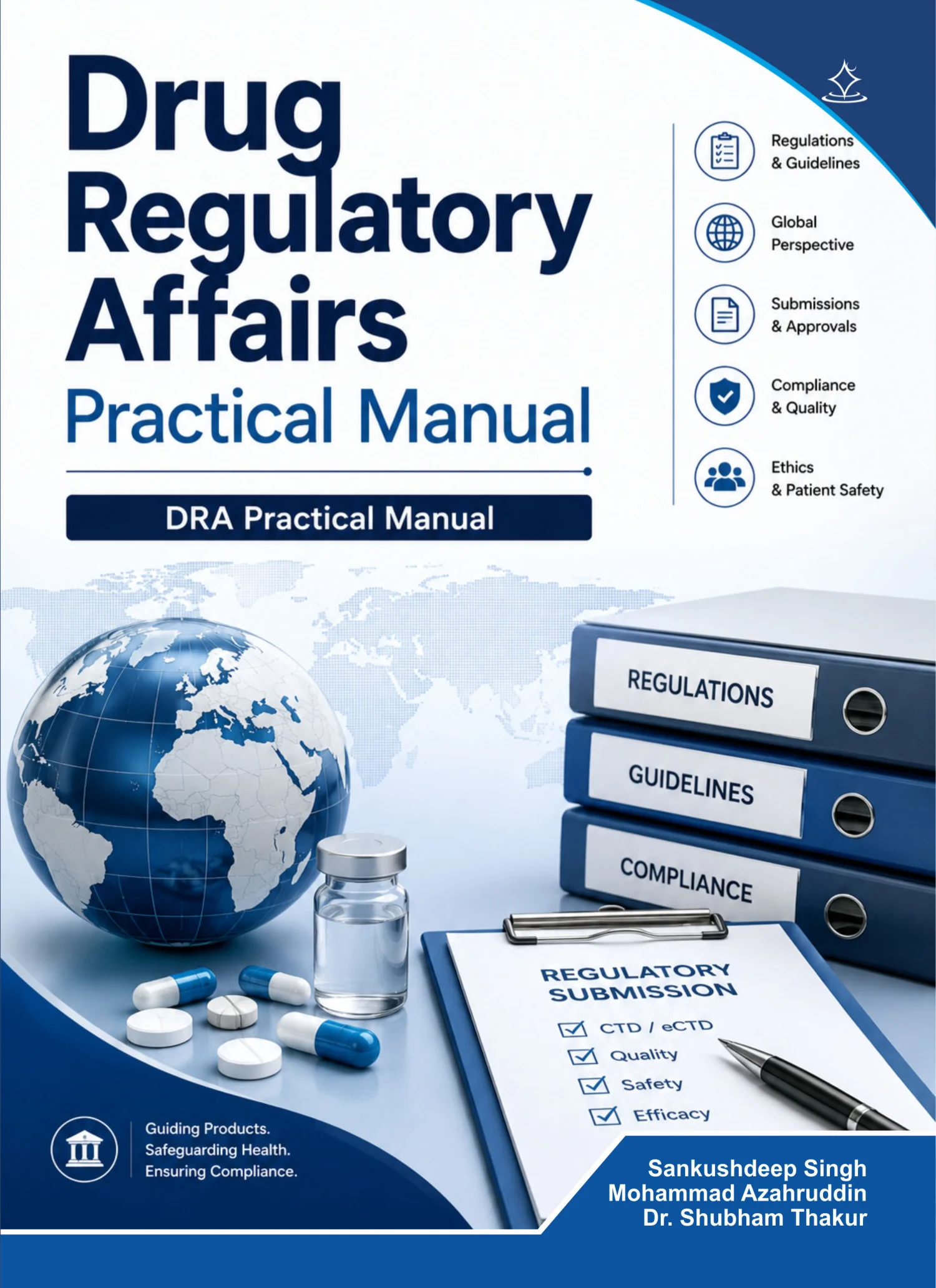
Drug Regulatory Affairs Practical Manual
DRA Practical Manual
Sankushdeep Singh, Mohammad Azahruddin, Dr. Shubham Thakur
Paperback
319.00
e Book
149.00
Pages : 109
Language : English
About Book
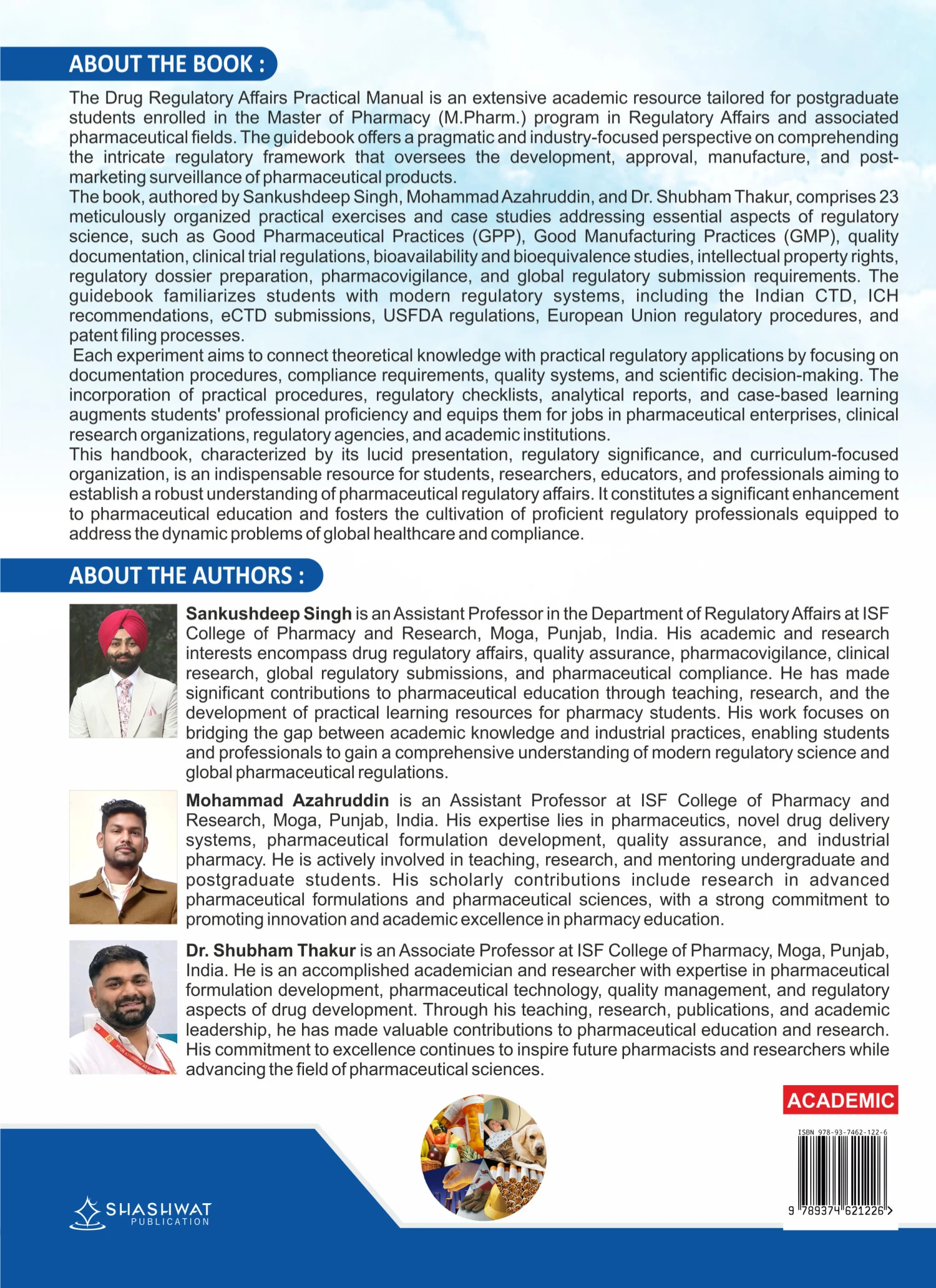
The Drug Regulatory Affairs Practical Manual is an extensive academic resource tailored for postgraduate students enrolled in the Master of Pharmacy (M.Pharm.) program in Regulatory Affairs and associated pharmaceutical fields. The guidebook offers a pragmatic and industry-focused perspective on comprehending the intricate regulatory framework that oversees the development, approval, manufacture, and post-marketing surveillance of pharmaceutical products. The book, authored by Sankushdeep Singh, Mohammad Azahruddin, and Dr. Shubham Thakur, comprises 23 meticulously organized practical exercises and case studies addressing essential aspects of regulatory science, such as Good Pharmaceutical Practices (GPP), Good Manufacturing Practices (GMP), quality documentation, clinical trial regulations, bioavailability and bioequivalence studies, intellectual property rights, regulatory dossier preparation, pharmacovigilance, and global regulatory submission requirements. The guidebook familiarizes students with modern regulatory systems, including the Indian CTD, ICH recommendations, eCTD submissions, USFDA regulations, European Union regulatory procedures, and patent filing processes. Each experiment aims to connect theoretical knowledge with practical regulatory applications by focusing on documentation procedures, compliance requirements, quality systems, and scientific decision-making. The incorporation of practical procedures, regulatory checklists, analytical reports, and case-based learning augments students' professional proficiency and equips them for jobs in pharmaceutical enterprises, clinical research organizations, regulatory agencies, and academic institutions. This handbook, characterized by its lucid presentation, regulatory significance, and curriculum-focused organization, is an indispensable resource for students, researchers, educators, and professionals aiming to establish a robust understanding of pharmaceutical regulatory affairs. It constitutes a significant enhancement to pharmaceutical education and fosters the cultivation of proficient regulatory professionals equipped to address the dynamic problems of global healthcare and compliance.
Customer Reviews