About Book
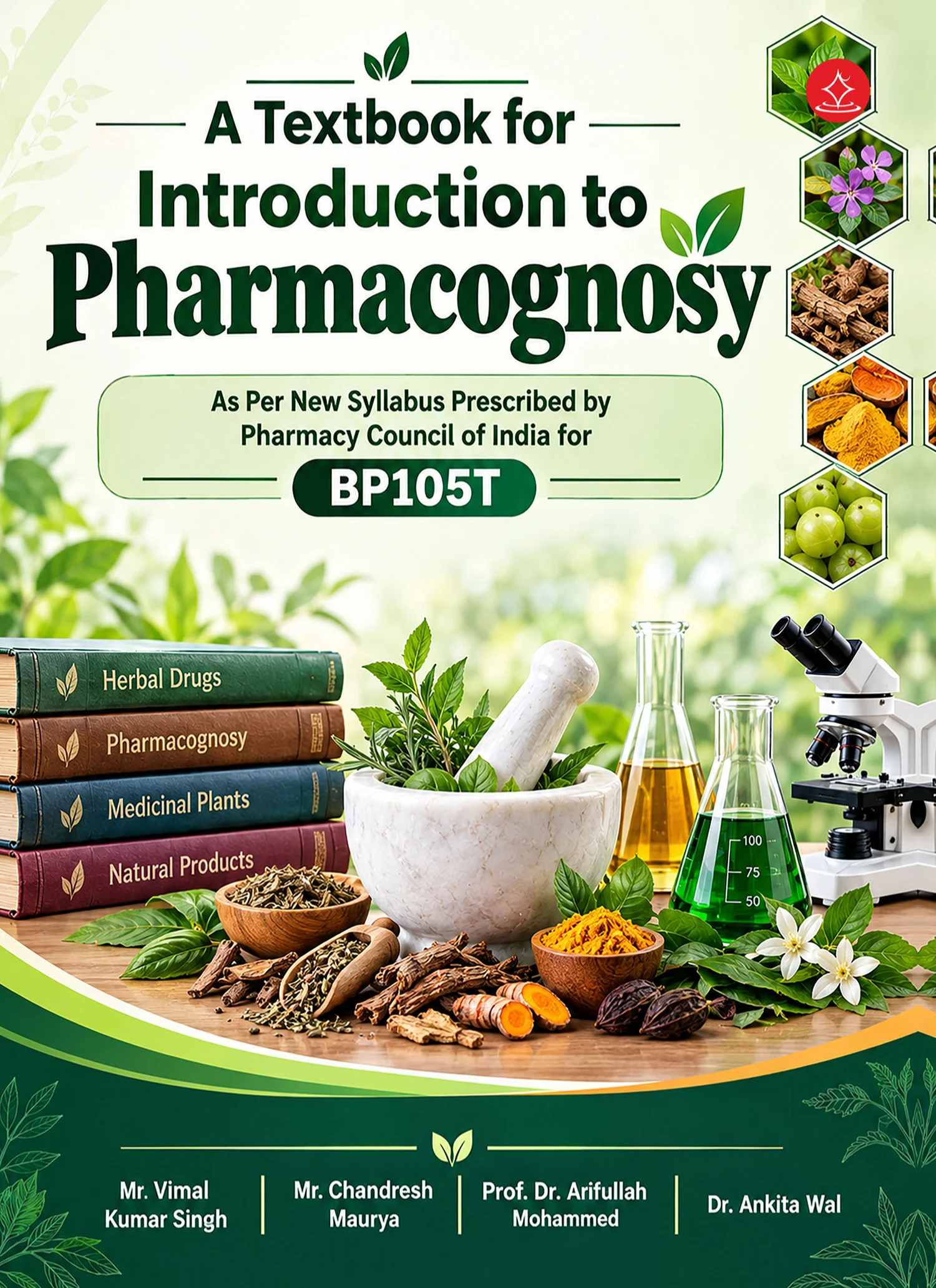
BP105T – Introduction to Pharmacognosy (Theory), as prescribed under the Pharmacy Council of India (PCI) New Syllabus aligned with NEP 2020 (implemented from 2026–27), is a core subject designed to provide foundational knowledge of drugs obtained from natural sources. The course introduces students to the history, scope, and classification of pharmacognosy, along with various sources of crude drugs such as plants, animals, microbes, marine organisms, and minerals. It emphasizes the scientific principles involved in the cultivation, collection, processing, storage, and conservation of medicinal plants, incorporating concepts like Good Agricultural and Collection Practices (GACP) and eco-pharmacognosy to ensure sustainability. The subject also focuses on the quality control and standardization of natural drugs using organoleptic, microscopic, physicochemical, and modern techniques such as DNA barcoding. Additionally, it covers primary and secondary metabolites—including alkaloids, glycosides, flavonoids, tannins, and terpenoids—and their therapeutic relevance. The course further integrates knowledge of traditional systems of medicine such as AYUSH and Traditional Chinese Medicine, highlighting their role in modern healthcare. In line with NEP objectives, the subject adopts a multidisciplinary, skill-based, and application-oriented approach, preparing students for roles in herbal drug development, phytopharmaceutical industries, research, and evidence-based use of natural medicines.
NEP-Based Learning Approach
As per the new syllabus, the subject emphasizes:
• Integration of traditional knowledge with modern science
• Focus on sustainable use and conservation of medicinal plants
• Application of advanced analytical tools (e.g., DNA barcoding, physicochemical evaluation)
• Promotion of eco-pharmacognosy and biodiversity conservation
• Development of practical skills in crude drug identification and evaluation
The revised curriculum aims to move beyond rote learning toward “learning by doing”, incorporating practical exposure, case studies, and real-world applications.
Relevance in Modern Pharmacy
Pharmacognosy plays a crucial role in:
• Drug discovery and development from natural sources
• Herbal medicine standardization and quality assurance
• Phytopharmaceutical and nutraceutical industries
• Supporting evidence-based traditional medicine systems
About Author
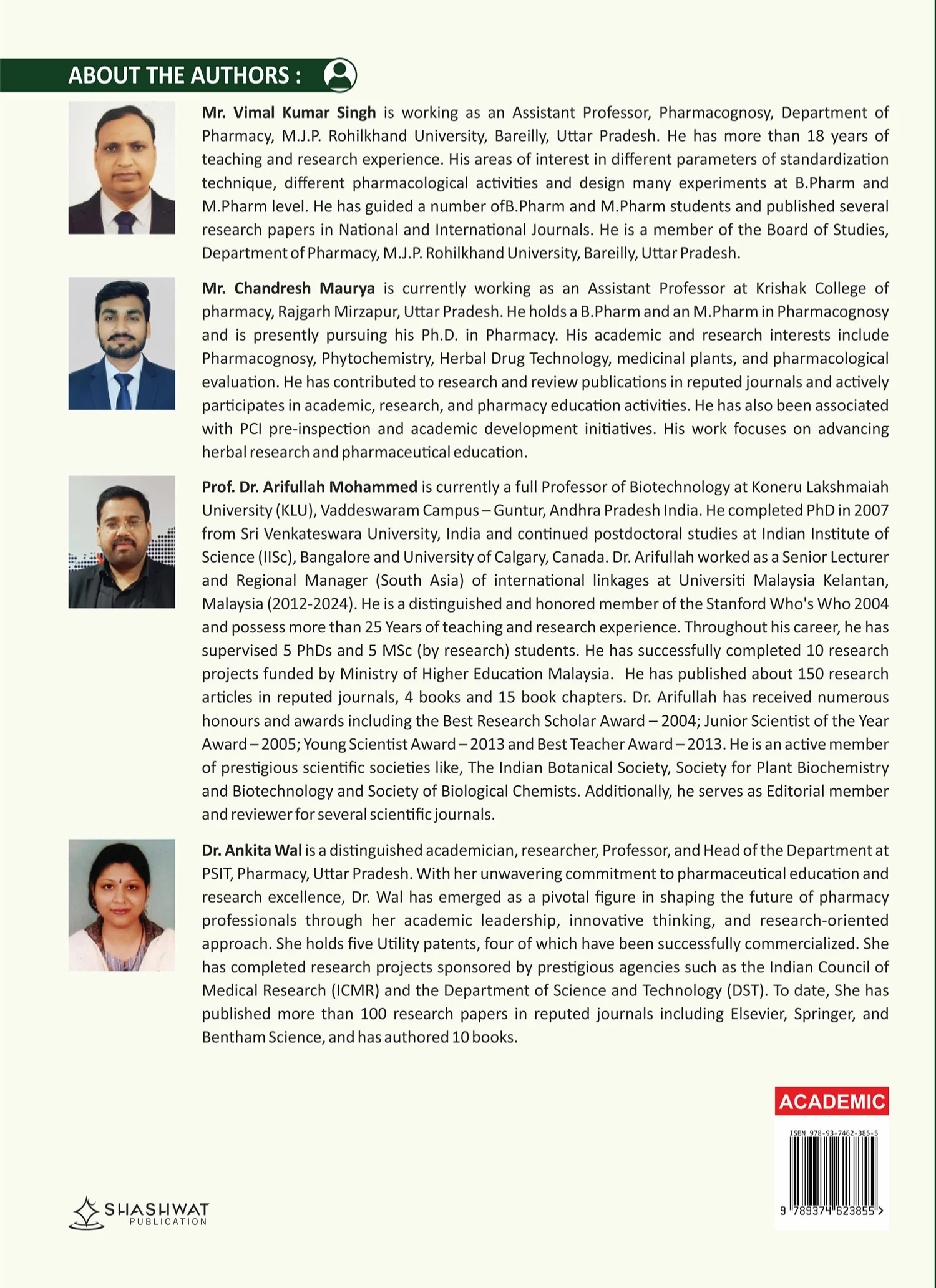
Mr. Vimal Kumar Singh is working as an Assistant Professor, Pharmacognosy, Department of Pharmacy, M.J.P. Rohilkhand University, Bareilly, Uttar Pradesh. He has more than 18 years of teaching and research experience. His areas of interest in different parameters of standardization technique, different pharmacological activities and design many experiments at B.Pharm and M.Pharm level. He has guided a number of B.Pharm and M.Pharm students and published several research papers in National and International Journals. He is a member of the Board of Studies, Department of Pharmacy, M.J.P. Rohilkhand University, Bareilly, Uttar Pradesh.
Mr. Chandresh Maurya is currently working as an Assistant Professor at Om Sai Vindhya College of Pharmacy, Mirzapur, Uttar Pradesh. He holds a B.Pharm and an M.Pharm in Pharmacognosy and is presently pursuing his Ph.D. in Pharmacy. His academic and research interests include Pharmacognosy, Phytochemistry, Herbal Drug Technology, medicinal plants, and pharmacological evaluation. He has contributed to research and review publications in reputed journals and actively participates in academic, research, and pharmacy education activities. He has also been associated with PCI pre-inspection and academic development initiatives. His work focuses on advancing herbal research and pharmaceutical education.
Prof. Dr. Arifullah Mohammed PhD graduated in 2007 from Sri Venkateswara University, India and continued postdoctoral studies at Indian Institute of Science (IISc), Bangalore (2007-2010) and University of Calgary, Canada (2010-2011). He worked as a Senior Lecturer and Regional Manager (South Asia) of International linkages at Universiti Malaysia Kelantan, Malaysia (2012-2024). Currently he’s a full Professor of Biotechnology at Koneru Lakshmaiah University (KLU), Vaddeswaram campus – Guntur, India. He has more than 25 Years of teaching and research experience. He has supervised 5 PhDs and 5 MSc by research. He has successfully completed 10 research projects funded by Ministry of Higher Education Malaysia. He has published about 130 research articles in reputed journals, 4 books and 15 book chapters, conference presentations and seminars in which he has been a keynote and invited speaker. He received many honours and awards which include the Best Research Scholar Award – 2004; Junior Scientist of the Year Award – 2005; Young Scientist Award – 2013 and Best Teacher Award – 2013. He is the member of scientific societies like, The Indian Botanical Society, Society for Plant Biochemistry and Biotechnology and Society of Biological Chemists. He serves as Editorial member and reviewer for several journals. His innovations have been well recognized with Gold and Siver medals in MTE, ITEX and PECIPTA international exhibitions. His areas of research interest include, Agriculture Biotechnology, Pharmacognosy of Medicinal Plants and Natural Products.
Dr. Ankita Wal is a distinguished academician, researcher, Professor, and Head of the Department at PSIT, Pharmacy, Uttar Pradesh. With her unwavering commitment to pharmaceutical education and research excellence, Dr. Wal has emerged as a pivotal figure in shaping the future of pharmacy professionals through her academic leadership, innovative thinking, and research-oriented approach. She holds five Utility patents, four of which have been successfully commercialized. She has completed research projects sponsored by prestigious agencies such as the Indian Council of Medical Research (ICMR) and the Department of Science and Technology (DST). To date, she has
published more than 100 research papers in reputed journals including Elsevier, Springer, and Bentham Science, and has authored 10 books.